
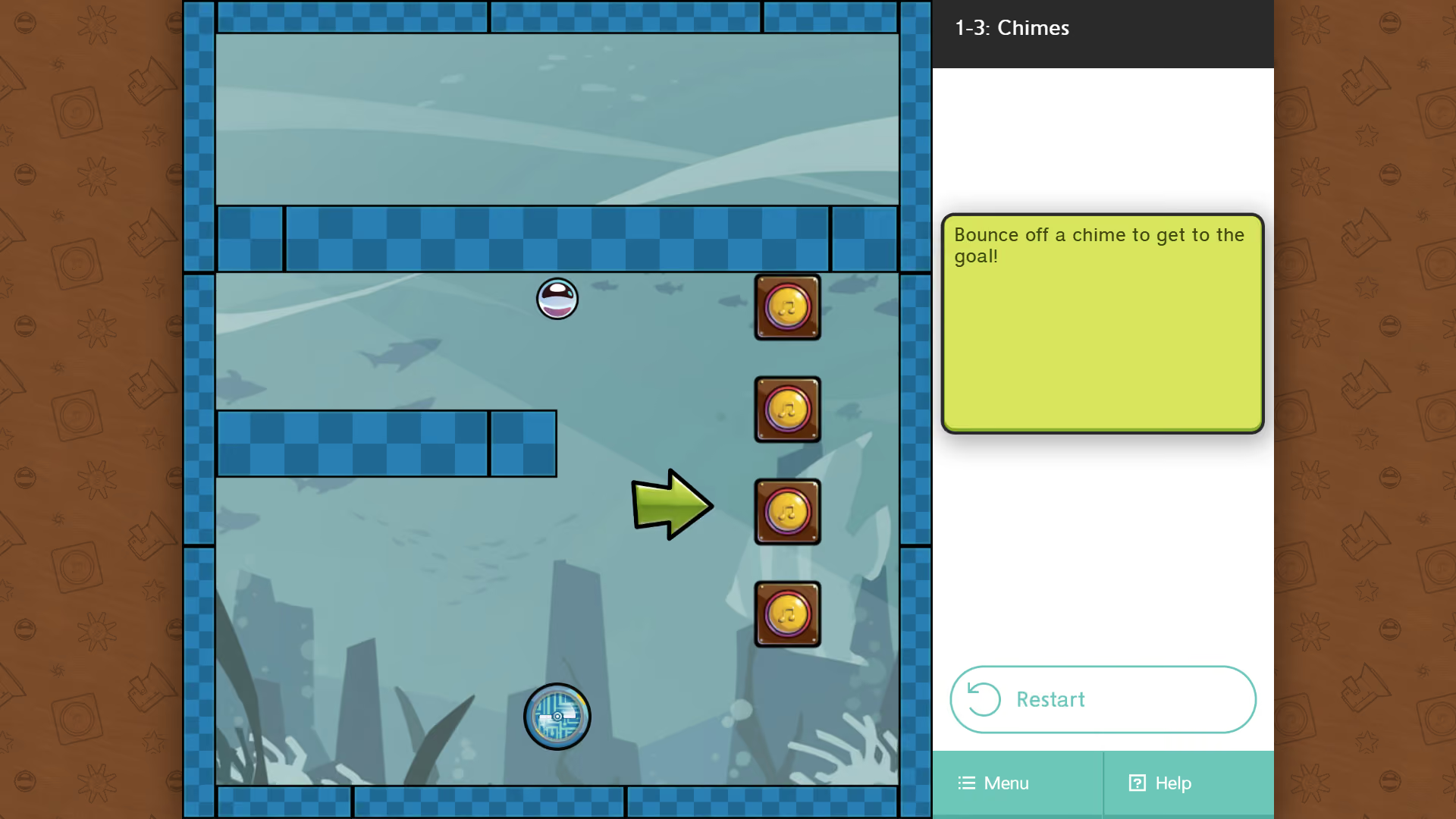
Pinball Energy Challenge is a physics learning game developed with McGraw-Hill that focuses on energy transfer and transformation. Players guide a pinball through interactive environments, observing how different objects convert energy between forms while solving physics-based challenges.
Explore →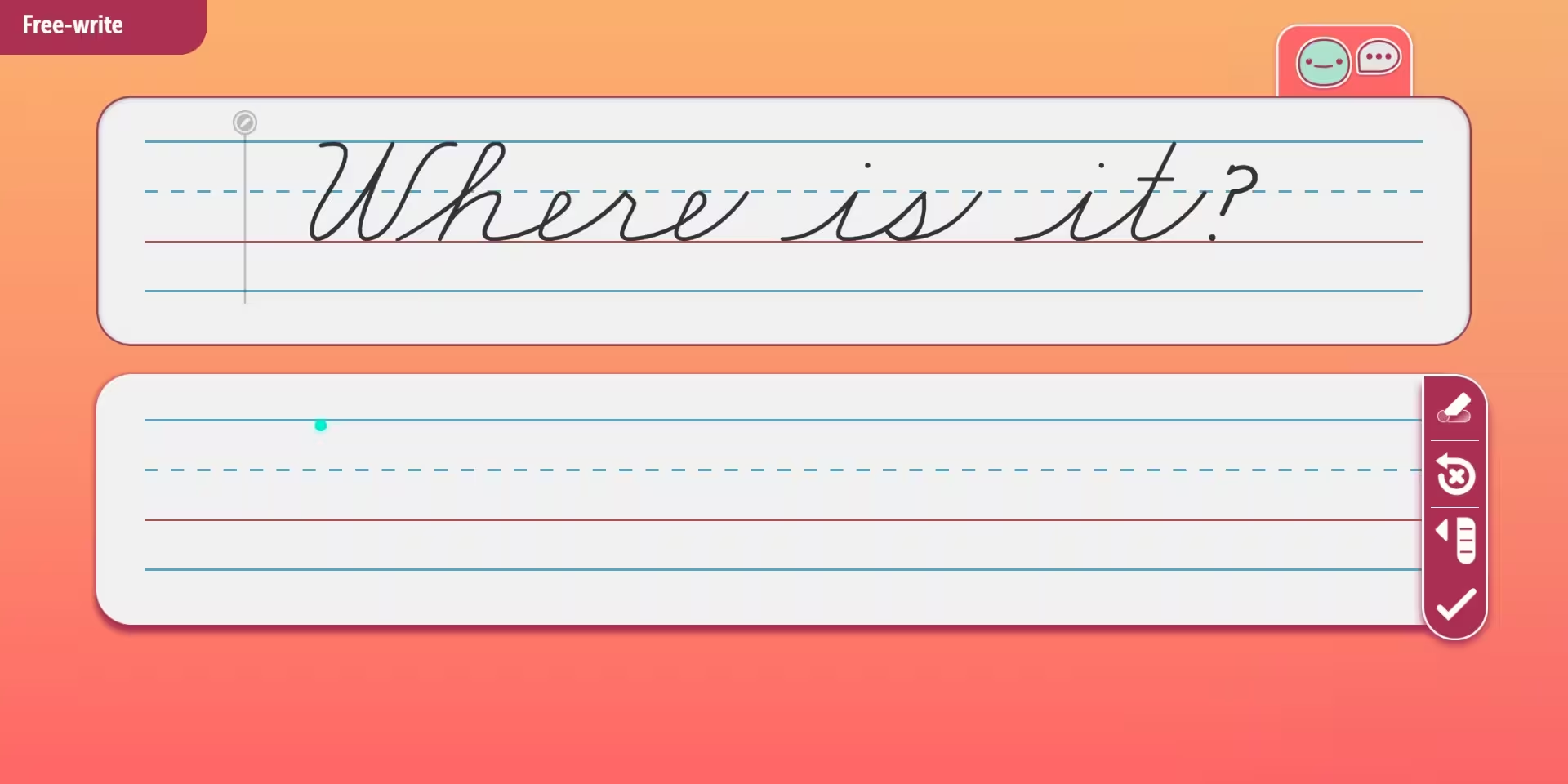
Digital Handwriting is a WCAG-compliant literacy learning game developed with Zaner-Bloser that focuses on handwriting skills through touchscreen interaction. Players practice forming letters and words using guided stroke sequences while progressing through both manuscript and cursive writing styles.
Explore →Educational game developers keep bumping into the same wall on big, interconnected topics like global sustainability: the data is compelling, but on its own it rarely gets an audience to act. Fortunately, we have a way to bring that data to life! Simulation games put learners right at the negotiation table, where every decision means weighing environmental outcomes against economic pressures. Recent climate simulators show how that interactivity builds critical thinking, diplomatic collaboration, and functional literacy. Once players can adjust the variables and watch the consequences play out in real time, you've got a working model for learning experiences that stick with people long after the session ends.
Ciara Renee Johnson's recent study in In Factis Pax looks at how the En-ROADS Climate Simulator fits into secondary and peacebuilding classrooms. Johnson reports that interactive simulators anchor peacebuilding work in scientific reality, helping users spot and weigh the co-benefits of specific environmental policies. The takeaway for developers is a strong one: scenario-based planning works best when it's built on personalized, location-specific data. When learners get feedback tied to their own region, long-term peacebuilding strategies start to click. That kind of customization is exactly how a client project can turn an abstract global challenge into something local, concrete, and worth engaging with.
Emma L. Kuster and Doo H. Lim, writing in Journal of Geoscience Education, reviewed 53 peer-reviewed articles to see how educational games build functional climate literacy in adult learners. Across the 48 games they analyzed, it became clear that pairing hands-on activities with digital play does the most to grow knowledge and move people toward action. That said, Kuster and Lim also flag a gap. Most existing games aim at youth and college students, while professionals in fields like natural resource management have clear demand for training and few options built for them. For studios, that points to the value of multiplayer, collaborative designs rooted in genuine decision-making, where learners can bring their own experience straight into the problem.
Theresa Jedd and her colleagues, writing in Journal of Political Science Education, tested Geovania, an online simulation about the geopolitics of renewable energy transitions, across 14 sessions with 292 university students in six countries. Jedd's team found that the game teaches a core international relations idea - namely, the two-level game. This model has players constantly balancing domestic welfare against international agreements. Simulating cross-border trade in food, energy, and technology sparked genuine interest and kept students engaged session after session. For client work, that's proof digital simulations are great at making messy coordination problems tangible. Put learners in the decision-making seat and they build the exact negotiation skills these sustainability challenges demand.
~
When an organization needs to turn tangled systems and policy trade-offs into leadership skills people can use, a custom simulation game gives them a place to explore the data and change how they act. Game-based learning hands your stakeholders the tools to negotiate, adapt, and work through the messy, high-stakes problems their teams face. Want to build a custom simulation that develops these skills for your audience? Let's talk.
Best practices for preventing motion sickness while maximizing learning outcomes.
Best practices for preventing motion sickness while maximizing learning outcomes.
Get the latest Game-Based Learning Review content delivered to your inbox, including new articles, videos, and industry insights.