

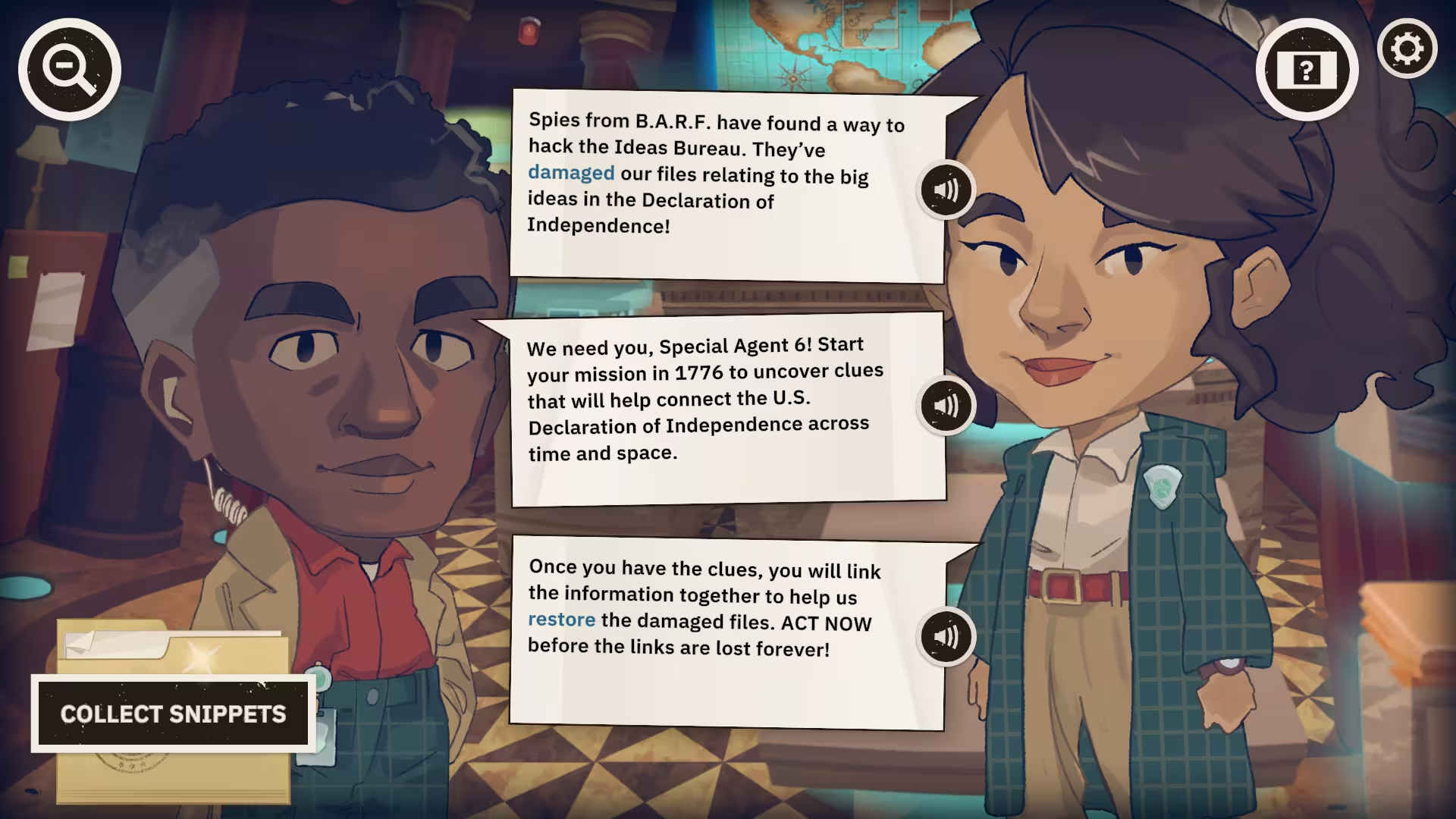
Investigation Declaration is a history and civics learning game developed to place students in the role of a secret agent investigating the origins of democratic ideas. Players travel across the Atlantic World and over a century of history to trace how Enlightenment principles shaped the United States Declaration of Independence.
Explore →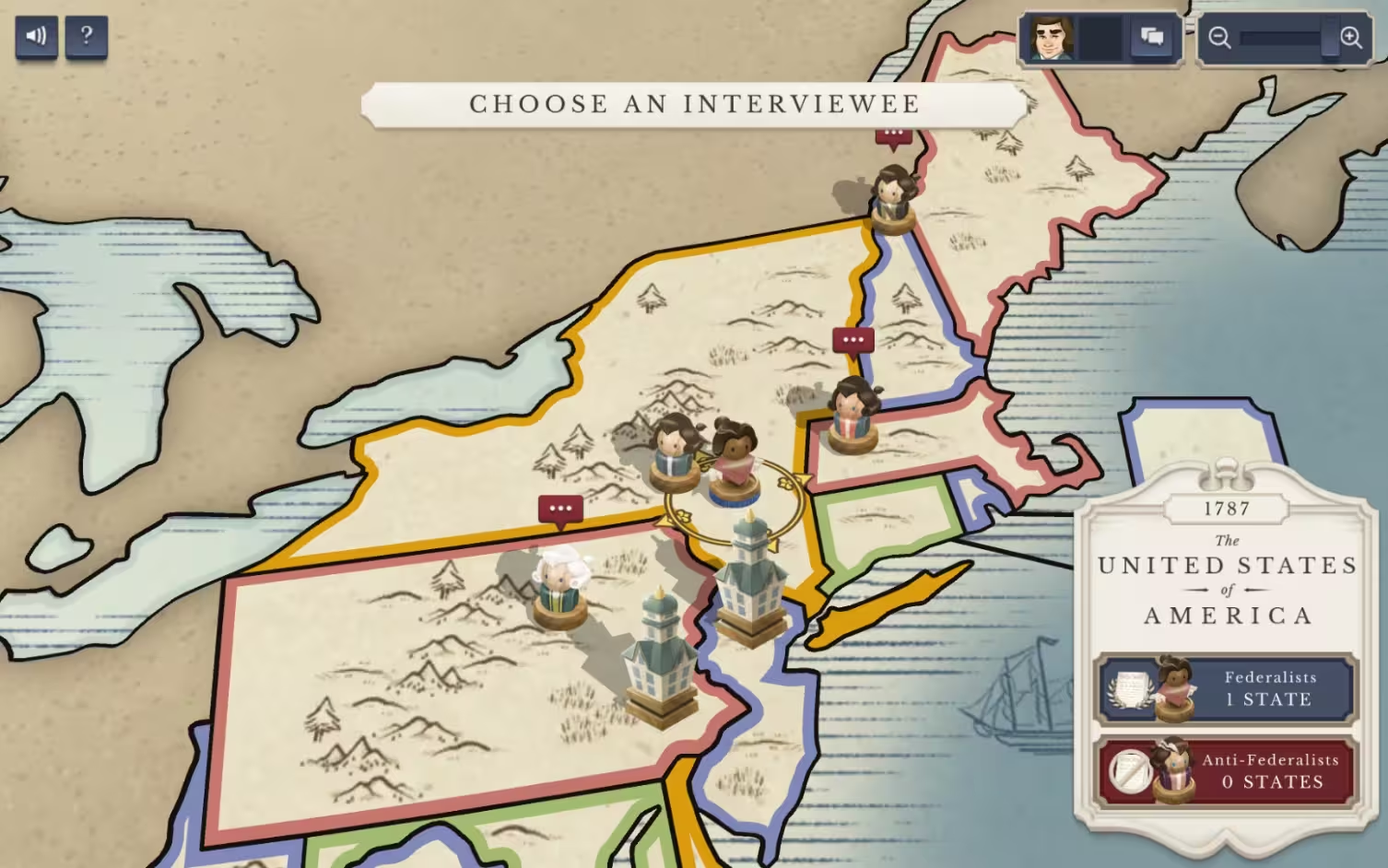
Race to Ratify is a civics learning game developed with iCivics that focuses on the debate over ratifying the U.S. Constitution. Players take on the role of a pamphleteer aligned with either the Federalists or Anti-Federalists, traveling across the thirteen states to gather arguments and influence public opinion.
Explore →Here’s some food for thought! Quizlet recently published a study scoring all 50 states and the District of Columbia on their readiness for game-based learning, using a very interesting blend of weighted statistics - namely, school infrastructure, school spending, bandwidth availability, and Google search trends. From this set of scores the researchers derived a ranking of each state for Game-based Learning Readiness. Reviewing this study, we were struck by the regionality of the readiness scores, and it begs an interesting question that’s relevant to both educational publishers and educational game developers: what actually makes a school ready to use game-based learning?
Breaking down the specific blend of statistics, Quizlet's Game-Based Learning Readiness Score weights school technology access at 40 percent, broadband availability at 30 percent, and Google search interest at 30 percent. The scores range widely, from 80.4 at the top to 18.3 at the bottom. The states that score highest, Washington, Utah, and Maryland among them, tend to combine strong school technology with broadband that reaches the large majority of homes. By region, the reported averages run from 65.7 in the Northeast to 48.5 in the South. The study's headline conclusion is that infrastructure, more than measured interest, tracks most closely with where a state lands. That's a fair reading in our estimation, and reminds us that a game can be excellent and still go unused if the building can't reliably run it.
There’s also compelling recent research that indicates that Quizlet’s study is on the right track from Carnegie Mellon. Researchers at CMU have reported that well-designed game-based learning can hold its own against conventional instruction, which helps explain why teachers keep reaching for it. That interest also shows up in places the infrastructure numbers wouldn't predict. Kansas lands in the study's top ten despite middling technology and broadband scores on the strength of local search interest. Meanwhile, South Carolina, Texas, and Ohio post the highest search interest in the country for "classroom games," a phrase that reads like teachers looking for something to use, even though none of the three ranks near the top overall. How much a Google Trends figure can really say about classroom readiness is a fair question, and search interest is a loose proxy at best. What we can conclusively determine is that curiosity about game-based learning reaches well beyond the most-resourced districts.
Whatever a composite score captures, readiness on the ground comes down to concrete conditions. A game that only runs well on new hardware and fast connections reaches a narrower set of classrooms than its makers might hope. Designing for the broader middle means accounting for the classroom with a shared connection and a cart of low-cost Chromebooks, which describes a ton of schools. SETDA, the association of state education technology directors, recommends planning for up to 2.8 megabits per second per student at peak, and in plenty of buildings the real figure drops below that once a full grade is online at once. Games that load quickly, run in the browser, tolerate a shaky connection, and recover when a device drops offline travel much further than games built for ideal conditions.
~
Interest in game-based learning is widespread, but as Gibson famously noted, the technology of the future is not. The conditions for using games well are simply not evenly distributed, and no single studio can change that landscape. What we can do is build games that hold up outside ideal conditions, so a strong idea can reach students whether or not their state sits near the top of the readiness list. Two decades of building for schools has taught us to design for that classroom first. If you're planning a game-based learning product and want it built to reach every student it's meant for, let's talk.
Best practices for preventing motion sickness while maximizing learning outcomes.
Best practices for preventing motion sickness while maximizing learning outcomes.
Get the latest Game-Based Learning Review content delivered to your inbox, including new articles, videos, and industry insights.