
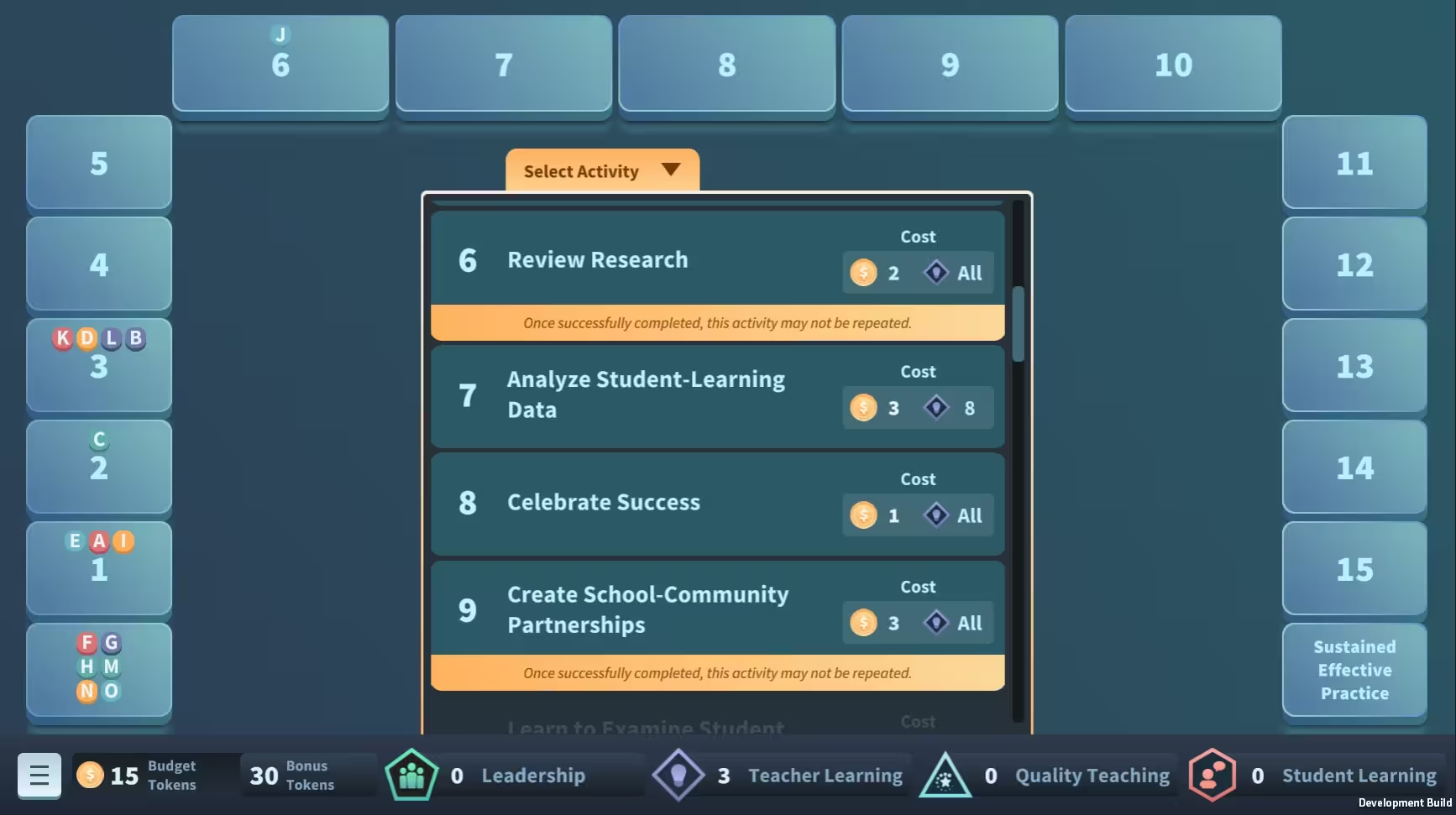
Leading Professional Learning is a professional development simulation developed with WestEd that focuses on preparing school leaders to design and implement effective teacher learning experiences. Players engage with realistic scenarios that reflect common school challenges.
Explore →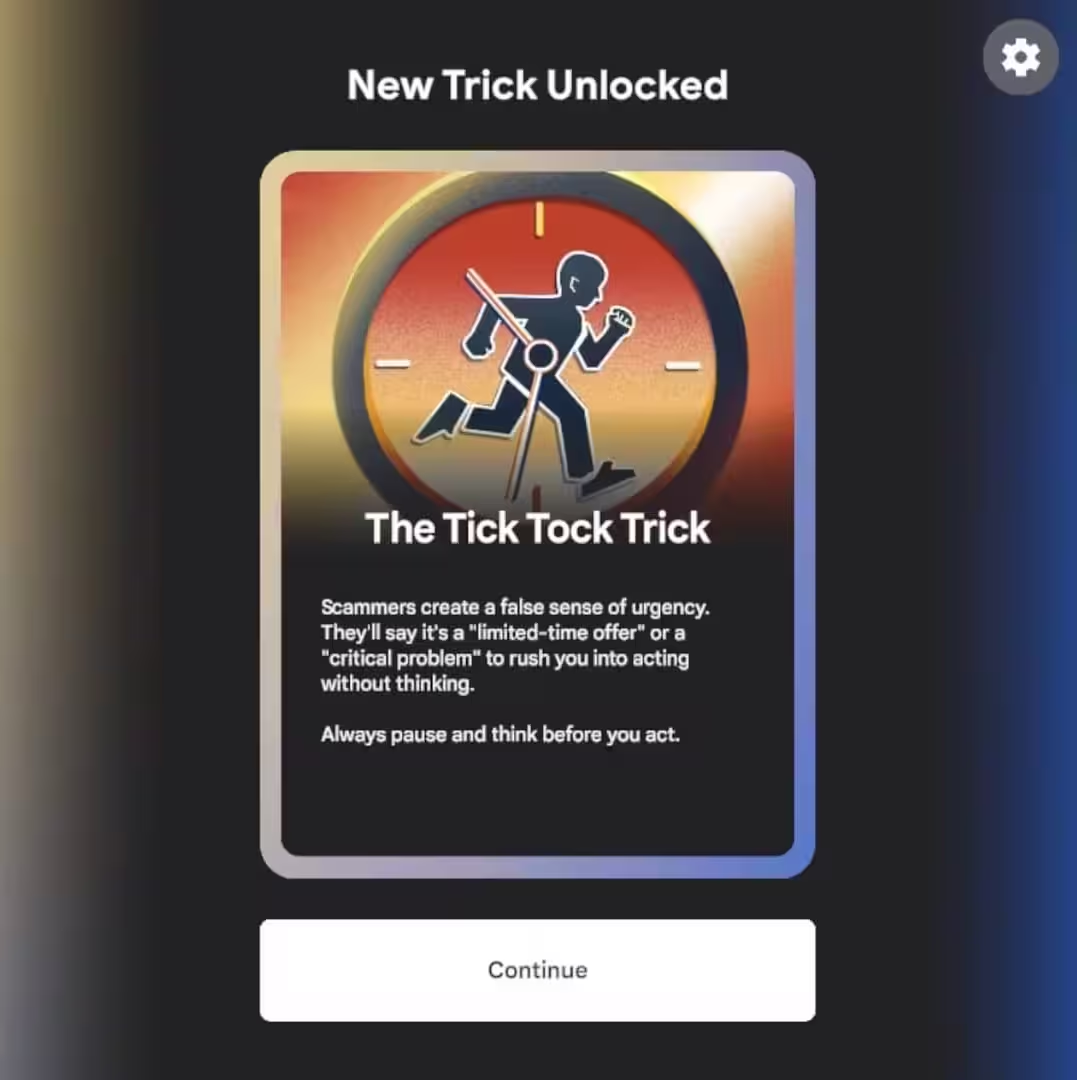
Be Scam Ready is a free, browser-based learning game developed with Google to help players identify and avoid online fraud. Players explore short, interactive scenarios across multiple characters to recognize the manipulation techniques used in real-world scams.
Explore →November has arrived, and with it a fresh stack of research on AI and learning 🍁 The month's biggest story comes from within the research community itself. A forensic audit of published meta-analyses on AI in education found serious statistical flaws in all 14 it examined, and a preliminary reanalysis of well-designed experiments puts AI's average effect on learning at roughly zero. Closer to the classroom, a University of Minnesota report urges extra caution with AI in the elementary grades, where students are still building the foundational skills they will later use AI to extend. The rest of this month's roundup spans everything from learning science guidance for college instructors to course redesign at a liberal arts university. Read on for the latest findings in AI and learning!
Writing in The Hechinger Report's Proof Points column, Jill Barshay covers a forensic audit that found serious conceptual and statistical flaws in 14 of the 39 published meta-analyses crediting AI with substantial learning benefits. Auditor Patrick O'Neill's preliminary reanalysis of 44 well-designed experiments found results ranging from very helpful to very harmful, averaging out to roughly zero. Northwestern's Beth Tipton added that a meta-analysis only becomes useful once it specifies how AI is being used, much as research on math instruction depends on the teaching approach.
MPR News's Elizabeth Shockman reports on a new University of Minnesota study in which learning scientists surveyed experts on how generative AI affects learning. The experts agreed that high-quality research on the question is still scarce, and they broadly agreed that introducing AI in certain contexts could severely disrupt how students commit new ideas to memory and develop higher-order thinking. Once students have mastered foundational skills like writing, the experts saw a productive role for AI in stress-testing ideas and extending an argument. That sequence mirrors how a well-designed game scaffolds its players, building competence first and unlocking more powerful tools as mastery grows.
In Faculty Focus, cognitive psychologist Beth Schwartz of the American Psychological Association and teaching center director Chris Hakala observe that much of the higher education debate over AI rests on perception and self-reported survey data, with little evidence yet on durable learning outcomes. While that research catches up, they point instructors to decades of well-replicated findings from psychological science. The authors propose using those findings as a filter for any AI practice. AI that prompts students to explain their reasoning or revise a draft fits the evidence well, and AI that hands over finished answers bypasses the practice where learning happens. That filter works just as well for evaluating a learning game, where every mechanic should keep the player doing the thinking.
Forbes contributor Ray Ravaglia sat down with Leah Belsky, OpenAI's vice president of education, after the company expanded ChatGPT for Teachers to 55 more school systems and more than 100,000 additional educators and staff. Belsky said the students who gain the most from AI tend to be those with stronger prior knowledge and learning skills, since the tool amplifies whatever curiosity a student brings to it. Ravaglia argues that schools will need to cultivate purpose directly and assess the learning process through live demonstrations like oral exams and presentations.
A Wesleyan University news feature by Ziba Kashef covers a three-day summer workshop at the university's Hazel Quantitative Analysis Center, where data science faculty from nearly a dozen institutions examined how generative AI affects student learning. Center director Manolis Kaparakis described an assignment on regression models where students earned perfect scores, then scored much lower on an in-class test a few weeks later. Despite a wide range of views on AI, participants agreed that building durable mental models still takes the same work it always has, and Associate Professor Maryam Gooyabadi framed the goal as moving students from novice to expert through productive struggle before they use AI to extend their skills.
~
The Hechinger audit offers a useful reminder for anyone evaluating a learning product. A positive headline number means little until you know exactly what was tested and what it was compared against. Tools built around a specific learning goal answer both questions up front, because success is defined before a single student starts playing. That has been our approach for more than 20 years, pairing commercial game development practices with learning science to build experiences where the learner does the thinking and the outcomes can be measured. Ready to build a learning game backed by evidence you can stand behind? Let's talk!
Best practices for preventing motion sickness while maximizing learning outcomes.
Best practices for preventing motion sickness while maximizing learning outcomes.
Get the latest Game-Based Learning Review content delivered to your inbox, including new articles, videos, and industry insights.