

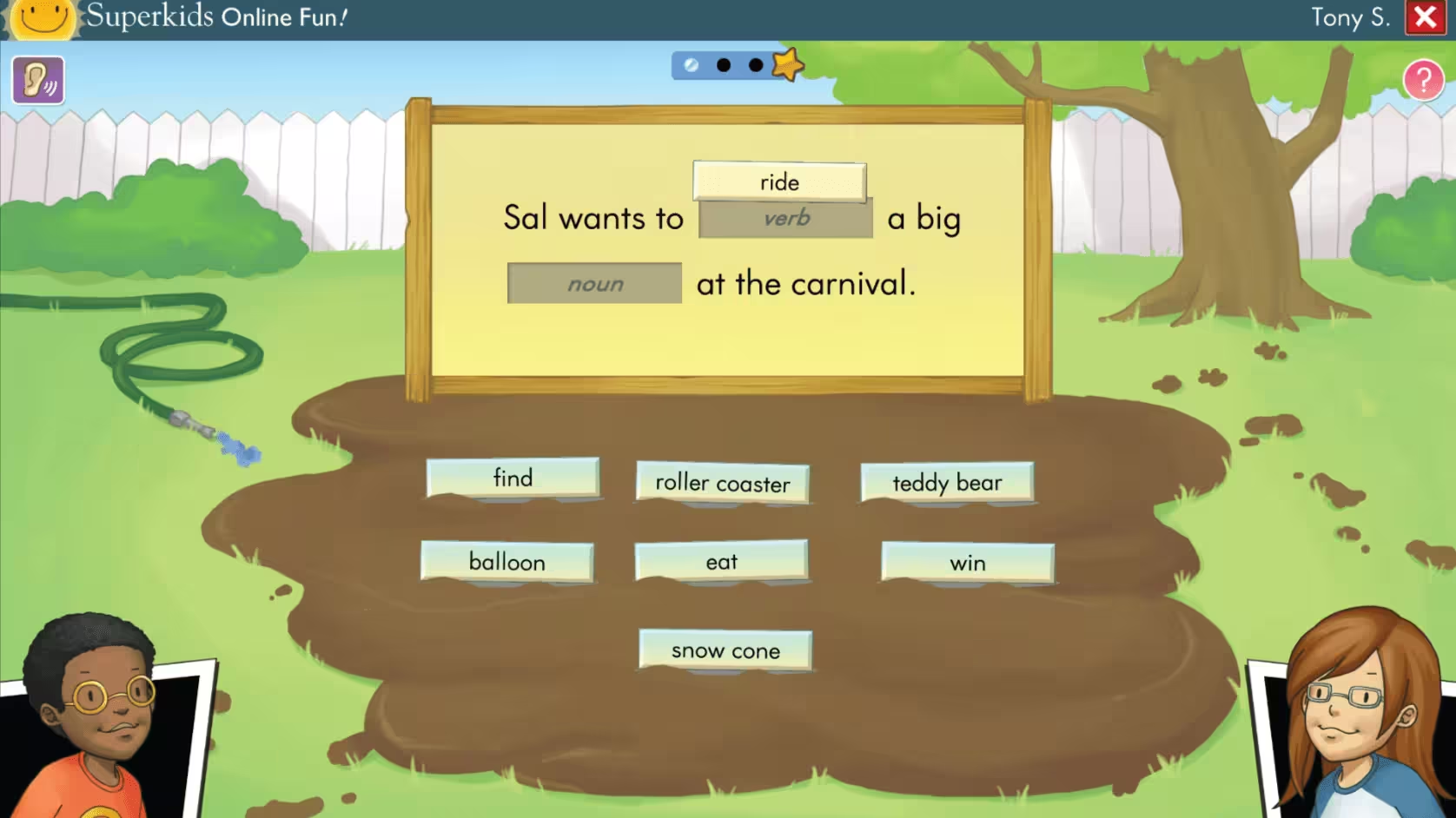
Superkids Online Fun! is a literacy learning game suite developed with Zaner-Bloser that supports the Superkids Reading curriculum for kindergarten through second grade. Players engage with read-aloud books and complete interactive activities that reinforce spelling, phonics, and vocabulary.
Explore →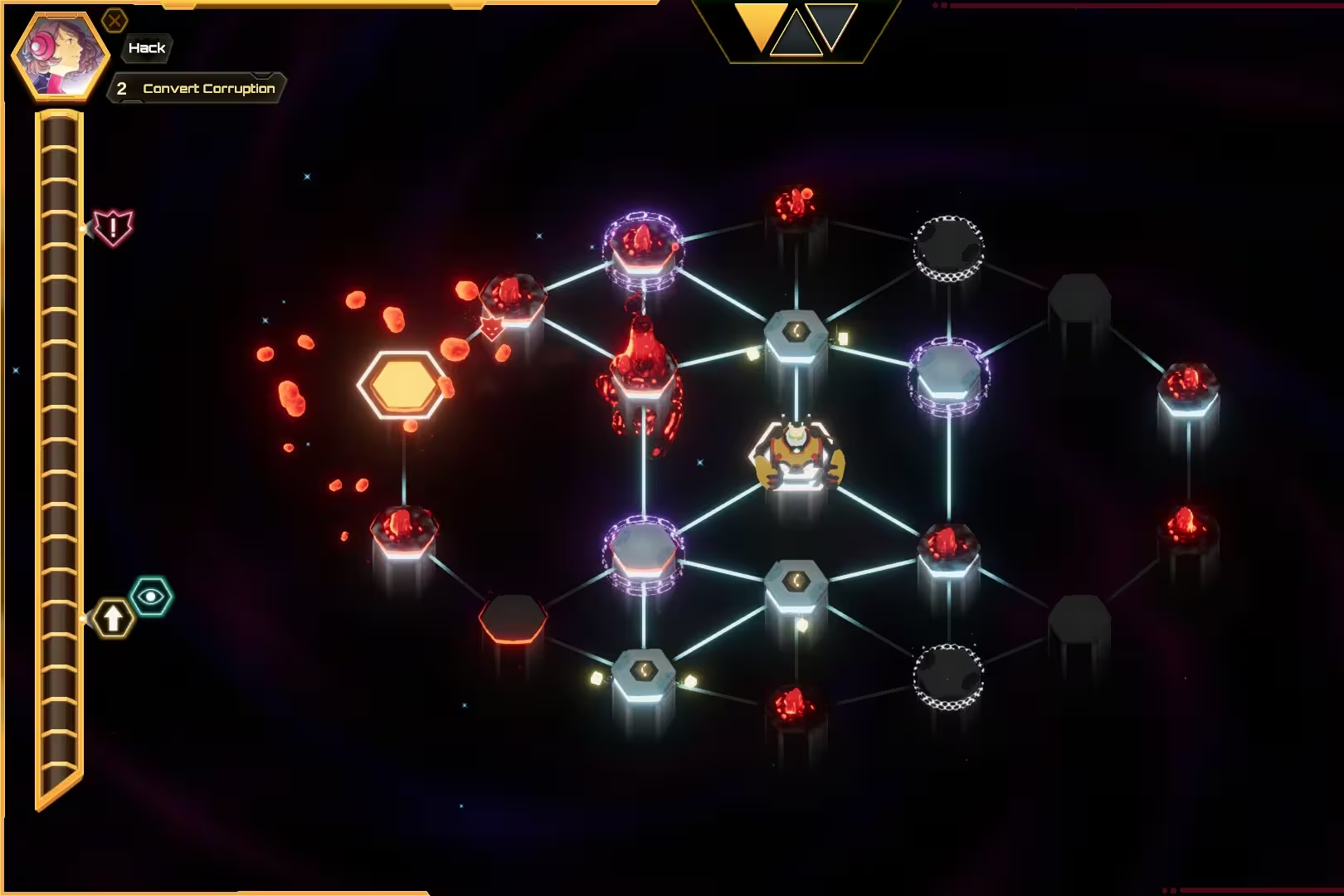
Zodiac is an artificial intelligence learning game developed with NYU CREATE that focuses on foundational AI concepts. Players apply search strategies and heuristics to solve challenges while observing how algorithms improve through iteration.
Explore →Passive instruction has a hard time keeping up with information overload. When learners face big, complex topics like environmental sustainability, a traditional lecture can leave them anxious and stuck rather than ready to act. We already know that play gives students an engaging way into complex systems, but emerging research is now actually surfacing hard data that’s backing up this design philosophy. Recent studies from around the world show how interactive mechanics beat passive reading on both immediate engagement and long-term retention, and how structured play keeps students from shutting down in the face of heavy material. Here's a look at the recent literature on why interactive experiences matter for the next generation of problem-solvers.
Educators report that students often feel disheartened and helpless when they learn about complex environmental crises. Researchers at Lund University set out to address that paralysis by developing a toolbox for young learners. The team co-created interactive activities that range from five-minute breathing exercises to week-long collaborative projects connecting students across generations. Their work shows that good curriculum design has to nurture emotional well-being and relational skills alongside the facts. We can apply that insight to educational games by building experiential systems that foster empathy, critical thinking, and resilience. Connecting learners to a sense of purpose has the potential to turn stress into active engagement.
A recent study in the Journal of Experiential Education found that interactive tabletop mechanics significantly outperform traditional lectures on knowledge retention. Researchers tested a climate change board game with high school students, and the game-based cohort showed 33% higher knowledge retention over a three-week assessment period. Those students also took part in active solution debates during 92% of their sessions, compared with just 12% in standard lecture settings. Clients need measurable outcomes on custom educational projects, and numbers like these show how tangible cause-and-effect mechanics drive stronger learning. Iterative gameplay helps to translate abstract concepts into understanding that sticks.
A recent preprint on EGUsphere looked at how 172 secondary students across Europe engaged with two climate policy escape games. The research team found that gameplay conveyed intricate local governance concepts well, but the intensity overwhelmed players when there was no post-game reflection phase. Students who played without a structured debriefing showed reduced support for collaborative decision-making, with 31% endorsing single-person rule in post-tests compared with 19% beforehand. The takeaway is that game mechanics can't carry all the pedagogical weight on their own for complex subjects. This emphasizes the importance of building comprehensive learning ecosystems, because guided debriefing materials are what turn a raw gameplay experience into lasting mastery.
An article in Times Higher Education points out that a constant stream of global crises through doomscrolling breeds emotional exhaustion and cynicism in today's students. Associate professor Soheil Davari argues that universities should replace passive problem descriptions with interactive simulation games and gamified project-based learning. These environments let learners experiment with difficult ideas, weigh genuine trade-offs, and make hard decisions inside a safe, supportive digital space. When students actively steer an experience rather than passively absorb alarming data, they build real confidence and sidestep academic burnout. You'll see much better long-term engagement when your programs use interactive tools in place of high-anxiety traditional assessments.
~
Taken together, this research makes a clear case that game-based learning is essential for educators who want to replace student anxiety with confidence and knowledge that lasts. By pairing interactive simulation mechanics with structured reflection, we build digital environments that help learners master complex global challenges. Interested in building custom game-based learning solutions that drive measurable educational impact? Let's talk.
Best practices for preventing motion sickness while maximizing learning outcomes.
Best practices for preventing motion sickness while maximizing learning outcomes.
Get the latest Game-Based Learning Review content delivered to your inbox, including new articles, videos, and industry insights.