

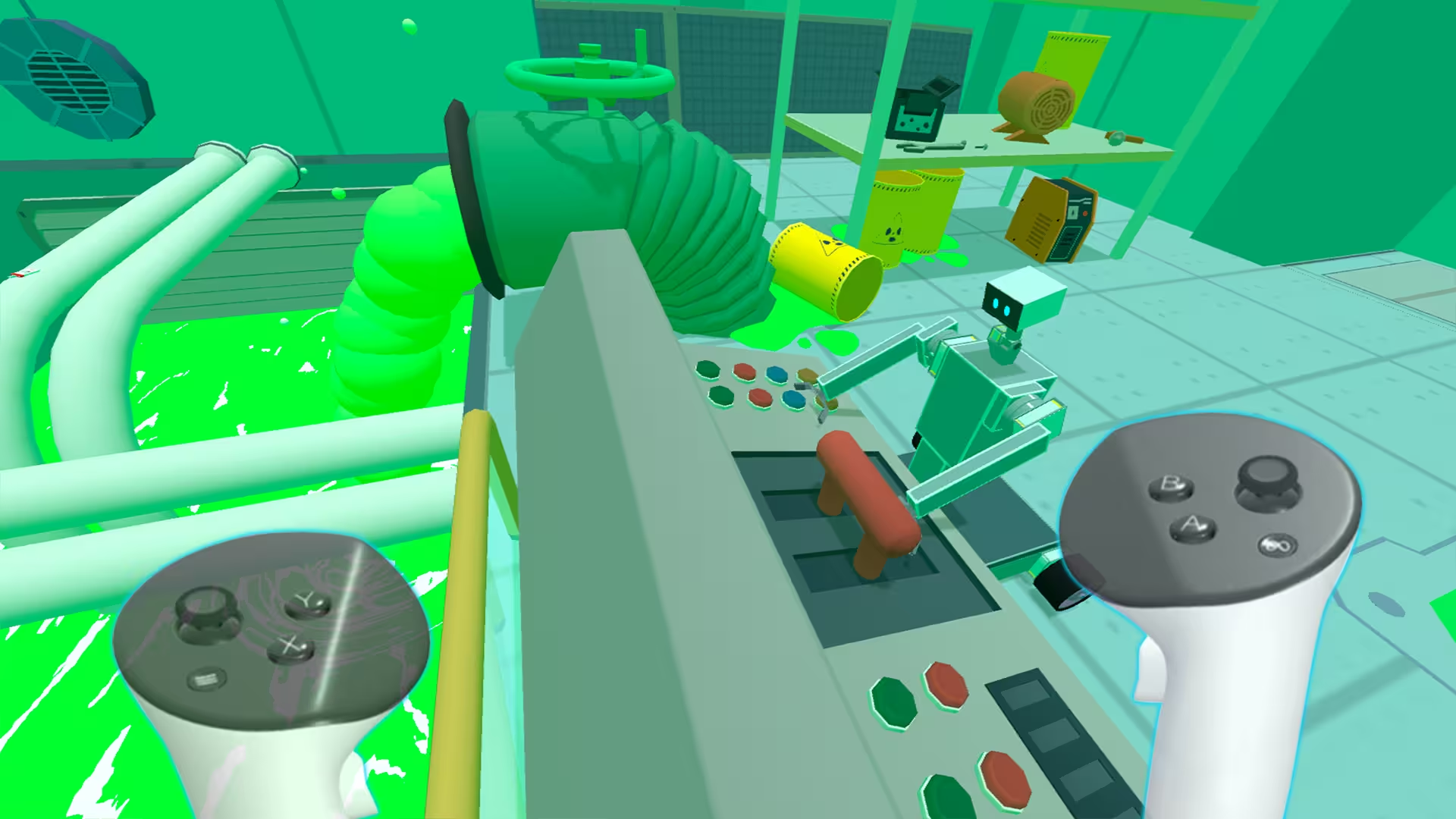
Some Assembly Required is a VR robotics sandbox game developed by Filament Games for Meta Quest 2 and 3. Players design and build robots with intuitive hands-on controls to complete mechanical challenges and explore a secret-filled warehouse.
Explore →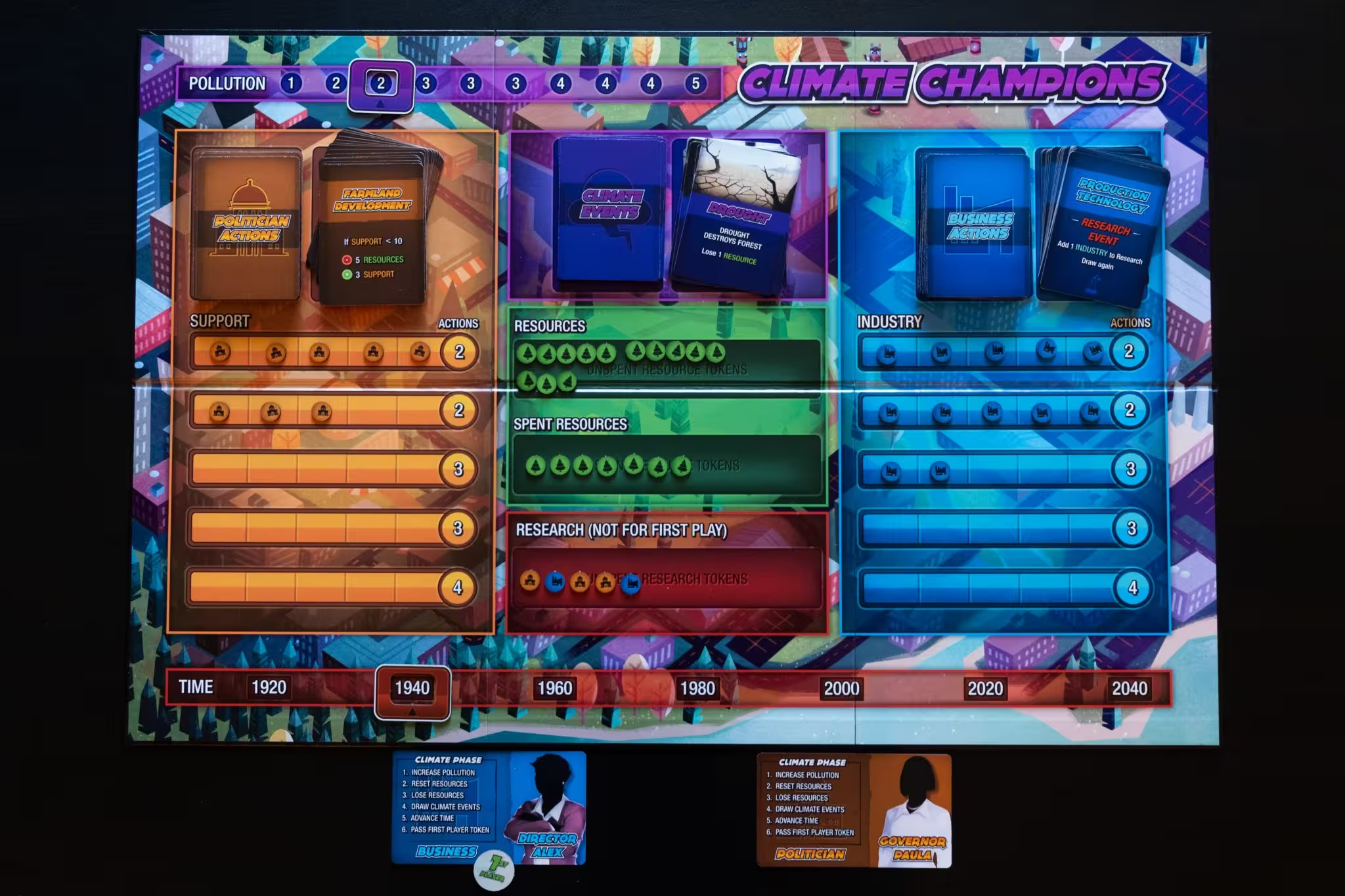
Climate Champions is a climate science learning board game developed with Educational Service District 101 that focuses on the environmental and economic impacts of climate change. Players collaborate to grow Washington State’s economy while managing resources.
Explore →Best practices in digital design often prioritize seamless user experiences – intuitive interfaces, frictionless onboarding, and uninterrupted progress are the hallmarks of the modern digital interactive. Yet, a frictionless experience becomes a liability when we shift our focus from software utility to actual human cognition. Smooth, guided tutorials guarantee task completion, but they rarely ensure deep comprehension of the underlying mechanics. Today we’re going to explore how effective learning games embrace the architecture of productive struggle to build robust mental models. It turns out that adding a bit of intentional difficulty and structured failure serves as functional, necessary means for skill development and education. Behold:
To illustrate this seeming paradox, Elizabeth L. Bjork and Robert A. Bjork identified the concept of desirable difficulties, which illustrates why artificially easy tasks sabotage long-term retention. Rapid, highly-supported task completion creates an illusion of competence in which learners assume they have mastered the material because the interface has removed all the cognitive hurdles. Genuine comprehension requires the learner to expend active cognitive effort to retrieve, process, and apply information without a digital safety net. Well-designed game-based learning forces players to grapple with the material by intentionally introducing friction into the environment. This productive struggle solidifies the neural pathways required for actual mastery.
Most traditional training paradigms treat failure as a terminal event or a permanent mark of inadequacy. This paper published by Old Dominion University explores how well-engineered serious games re-contextualize failure as a functional, immediate feedback loop. When a player makes a critical error in a simulated environment, the consequences are localized and instructive. The system provides immediate data on what went wrong and requires the player to iterate their strategy before progressing. This structured approach to failure incentivizes players to confront their mistakes head-on. They learn to view setbacks as necessary data points for their next attempt, transforming avoidance behavior into active problem-solving and an opportunity to gather new information.
Introducing friction requires precise engineering to keep the learner actively engaged. In Assessment and Adaptation in Games, Shute et al. highlighted that instructional designers must carefully calibrate the difficulty to keep players within their zone of proximal development. If the challenge significantly exceeds the player’s current skill level, productive struggle degrades into frustration. If the challenge is too low, the player falls into boredom and disengages. Sophisticated learning games use backend analytics and adaptive algorithms to maintain this delicate equilibrium. These systems sustain a state of flow while demanding rigorous intellectual effort by constantly adjusting the cognitive load based on real-time performance. We recently explored this in our livestream of Be Scam Ready, which uses time-based challenges to simulate the urgency and user pressure of real-life scams.
–
As these studies demonstrate, building genuine capability requires learners to grapple with complex systems and iterate on their mistakes. And to iterate on their mistakes, they need to make mistakes! Game-based learning provides a structured, secure environment for exactly this kind of productive struggle, where mistakes are encouraged and consequences are impermanent. By treating friction as a functional design element, we move past surface-level engagement and deliver verifiable skill development. If you’re ready to design training tools that put your users squarely in the zone of proximal development, let’s talk!
Best practices for preventing motion sickness while maximizing learning outcomes.
Best practices for preventing motion sickness while maximizing learning outcomes.
Get the latest Game-Based Learning Review content delivered to your inbox, including new articles, videos, and industry insights.