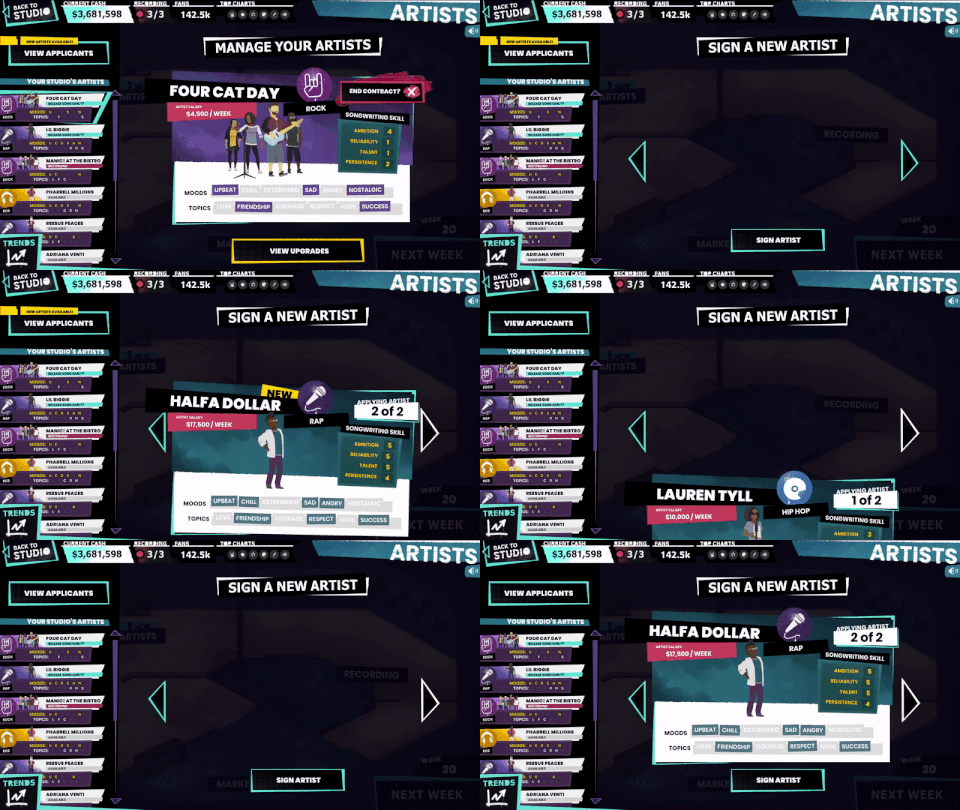
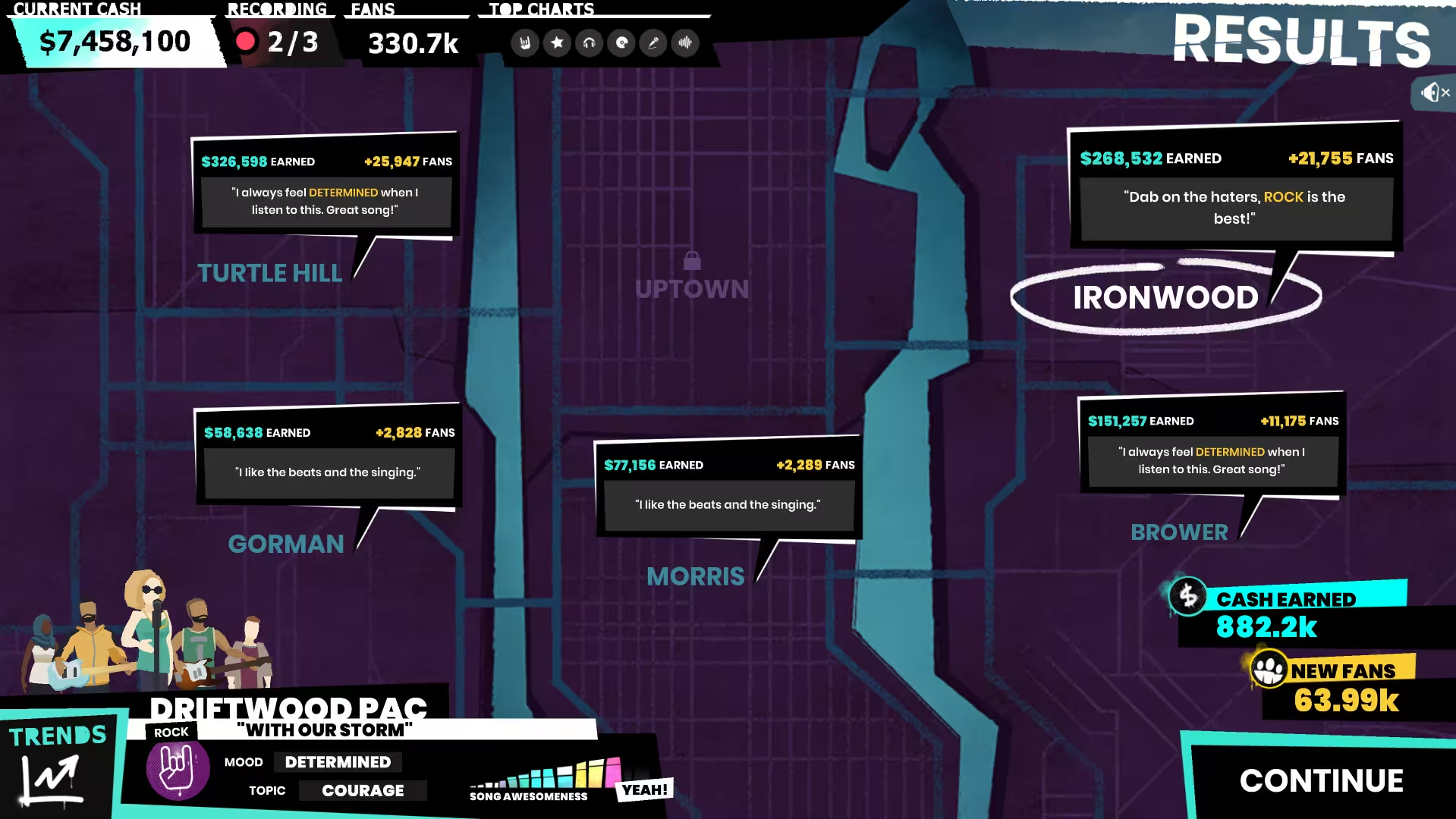
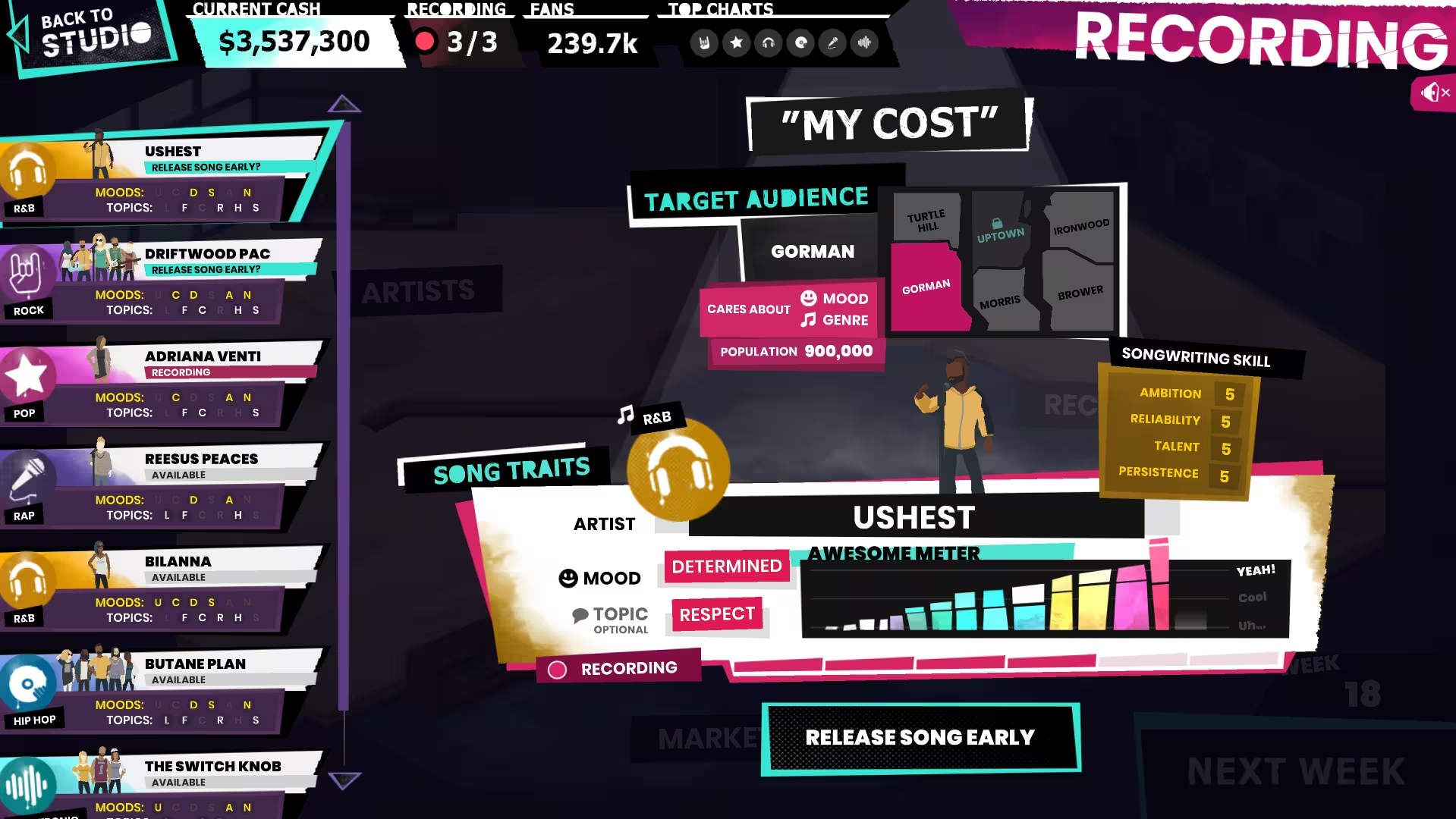
Beats Empire is a turn-based computational thinking and data analysis game developed for Columbia University and delivered through web browsers. Players run a music studio and record label, using market data from a fictional city to guide business decisions.
Beats Empire is a turn-based computational thinking and data analysis game developed for Columbia University and delivered through web browsers. Players run a small music studio and record label, using market data from a fictional city to guide business decisions. By analyzing market trends and applying computational thinking, players learn to manage their label through data-driven choices in an interactive music industry simulation.
Data Literacy, Computational Thinking, Market Analysis, Data Visualization


Review data about musical preferences across different boroughs.
Use trends and insights to guide studio strategy.


Sign artists, book gigs, and record songs.
Fulfill requests using insights derived from data analysis.

Data literacy and computational thinking are increasingly important across disciplines. Beats Empire situates these skills within a familiar creative industry context, giving learners repeated practice using data to make informed decisions and evaluate outcomes.
If you’re exploring educational games, digital learning tools, or interactive simulations, Filament Games can help you design and build experiences that deliver measurable impact.
Start a project
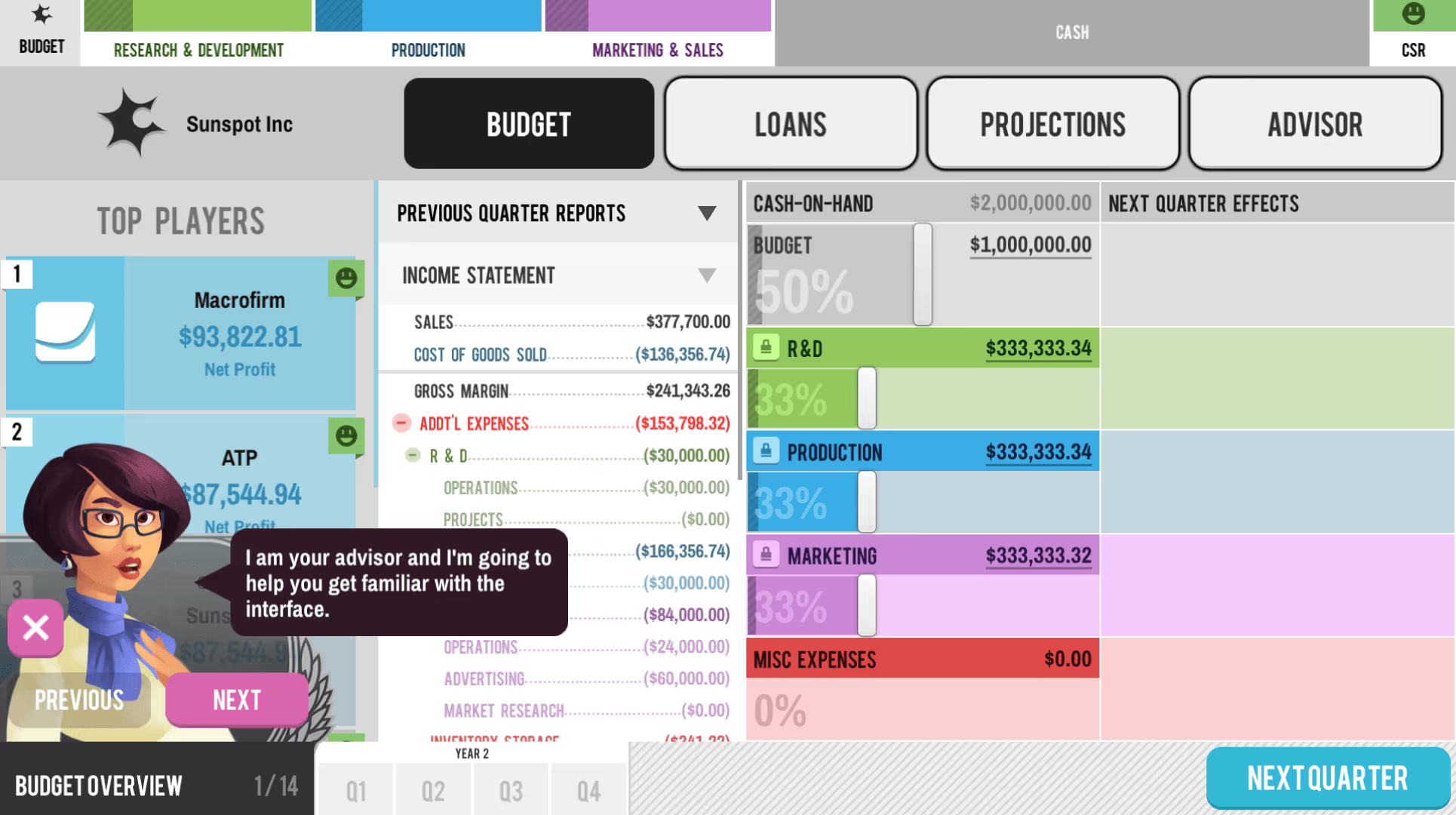
JA Titan is a financial literacy and business administration learning game developed with Junior Achievement that focuses on corporate decision making in a competitive market. Players take on the role of a company executive, making quarterly decisions about budgeting, production, and stakeholder priorities to improve business performance.
Explore →
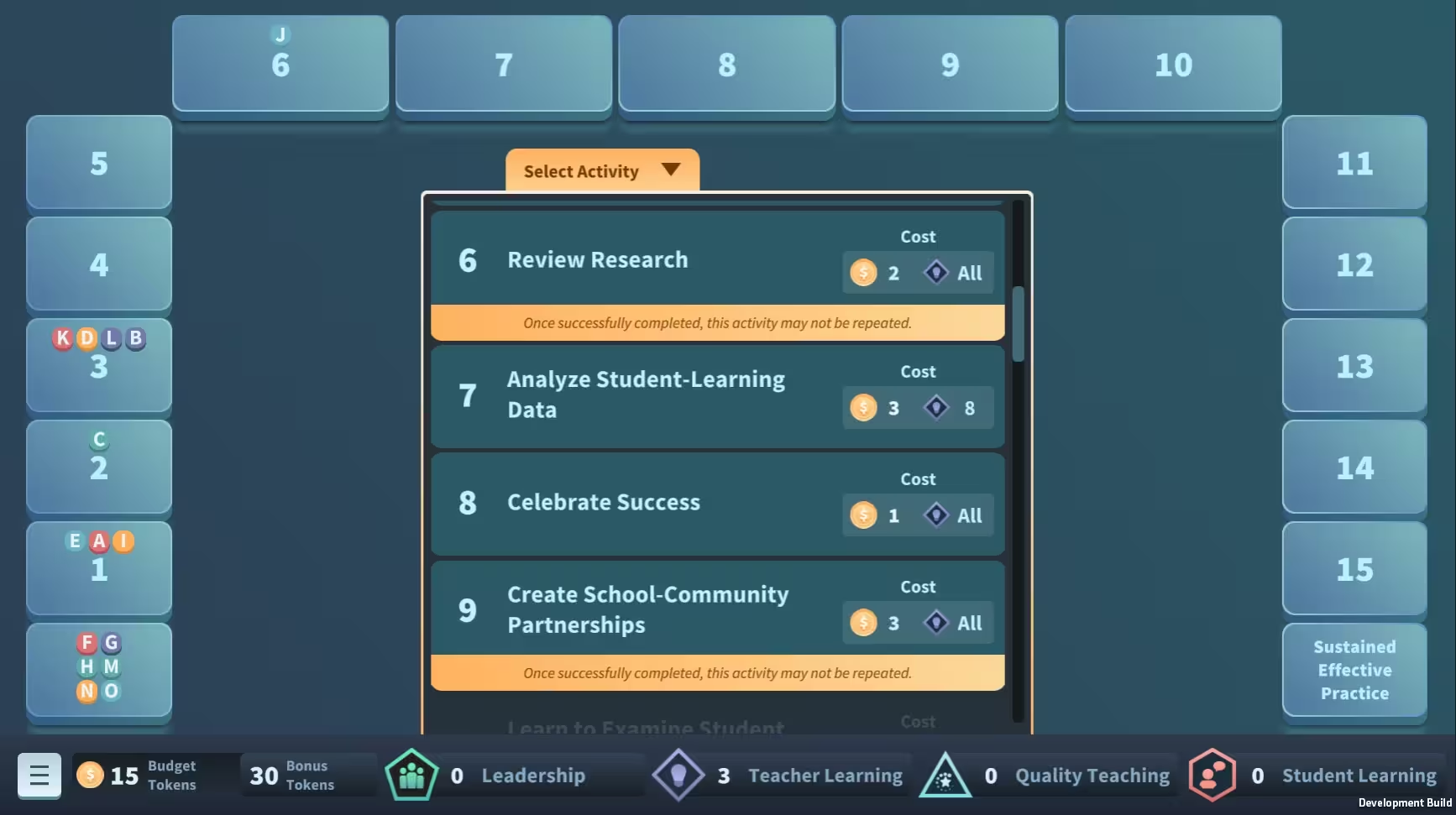
Leading Professional Learning is a professional development simulation developed with WestEd that focuses on preparing school leaders to design and implement effective teacher learning experiences. Players engage with realistic scenarios that reflect common school challenges.
Explore →