

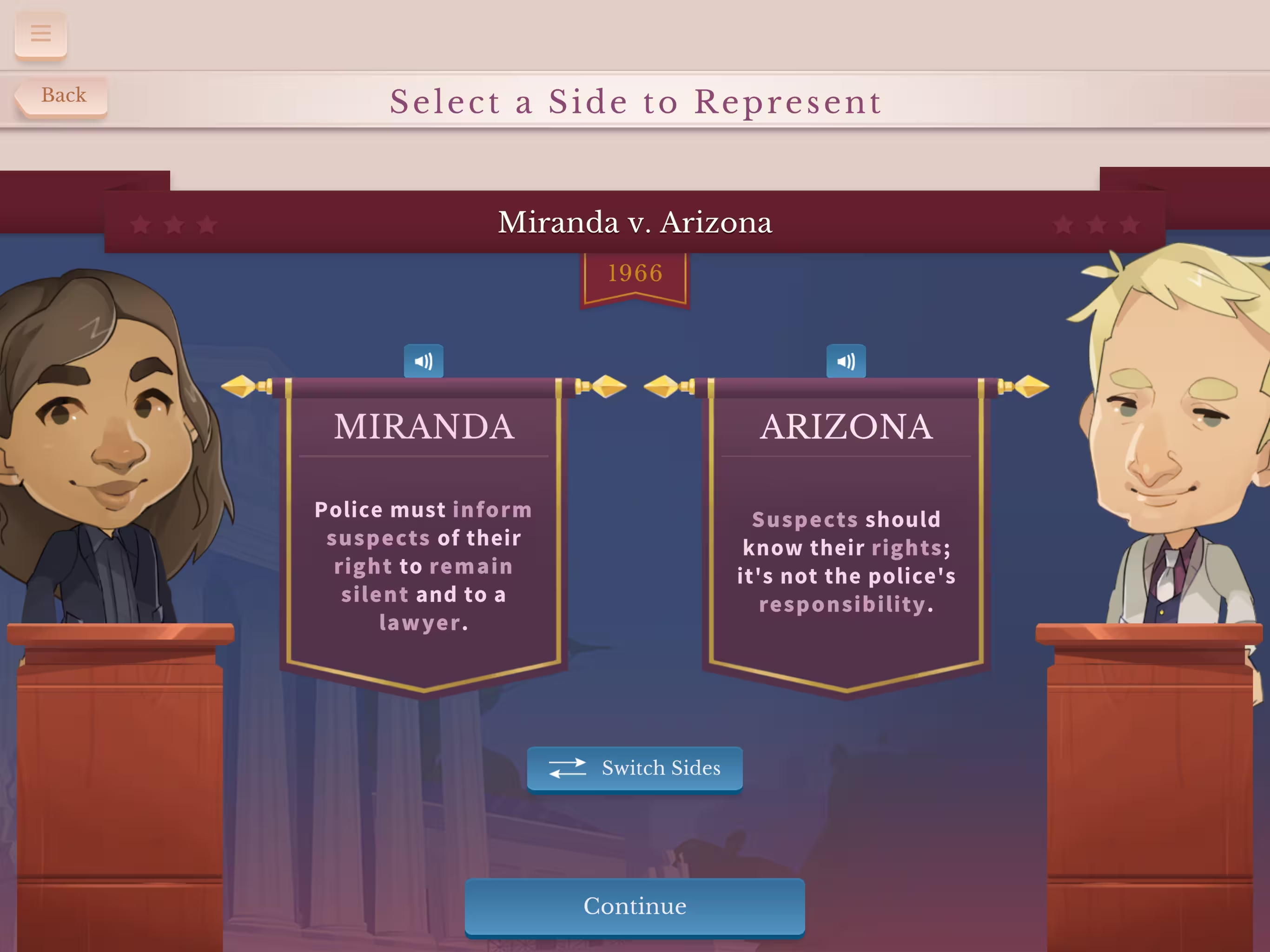
Argument Wars is a civics learning game developed with iCivics that puts learners in the role of an attorney arguing real Supreme Court cases. Using card-based mechanics, players face off against rival lawyers in landmark decisions to build persuasive skills and learn constitutional law.
Explore →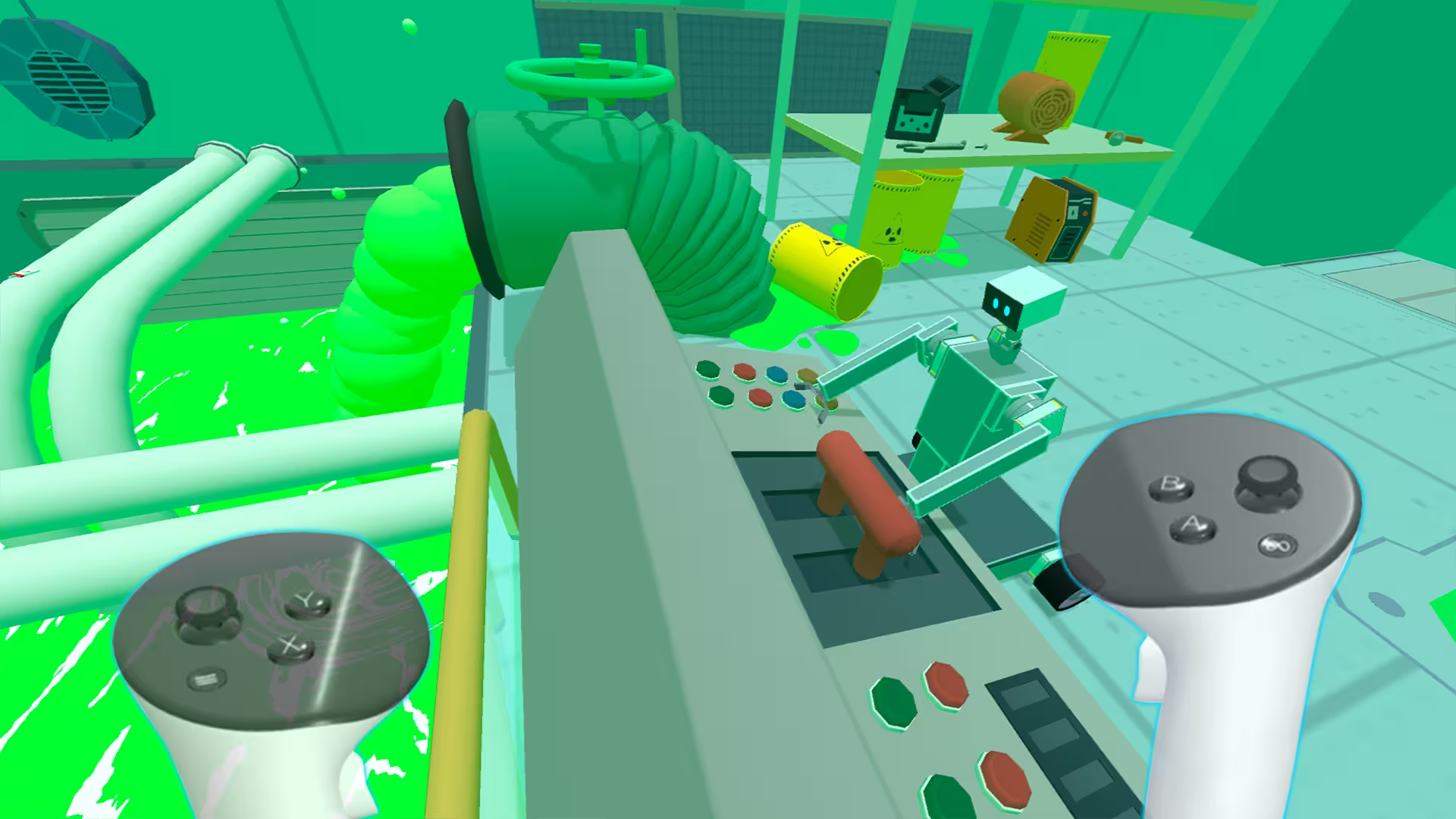
Some Assembly Required is a VR robotics sandbox game developed by Filament Games for Meta Quest 2 and 3. Players design and build robots with intuitive hands-on controls to complete mechanical challenges and explore a secret-filled warehouse.
Explore →Almost every company has a sustainability pledge. Far fewer have a good answer for the harder question: how do you get thousands of employees to actually change the way they work? A compliance module confirms that everyone finished the training, but the systems thinking that resource management, supply chains, and energy use demand takes more than a completion screen. That's where game-based learning comes in. A well-built simulation gives people a safe place to test a hunch, make a bad call, and watch it play out over a decade of simulated time, with no real-world consequences attached. The following research offers three perspectives on how immersive mechanics, AI, and interactive visualization are turning sustainability training into something you can actually measure.
Leaders want the data before they green-light a training budget. An analysis in Frontiers in Education looked at what happens when you pair artificial intelligence with a gamified learning environment, and the short version is: a lot more precision than a slide deck can offer. Adaptive platforms use machine learning to tailor sustainability challenges to how each employee actually performs and what they say they care about. And because these systems can hook into real building infrastructure, the results show up in the facilities data. One documented rollout saw a 27% drop in energy use and a 34% jump in recycling rates. Generative AI adds another layer, spinning up scenarios that reflect the specific geographic and economic realities a given team works in. The upshot is that a vague commitment turns into a number you can point to in the facilities report.
Some of the most consequential sustainability decisions play out over timelines no one gets to experience firsthand. SIMA-Play, a hybrid strategy game recently demonstrated by researchers, takes that on directly: players manage a ten-hectare forest parcel across a simulated sixty-year horizon, weighing quick economic wins against long-term ecological health. The game introduces realistic market swings and natural disturbances, pushing players to decide when to buy insurance, when to harvest, and when to hold. At the end of a session, the system feeds every decision into a quantitative growth model and returns hard metrics: tree biomass carbon, net present value, and so on. Interactive visualizations then translate all of that into feedback a player can read and digest. It's the kind of consequence you'd normally need a whole career to witness, delivered in a single sitting.
Whether a sustainability initiative sticks usually comes down to how it's structured. A 2026 study in Frontiers in Psychology examined how gamified HR practices shape employee behavior across a range of industries, and the pattern was clear: goal-setting, friendly competition, and steady feedback loops meaningfully boost engagement. The driver is basic psychology: autonomy, competence, and a sense of connection to the team. The strongest effects showed up when the game elements matched what individuals personally found motivating and were backed by a genuinely supportive workplace. Get that combination right, and the mechanics become a support system for the behavior change you're after, long after the novelty wears off.
~
Custom simulations give working professionals a place to practice their systems thinking by making decisions and living with the results, priming your workforce to meet ESG requirements. Turn your sustainability data into a playable, consequence-rich scenario, and operational competency becomes something you can watch people build. Curious what that could look like for your team? So are we. Let's talk!
Best practices for preventing motion sickness while maximizing learning outcomes.
Best practices for preventing motion sickness while maximizing learning outcomes.
Get the latest Game-Based Learning Review content delivered to your inbox, including new articles, videos, and industry insights.