
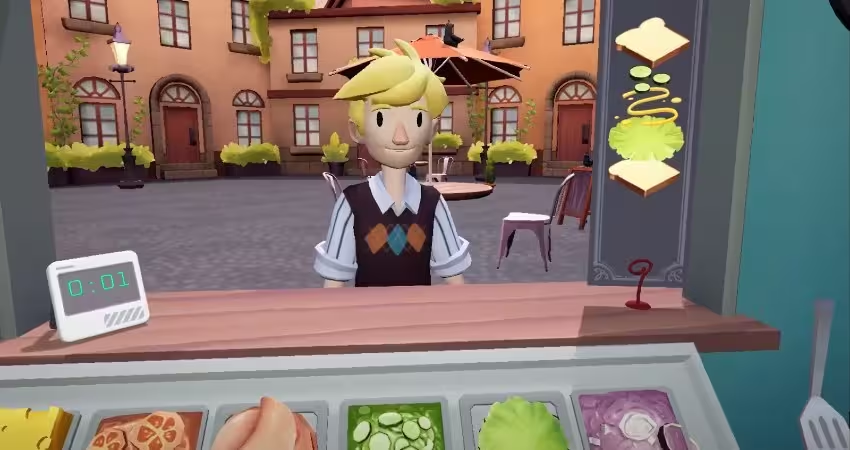
Mindful Market™ is a therapeutic VR learning experience developed with Penumbra, Inc. focusing on executive function and resilience. Players complete structured daily tasks to rebuild working memory and cognitive skills.
Explore →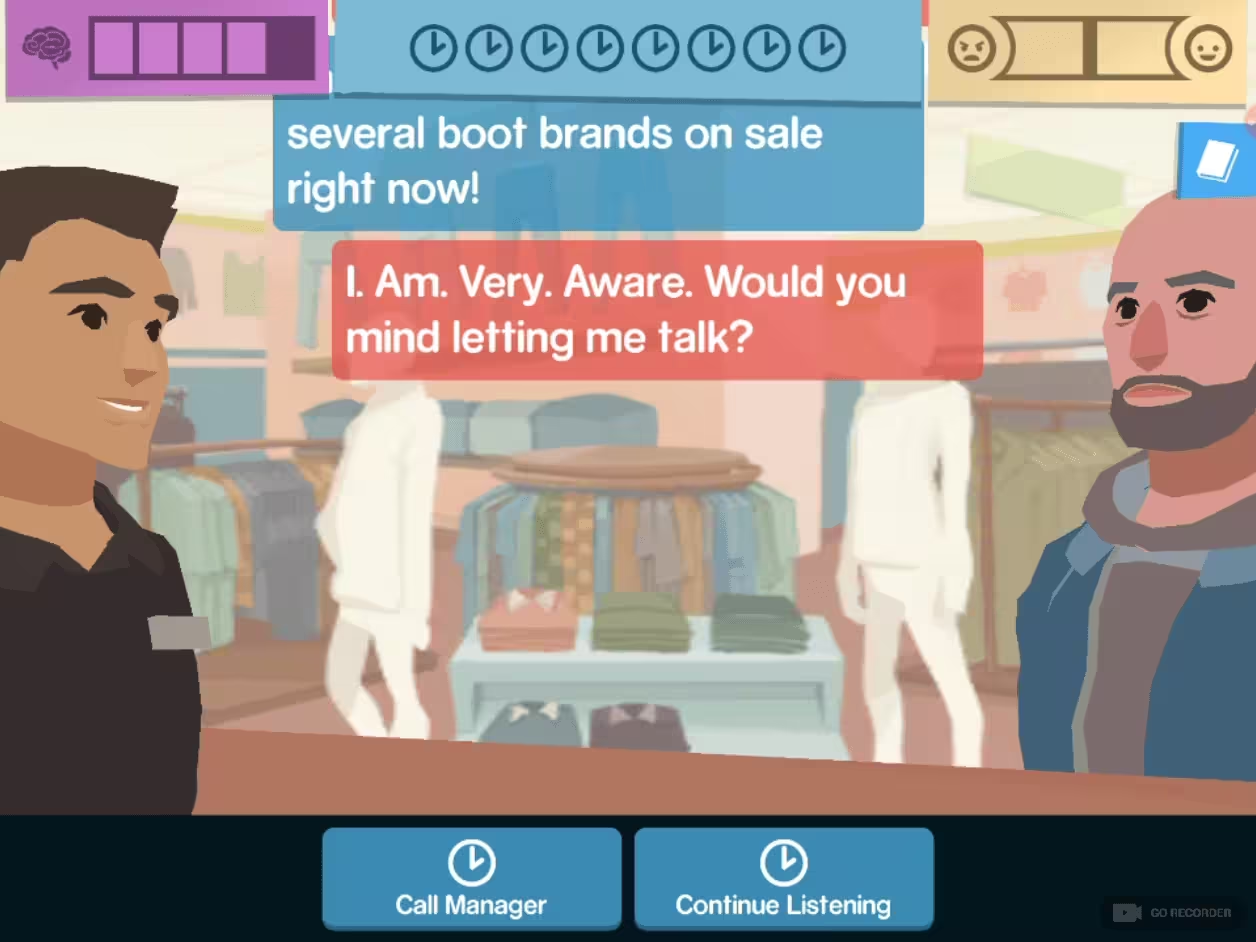
MSI Retail Sim is a workforce learning game developed with McKinsey Social Initiative focusing on retail customer service. Players navigate store scenarios to improve satisfaction and business performance.
Explore →Clinical education depends on practice, and every health sciences program strives to give students enough supervised repetition before they care for patients. Simulation centers and clinical placements remain essential to that work, and serious games can extend practice to any device a student carries. Medical simulation games and patient simulators let nursing and medical students take histories and manage deteriorating patients as often as they need, with feedback built into every decision. Below are five recent studies that show what these tools can do for your healthcare education program.
As serious games become more common in nursing programs, educators and developers need a clear picture of where these games are used. Fenglin Shao and colleagues screened 6,078 records for a scoping review in JMIR Serious Games and included 24 studies, finding that the games appeared mainly in fundamental skills training and adult nursing courses. That concentration points to a clear opportunity for games that support specialty coursework and the clinical reasoning students develop later in a nursing program.
Liyuan Xu and colleagues at Quzhou People's Hospital in China ran a two-year randomized controlled trial, published in JMIR Medical Education, comparing traditional case-based teaching with a system that presents AI-driven virtual patients in 3D clinical scenarios. Students worked through each case from history taking to diagnosis and treatment, and the experimental group scored significantly better on the system's clinical thinking test. A patient simulator built around the full diagnostic sequence gives learners practice with the reasoning process itself, which is the skill they need when they hit the ground running in the patient ward.
Improper catheterization technique can lead to catheter-associated urinary tract infections, so nursing students need repeated practice with prevention protocols. Researchers at Gazi University in Ankara, led by İnci Mercan Annak, gave 38 of 75 nursing students seven days of access to a virtual simulation game on infection prevention in a randomized controlled trial published in Nursing Open. Post-test knowledge and skill scores were significantly higher in the game group. A week of on-demand access allowed students to rehearse the procedure on their own schedule, a format that complemented lab time without competing for it.
A randomized controlled trial in Nurse Education in Practice compared a mobile serious game and interactive video-based instruction against a control group for teaching parenteral drug administration (drugs administered outside of the digestive tract) to nursing students. Students in the game group played on their phones over two weeks until they earned at least one gold medal for each application, and both interventions significantly improved psychomotor skill performance compared with the control group. A mastery target like a gold medal on every application turns repetition into a goal students pursue on their own, which is how a mobile game multiplies practice time.
Lauren Medwell, Tim Old, and colleagues at Great Western Hospital in Swindon compared VR and in-person sepsis simulation for 32 final-year medical students in a randomized comparative pilot study. Performance on a septic shock assessment scored by blinded reviewers showed no statistically significant differences between groups, and students who trained only in VR were more likely to recognize the need for critical care. Comparable performance on an integrated clinical scenario makes headset-based simulation a strong option for increasing how often your learners rehearse emergencies.
~
These studies span nursing and medical programs in several countries, and the strongest results seem to come from designs that gave learners more repetitions with immediate feedback. The Great Western Hospital team also credits structured debriefing as a critical path to outcomes in both VR and in-person simulation, a reminder that the most effective medical games pair play with guided reflection. Ready to give your learners more time with patients before they meet their first one? Let's talk.
Best practices for preventing motion sickness while maximizing learning outcomes.
Best practices for preventing motion sickness while maximizing learning outcomes.
Get the latest Game-Based Learning Review content delivered to your inbox, including new articles, videos, and industry insights.