

Neighborhood Good is a civics learning game developed with iCivics that introduces students to community-level civic engagement. Players select issues within a fictional neighborhood, talk with residents to understand different perspectives, and develop plans of action using available community resources.
Explore →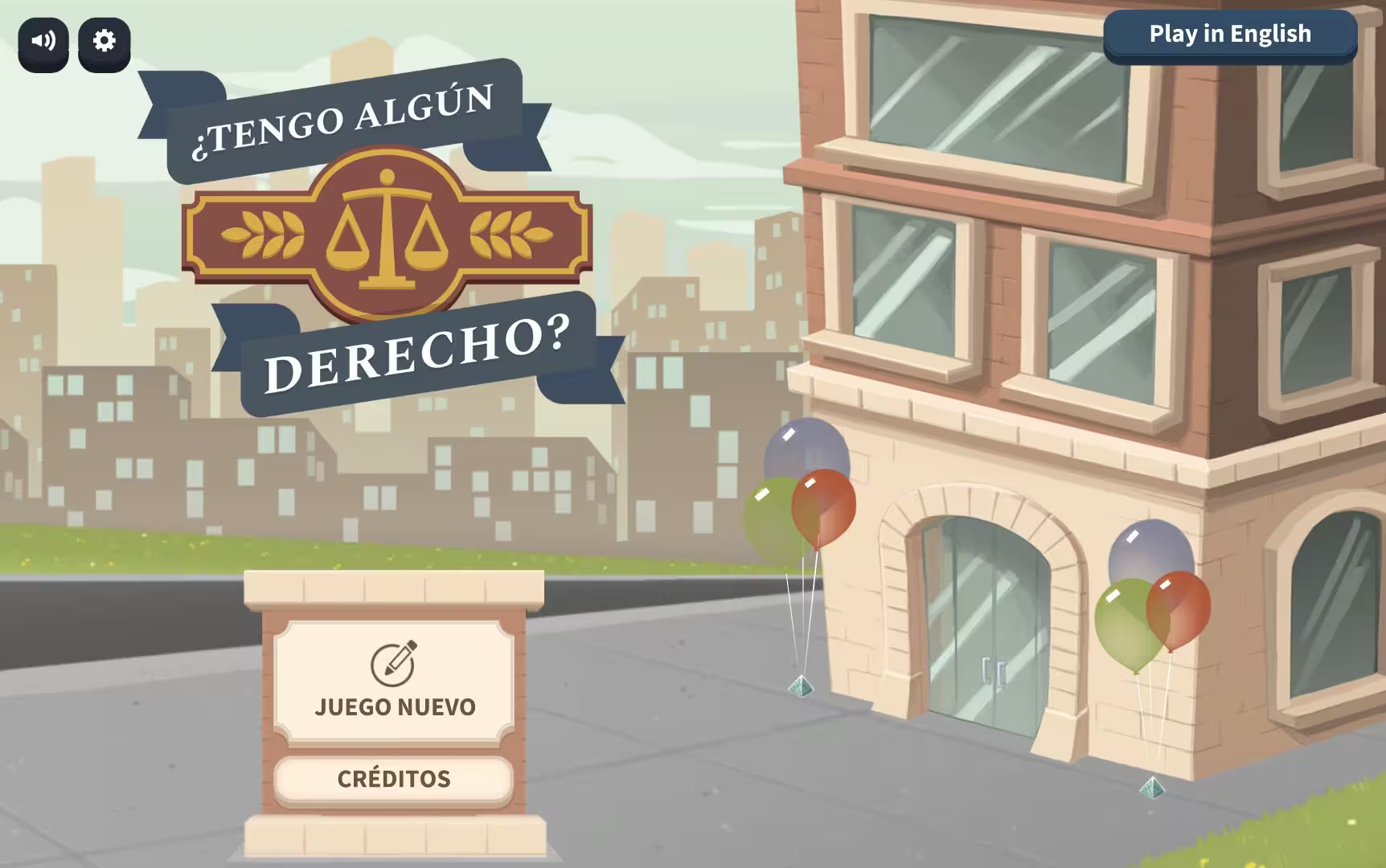
Do I Have a Right? is a civics learning game developed with iCivics that teaches constitutional law through interactive legal scenarios. Players run a law firm, determine whether clients’ rights have been violated, and argue cases based on the Bill of Rights.
Explore →Welcome in everyone, it’s time for another monthly roundup of the latest developments in the grand, society-wide technological experiment we call artificial intelligence. This is always an interesting round up to generate because we write them retrospectively for the preceding month, which gives us a chance to try and synthesize the theme of that month with the benefit of some amount of hindsight. That being said – go out and search “AI and education” on your favorite news search engine. You’ll find that there are dozens of articles going out every single day! Unlike any other topic I’ve covered, the conversation around AI is relentless and loud and overwhelmingly prolific. With that context in mind, it’s no surprise to me that this month’s roundup focuses on clarity. AI users are looking for guidelines, and AI companies and researchers are working hard to benchmark where users are currently at with the technology. Read on for the details!
New data from the Pew Research Center provides a clear baseline for how the youngest generation of learners is interacting with generative tools. While headlines often focus on academic dishonesty, the research suggests a more nuanced reality: students are increasingly using AI as a cognitive partner for brainstorming and concept clarification. However, a significant gap remains in formal instruction; many teens report that while they use these tools personally, they receive little to no guidance from their schools on how to use them ethically or effectively. This lack of formal onboarding highlights a critical need for structured AI literacy programs that meet students where they already are.
Anthropic’s latest AI Fluency Index offers a new framework for understanding AI users. Rather than measuring simple usage, the index categorizes users by their ability to prompt effectively, verify outputs, and understand model limitations. For educators, the index serves as a warning: access does not equal fluency. The research indicates that without intentional intervention, a new digital divide is forming based on who knows how to direct these new tools. This benchmark provides institutional leaders with a much-needed metric for assessing the success of their professional development efforts.
Reporting from Education Week highlights a growing movement of educators taking their concerns to the national stage. In recent testimony, teacher representatives emphasized that the velocity of AI development has left them feeling unequipped to protect student data and maintain academic integrity. The plea to lawmakers was for clear, enforceable federal guardrails that prioritize student privacy and provide funding for AI-specific training. This shift from exploration to advocacy suggests that the teaching profession is no longer content to wait for industry-led solutions.
A deep dive from The New York Times explores how the sheer volume of AI integration is forcing a fundamental shift in classroom culture. The article profiles schools that have moved past the initial panic phase and are now focused on long-term adaptation. A key takeaway is the resurgence of oral exams and in-class, handwritten assignments as a way to verify human understanding. By creating these human-only spaces, educators are paradoxically finding more clarity on where AI adds the most value: in the preparatory and administrative phases of learning, rather than the final demonstration of mastery.
The National Science Foundation (NSF) has announced a new wave of funding specifically targeted at the intersection of AI, cybersecurity, and educational ethics. This development underscores the institutional push for technical clarity. These grants are aimed at developing explainable AI for the classroom, emphasizing tools that show the logic and sources behind the answers they provide. For the learning community, this research is vital for building the trust and safety that previous reports from the World Economic Forum and Brookings have identified as non-negotiables for successful integration.
–
Considering all of these stories, the need for stable, educator-led frameworks has never been more apparent. Whether it’s through new competency benchmarks like the AI Fluency Index or the push for federal guardrails, the focus right now is to replace the noise with actionable clarity. Looking for clarity on where AI fits in your educational games portfolio? Let’s talk.
Best practices for preventing motion sickness while maximizing learning outcomes.
Best practices for preventing motion sickness while maximizing learning outcomes.
Get the latest Game-Based Learning Review content delivered to your inbox, including new articles, videos, and industry insights.