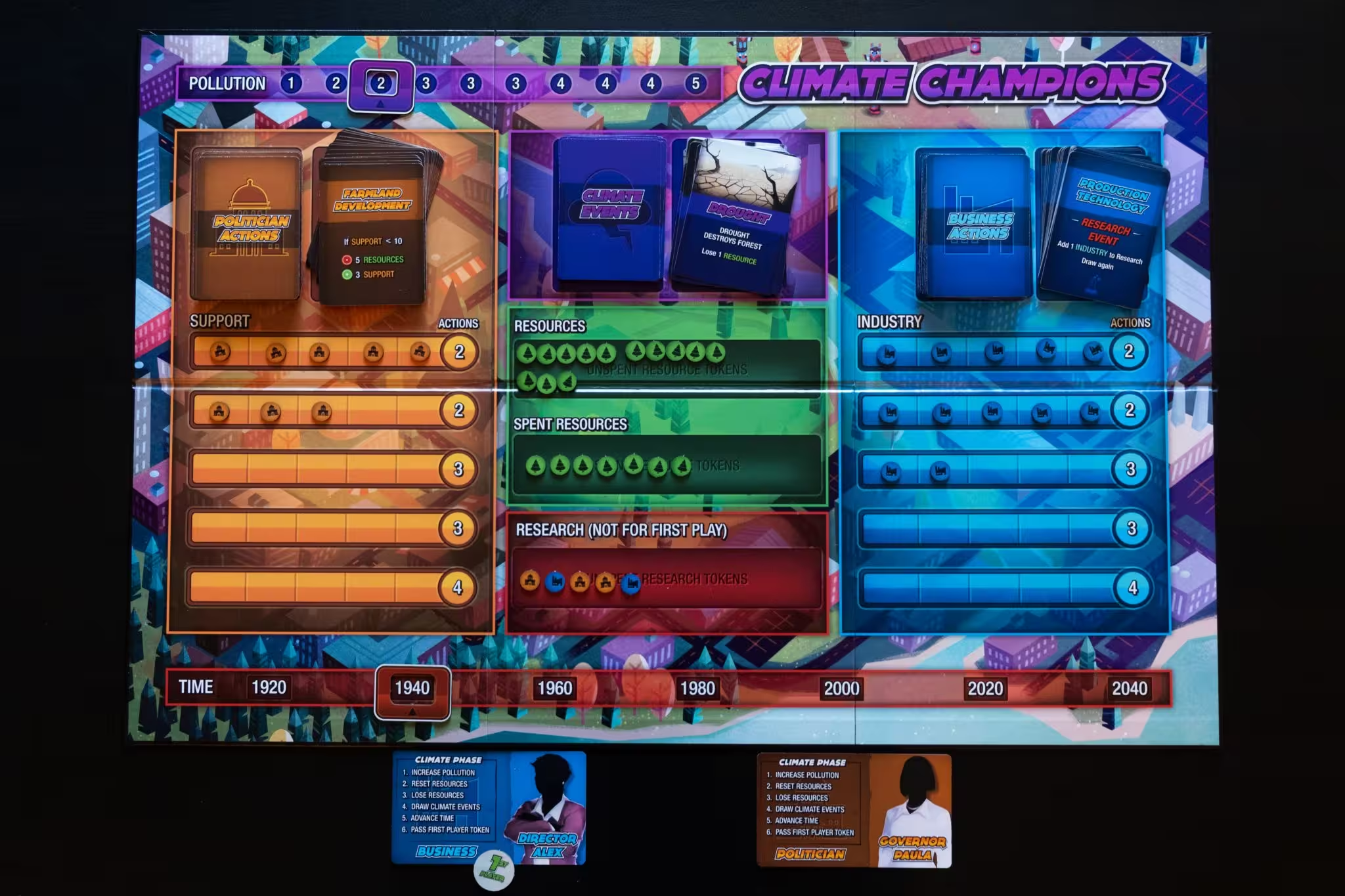
Climate Champions is a climate science learning board game developed with Educational Service District 101 that focuses on the environmental and economic impacts of climate change. Players collaborate to grow Washington State’s economy while managing resources.
Explore →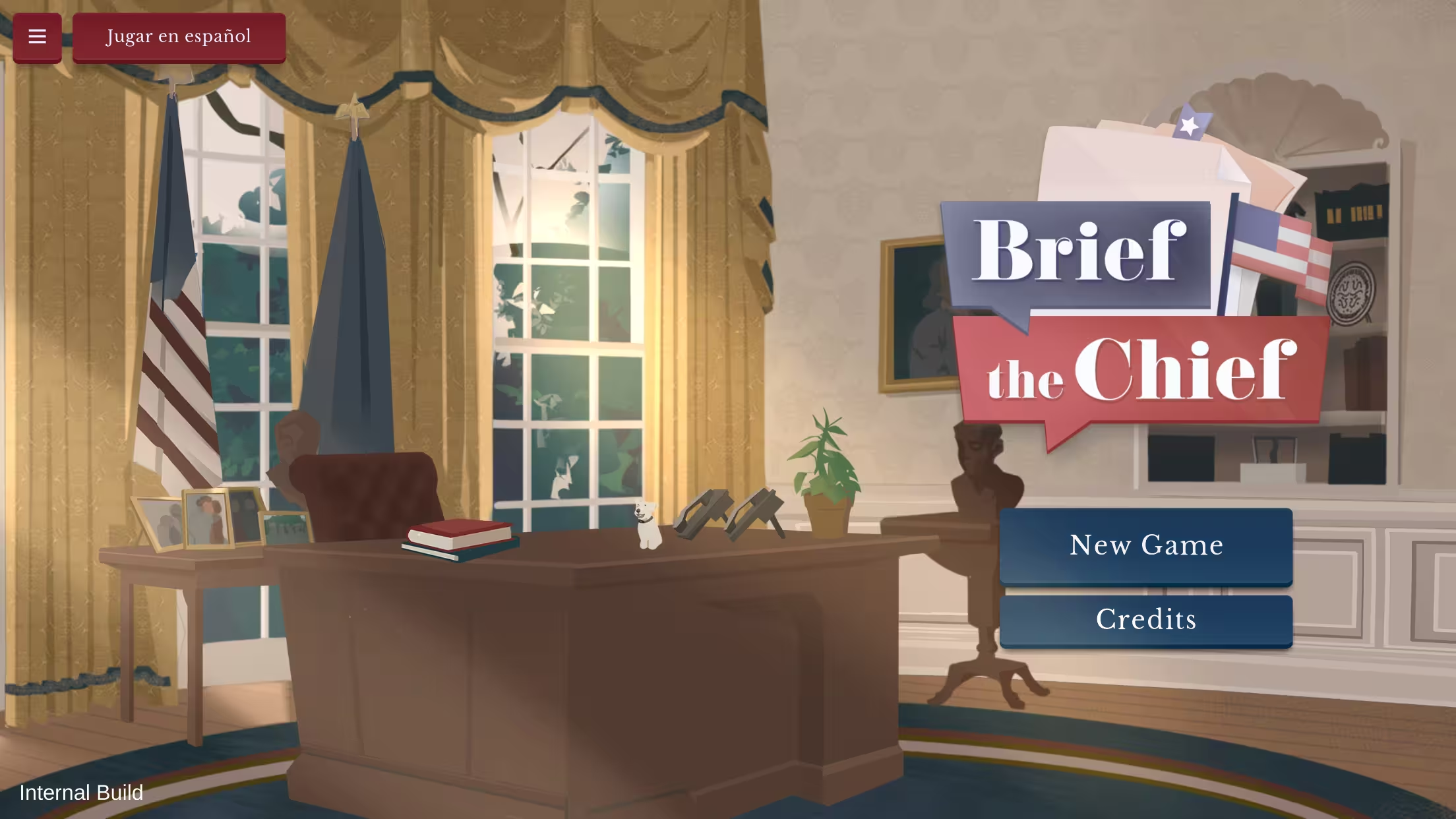
Brief the Chief is a history and civics learning game developed with iCivics that challenges students to advise U.S. presidents through major historical events. Players consult with White House figures and use evidence-based reasoning to deliver presidential briefings to Presidents Jefferson, Lincoln, and Johnson.
Explore →Fall is in full swing, and so is the conversation around AI in education 🍂 With the school year now several weeks old, districts and institutions everywhere have moved from summer planning into day-to-day practice. Microsoft's latest survey finds that nearly everyone in education has tried AI, even as most students and about half of educators say they've never had formal training to use it. Closer to home, our own Madison school district is holding off on student access while it prepares staff for a rollout next year. The rest of this month's roundup spans everything from classroom pilots to global policy. Read on for the latest findings in AI and learning!
Microsoft's third annual AI in Education Special Report, covered by EdTech Magazine, surveyed more than 3,000 students, educators, and education leaders worldwide, and about 9 in 10 say they've already used AI for school. The report also surfaces a gap in perceived support, with 4 in 5 leaders describing their institution's AI guidance as clear while half of students and teachers say that guidance is neutral or nonexistent. Although 7 in 10 leaders believe at least half their students and teachers have received AI training, 77% of students and 53% of educators report no formal training at all, and respondents asked for training on a monthly or quarterly rhythm. Ongoing, hands-on practice is the format that sticks, and it's why we design our learning games around repeated, active play.
NPR's Lee V. Gaines reports that schools across the country are experimenting with AI well ahead of the evidence, while states and the federal government have largely left those decisions to districts. In Dayton, Ohio, a small group of students spent several weeks last school year in daily conversation with a social-emotional learning chatbot, and a consultant who helped evaluate the pilot found enough positive signals to keep testing. A recent Stanford review of more than 800 academic papers found that research on how AI can help students remains very limited, though some studies suggest carefully designed tools show more promise than general-purpose chatbots. Tools built around a specific learning goal are far easier to evaluate, because you know what success looks like before a student ever logs in.
The Madison Metropolitan School District, right here in Filament's hometown, is keeping AI tools like ChatGPT and Google's Gemini blocked or disabled on student Chromebooks this school year, according to the Cap Times. The district likely took inspiration from New York City and Los Angeles, the nation's two largest systems, which moved to largely restrict student-facing AI at the end of the summer. Madison's approach is part of a longer plan, as a district task force has spent about two years training staff in appropriate AI use and is now developing a plan to roll out AI for students next school year. A staff-first rollout gives teachers the confidence to guide students well once the tools arrive, and we're intrigued to see where it goes from here!
Ahead of Digital Learning Week 2026, UNESCO released a discussion paper on sustaining education as a common good in the age of AI, along with six background papers on specific governance questions, including whether there is a right age for AI in education and how to decide when a tool is safe enough to scale for learners. UNESCO is inviting experts, academics, government officials, and other stakeholders to review the papers and send comments to aied@unesco.org by October 15, 2026, and the feedback will inform a compilation of policy briefs releasing at Digital Learning Week 2027. If your organization has a perspective on how AI should serve learners, this consultation is a chance to inform international guidance directly, so get your comments in before the deadline!
Writing for the Fast Company Executive Board, EDMO founder and CEO Ashish Fernando outlines how quickly American colleges are adding AI to their academic offerings in response to student interest and employer demand. The University of Florida now offers more than 200 AI courses across all 16 of its colleges. Nationally, the 2025 AI Degree Report counts 304 U.S. colleges and universities offering AI or AI-related degrees, with AI master's programs growing from 116 in 2022 to 310 in 2025. As AI fluency becomes an expectation in every profession, learners will need ways to practice applying it in context, and interactive simulations give them a low-stakes environment to build those skills before they reach the workplace.
~
These five stories come from very different corners of education, and each reflects a community working out its own answer on its own timeline. The research NPR highlighted points toward purpose-built tools with clear learning goals, designed from the start so their outcomes can be measured. It just so happens that we’ve been doing exactly that for more than 20 years, pairing commercial game development practices with learning science to build experiences that put students in the active role. The right learning game can give your learners meaningful practice and give you the evidence to show it works. Ready to build something your stakeholders can measure? Let's talk!
Best practices for preventing motion sickness while maximizing learning outcomes.
Best practices for preventing motion sickness while maximizing learning outcomes.
Get the latest Game-Based Learning Review content delivered to your inbox, including new articles, videos, and industry insights.