

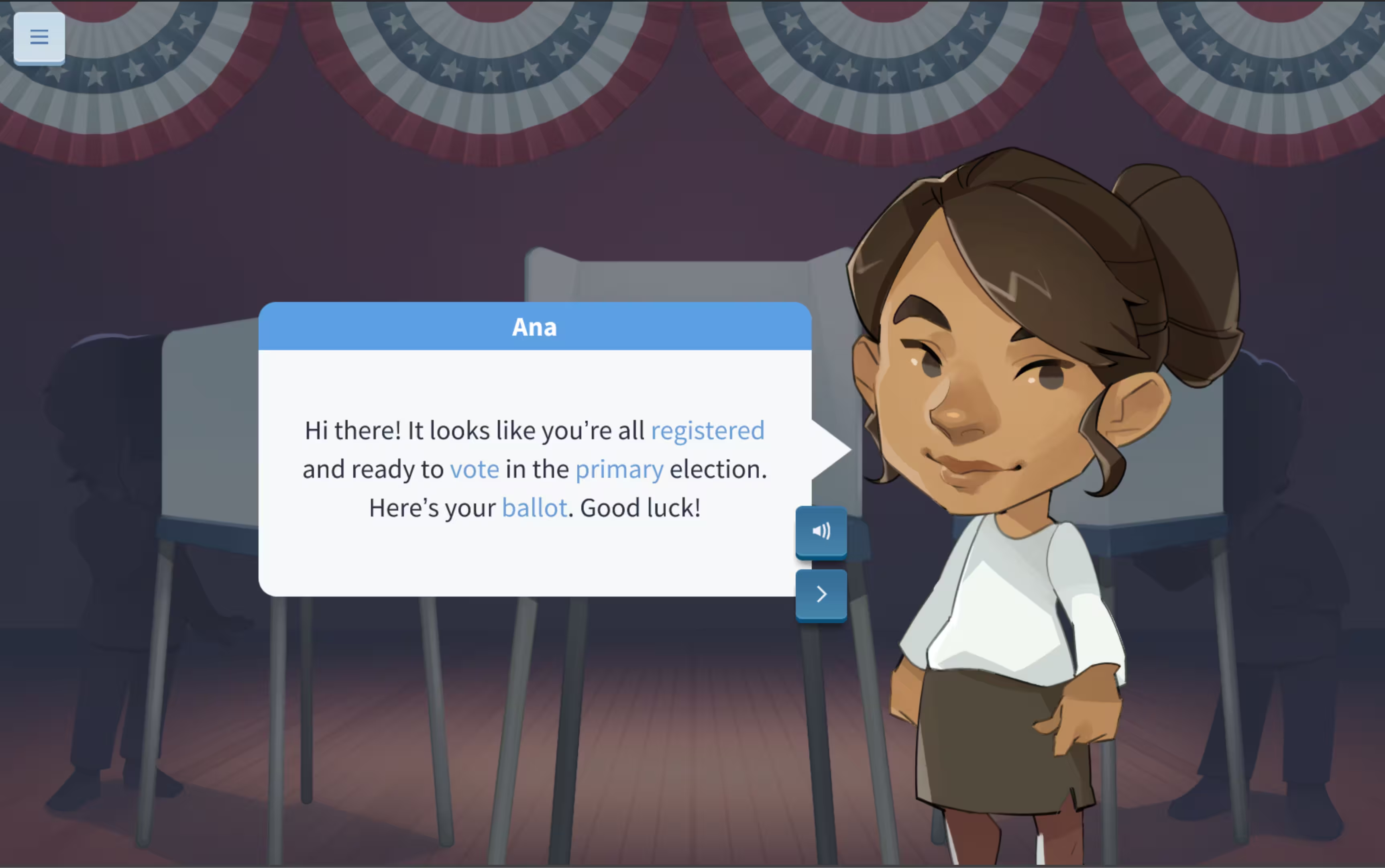
Cast Your Vote is a civics learning game developed with iCivics that teaches what it means to be an informed voter. Players explore issues, evaluate candidates through debates and media sources, and collect information to make reasoned voting decisions.
Explore →
Super Seasons Snapshots is a life science learning game developed with Twin Cities PBS that focuses on seasonal changes and their effects on ecosystems. Players observe environments across different times of year and capture photographs to document shifting conditions.
Explore →Interest in VR training keeps growing across education and workforce programs, and the first budget question is usually the price of a headset. Hardware is the most visible line item, though content development and device management also shape the total cost of ownership over the life of a program. The sources below cover the full cost picture and the learner volumes where VR delivers its strongest return, so you can plan your next immersive project around the full cost of ownership.
Forrester Consulting built a composite organization for a Total Economic Impact study commissioned by Meta, drawing on interviews with organizations that train on Meta Quest, including education providers. The composite deployed 1,000 Quest 3 headsets to train 3,300 of its 10,000 employees, with costs that included an external development partner, internal staff time, and ongoing iteration of the training content alongside hardware. Over three years, the model projected $6.1 million in benefits and a 219% return on investment. The cost structure is the most practical takeaway for your planning, since it places content development and upkeep beside hardware on the ledger.
PwC's study of VR soft skills training found that VR content can require up to 48% more initial investment than comparable classroom or e-learning courses. VR reached cost parity with classroom training at 375 learners, and at 3,000 learners it was 52% more cost-effective than the classroom. Learners also completed VR training up to four times faster than classroom training, which reduces the time cost of every session. An estimate of how many learners your program will serve over its lifetime is the single most useful input for your cost model.
Michael Bumbach, Beth Culross, and Santanu Datta used budget impact analysis to compare manikin-based high-fidelity simulation with VR simulation in nursing education, publishing their case analysis in CIN (Computers, Informatics, Nursing). VR simulation was 40% less expensive overall and required 22% less total time to deliver. Simulation programs invest heavily in faculty time and dedicated facilities, so a modality that shortens delivery compounds its savings with every cohort.
Debra Kiegaldie and Louise Shaw compared four immersive VR simulation modules with four face-to-face group simulations for 675 nursing students at a training institute in Melbourne, publishing their findings in BMC Nursing. Students in the VR group achieved significantly better knowledge outcomes and equivalent scores on practical clinical exams, and the researchers found VR simulation to be more cost-effective. Equivalent practical outcomes at a lower cost make VR a strong fit for programs that serve large cohorts.
~
Learner volume and content strategy are the two decisions with the greatest influence on what VR training costs over its lifetime. Hardware prices and platform offerings will keep changing, and a program designed for scale and portability holds its value through those changes. On Monday, we'll look at learning analytics and game-based assessment, the tools that help you measure the return on that investment. Ready to plan an immersive program built to deliver value for years? Let's talk.
Best practices for preventing motion sickness while maximizing learning outcomes.
Best practices for preventing motion sickness while maximizing learning outcomes.
Get the latest Game-Based Learning Review content delivered to your inbox, including new articles, videos, and industry insights.