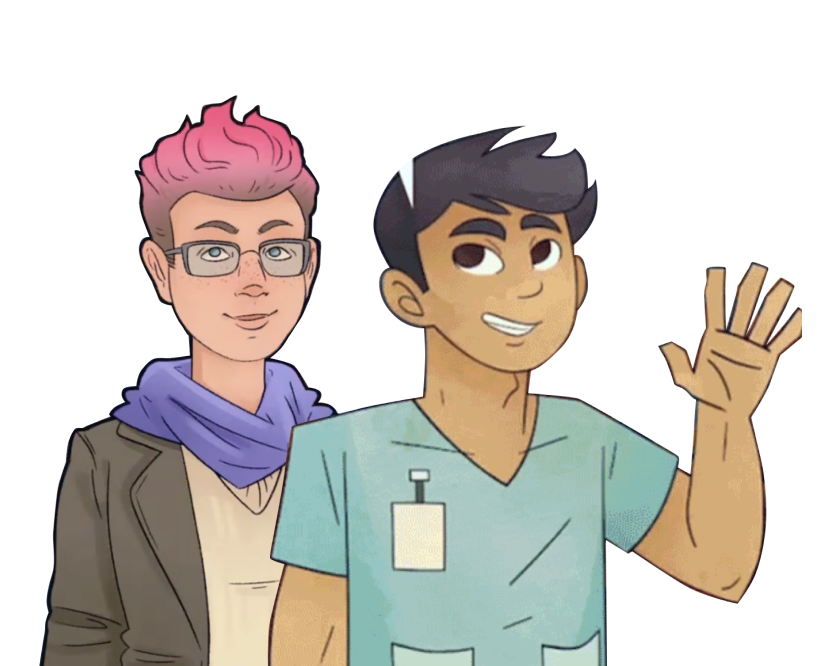

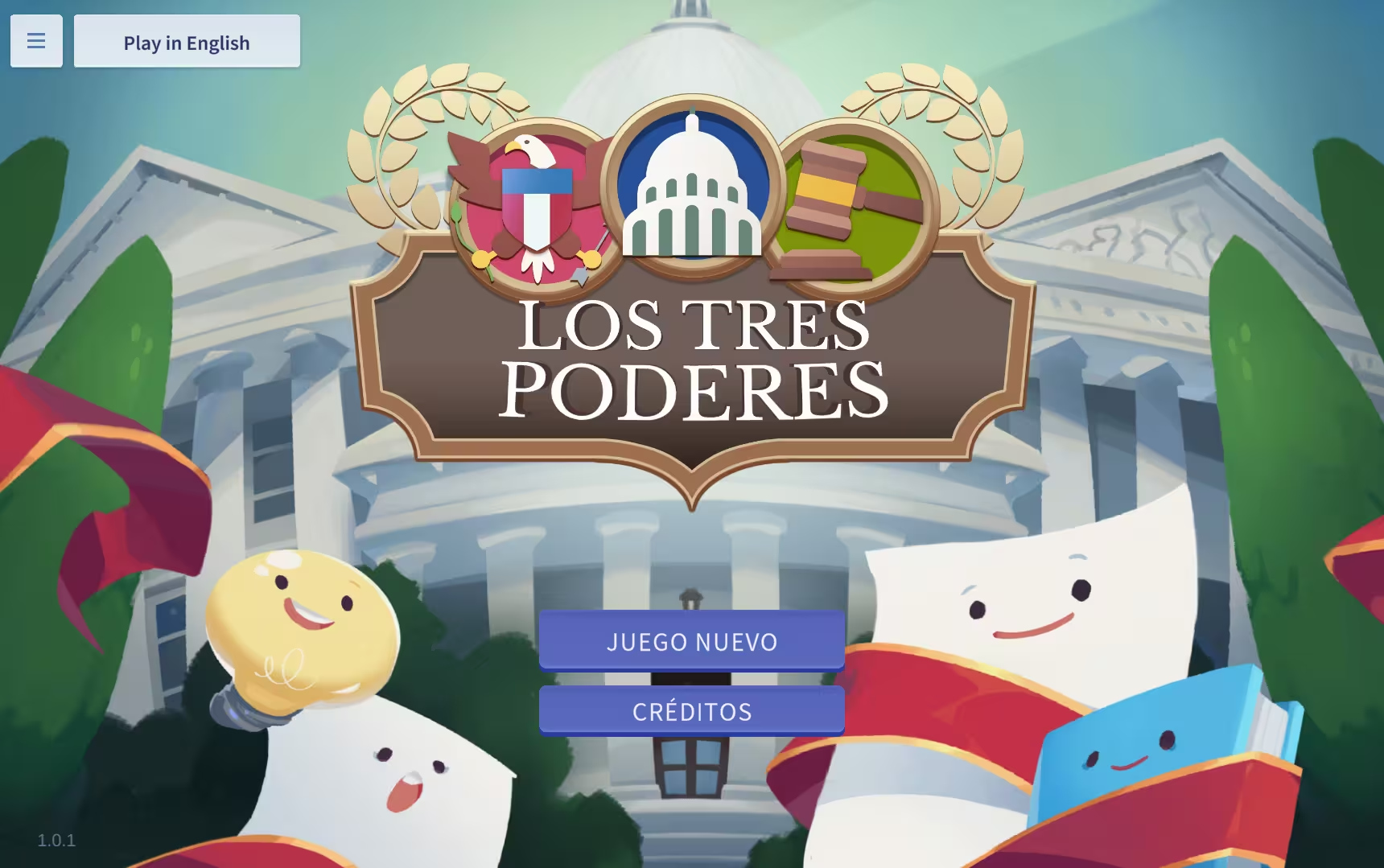
Branches of Power is a civics learning game developed with iCivics that allows players to take control of all three branches of the United States government. Players manage executive, legislative, and judicial responsibilities to understand how laws are created, applied, and reviewed within the federal system.
Explore →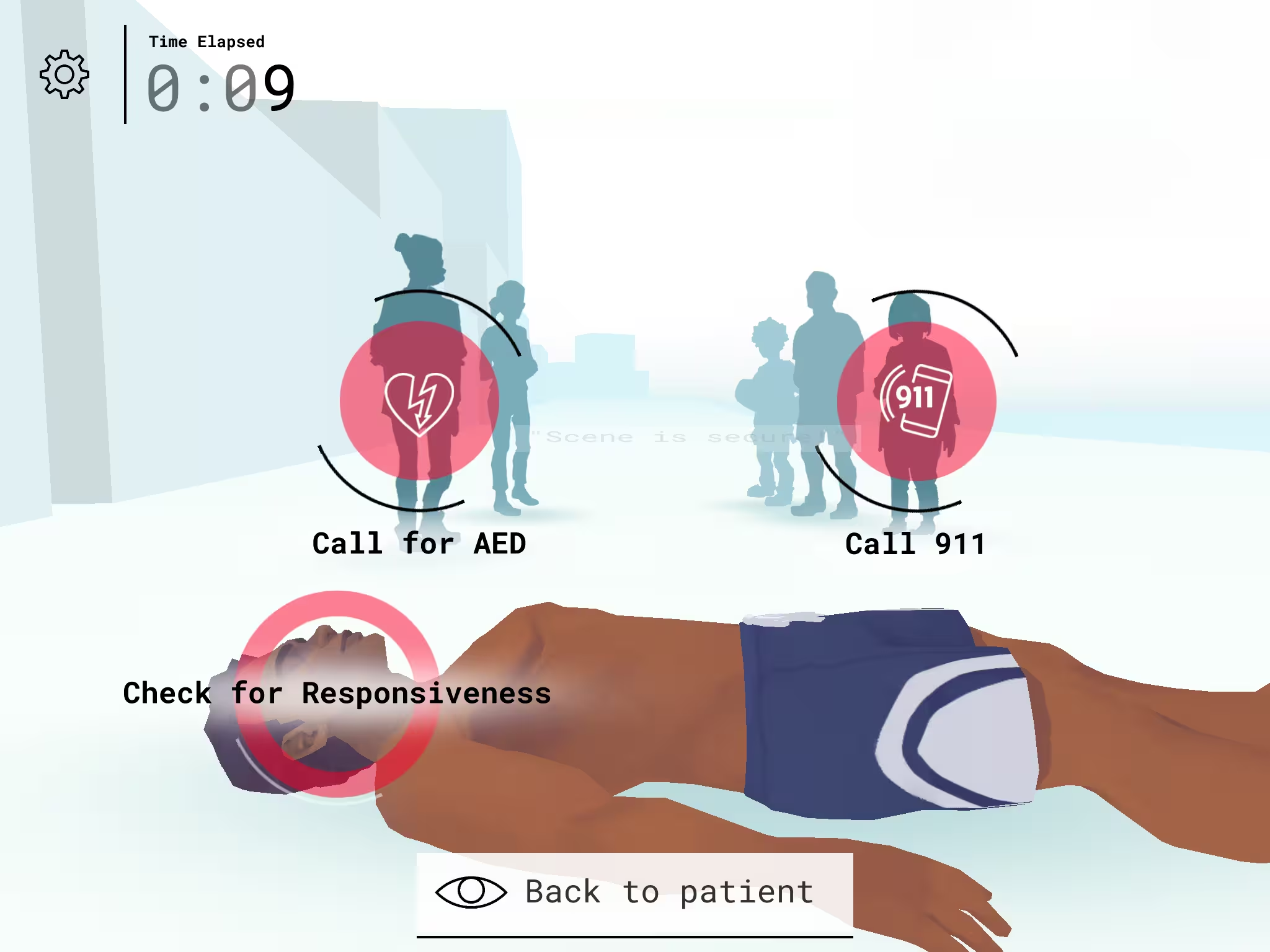
Saving Lives! trains professionals in AHA best practices for CPR and life support. Players master compressions and AED use in real-time simulations, building the muscle memory needed for high-stakes emergencies.
Explore →Welcome back to what’s new in game-based learning, where we cover what’s 🔥 hot 🔥 in the world of education, and we’re not just talking about the current heat wave. The demand for interactive learning tools is also heating up, with developers and educators finding new ways to integrate play into formal education and professional training. This month brings several exciting examples and wide-ranging insights from applied game design. We’re seeing sandbox games, rhythm games, and music apps creating unique learning opportunities that traditional methods can’t match. We’re also taking a look at Kaspersky’s recent survey of search data, providing a handy reference for the entertainment platforms young people are using today - critical insight for providers looking to reach those audiences! Read on and be enriched.
Kaspersky recently published a report analyzing global search habits among children between May 2025 and April 2026. The data shows youth audiences favoring digital environments that blend entertainment with utility, with video games representing a massive segment of their digital footprint. To the surprise of possibly no one, platforms like Roblox and Minecraft have been dominating search queries. The report also highlights a significant uptake in artificial intelligence tools, with AI-related queries accounted for over 40% of all searches within the apps and tools category. Based on this data, it appears that young users regularly seek out ChatGPT and Gemini to assist with daily tasks. Educational game developers should take this baseline of digital fluency into account - modern learners expect interactive, highly responsive software environments that seamlessly integrate advanced technology.
Buffalo Toronto Public Media covered a recent Girls Who Game event at Canisius University, demonstrating how existing commercial games serve as powerful educational platforms, particularly when they have as much educational support as Minecraft has from Microsoft! This particular initiative targets fourth through eighth-grade girls, combining biological science lessons with digital building tasks. Students participate in hands-on activities about insects and water sampling before recreating their findings inside Minecraft. Buffalo Public Schools staff have noted that the familiar gaming environment keeps the students deeply engaged with the core academic material, while the participants process complex information naturally during play. This program underscores the value of leveraging established intellectual property - organizations can reach learners effectively by utilizing the game mechanics and virtual spaces those students already know and enjoy.
The Child Mind Institute published an insightful look at ongoing research into rhythm-based video games and their potential to improve academic performance. Researchers from the Universidad Nacional Autónoma de México are studying how rhythmic coordination correlates with cognitive abilities, building on previous studies which indicate that children who easily synchronize their movements to a beat perform better on reading and language processing tasks. The current project aims to develop open-access digital interventions to support primary education across Latin America. Developers looking to build impactful learning tools should pay close attention to this intersection of neuroscience and game design. Integrating simple auditory and motor coordination challenges can yield measurable improvements in foundational learning skills.
Florida State University News detailed several university projects utilizing game technology, including a standout initiative for child welfare professionals. In one example the Florida Institute for Child Welfare partnered with developers to create immersive virtual reality training simulations. Social work students use headsets to enter virtual homes, practice identifying environmental hazards, and interact with voice-acted characters. These digital environments allow trainees to make critical decisions and receive immediate feedback without risking real-world harm, particularly in environments and situations where tension can be high in the real world. This application highlights the immense utility of serious games for corporate and professional training. Custom game-based learning tools offer organizations a safe, repeatable method to de-risk training, build specialized skills, and evaluate employee competency prior to field deployment.
The Violin Channel reported on NADIA, a new educational application developed by New England Conservatory faculty member Andrew Schartmann. The app teaches musical concepts through interactive puzzle solving, as players interact with core compositional elements like rhythm and meter using standard smartphone mechanics. By translating abstract auditory concepts into tactile digital challenges, the software makes classical music theory highly accessible. As a musician whose fluency is limited to tablature, I’m looking forward to taking this for a spin myself! That said, this project also provides a clear blueprint for institutions seeking to modernize their curriculum. Abstract or highly technical subjects become much easier to digest when developers translate them into intuitive, goal-oriented game loops. Organizations can increase retention and engagement by packaging complex theoretical frameworks inside familiar mobile gaming formats. You can check out the app yourself for free on iOS or Google Play.
~
With a broad spectrum of impact, these recent projects illustrate that game-based learning delivers measurable results across early childhood education, university studies, and professional workforce training. Partnering with experienced developers ensures your organization can leverage these proven interactive mechanics to meet your specific educational objectives. Interested in building a custom educational game that drives engagement for your learners? Let's talk.
Best practices for preventing motion sickness while maximizing learning outcomes.
Best practices for preventing motion sickness while maximizing learning outcomes.
Get the latest Game-Based Learning Review content delivered to your inbox, including new articles, videos, and industry insights.