

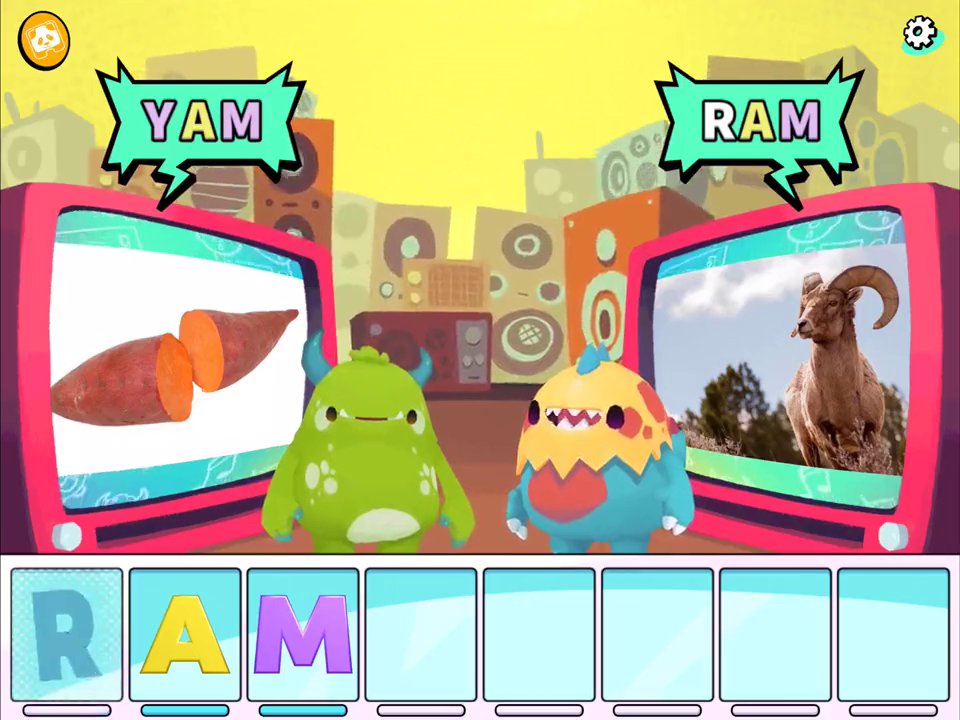
Square Panda is collection of early literacy games developed with Square Panda that focus on letters, phonetics, and spelling. Players place physical letters into the Square Panda Playset to hear sounds and build words while completing challenges.
Explore →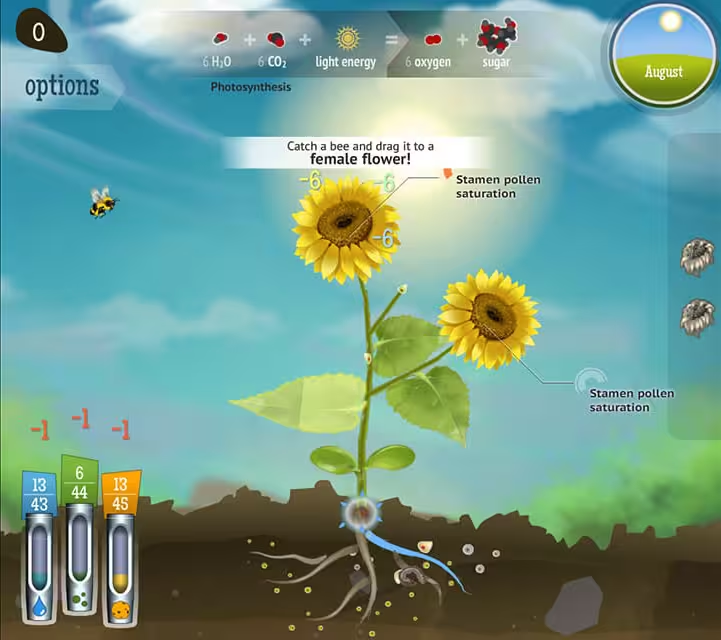
Reach for the Sun is a plant growth learning game developed by Filament Games that teaches photosynthesis and plant life cycles. Players grow a plant from seedling to maturity, managing environmental challenges and seasonal change through interactive play.
Explore →Happy Monday, Filafriends! 🍂 Welcome back to What's New in Game-based Learning, our monthly look at what's 🔥 hot 🔥 in the world of educational and serious games. Fall is in full swing, and September delivered a packed slate of news to match. Two of the biggest names in educational publishing made major acquisitions in AI and assessment, while new research added to the evidence that game mechanics keep secondary students engaged and on track. Elsewhere, a British startup is turning everyday gameplay into training data for robots. We close things out in Michigan, where a high school elective has students learning to code by building games of their own. Grab your favorite fall beverage and dig in!
September was a busy month for edtech dealmaking. McGraw-Hill acquired Teachally on September 2, adding an AI platform that helps educators create, localize, and translate standards-aligned instructional materials. Two weeks later, the company acquired TeachFX, an AI coaching tool that analyzes classroom audio and gives teachers private feedback on patterns like student talk time and questioning techniques. Pearson made two moves of its own, acquiring ITS, a Baltimore-based assessment technology company specializing in test delivery and remote proctoring, and agreeing to acquire Workera, a platform that measures workforce proficiency through role-specific scenarios and simulations. Workera's model of verifying skills through simulation is especially relevant to your next learning game, since a well-designed game can assess what a learner is able to do while they play.
A new study published in Humanities and Social Sciences Communications followed 100 secondary students through an eight-week mathematics unit, with half using a gamified version of their school's learning management system and half using the standard version. The gamified platform added progression tracking, adaptive challenges, real-time feedback, and digital rewards. Students in the gamified group completed more of their tasks (a median of 84.2% compared to 64.3%), followed through on more assignments, and dropped out at half the rate of their peers. The researcher also observed narrower performance gaps across socio-economic and demographic groups, and the study's single-school sample means those equity findings call for larger follow-up research. The features most closely tied to these gains, adaptive challenge and immediate feedback, are core game mechanics, which makes a strong case for building them into the foundation of your next learning experience.
Wired reported on Worldmodeldata, a British startup that has licensed close to one million hours of gameplay from game studios. The company packages what players see on screen alongside the controller inputs they used, then offers those datasets to labs building world models, which are AI systems designed to predict how an environment changes in response to an action. Supporters believe this data could help robots and autonomous vehicles learn to move through the world, while Nvidia's world model lead warns that game physics are too approximate for delicate tasks like grasping objects. Games record cause and consequence with every button press, and that same quality is what makes them such effective teachers for human learners, too.
At Waverly High School in Lansing, Michigan, students in a video game programming elective are learning to code by building their own games, starting with lessons on creating a character and making it move. Teacher Jared Tasch told WILX that the course gives students a chance to explore career interests like software engineering, and students described the class as a look at how games are made behind the scenes. The program used in class is free and available at home, so students can keep building in their free time. Game creation turns abstract programming concepts into visible, playable results, which makes it an excellent entry point for your own computer science learners.
~
That's a wrap on September! Whether the player is a high schooler programming a character's first steps or a professional completing a Workera module, games give learners a safe space to make decisions and watch the consequences play out. That same feedback loop is what allows a well-designed learning game to show you what your learners have mastered, which is why the gamified math study and Pearson's investment in simulation-based assessment deserve a close look from anyone planning a training or curriculum project. Serious games are our focus here on the blog all October long, so keep an eye out for more, and we'll see you back in November for the next edition of What's New in Game-based Learning! 🎮
Ready to build a learning game that gives your learners room to practice and gives you a clear view of their progress? Let's talk.
Best practices for preventing motion sickness while maximizing learning outcomes.
Best practices for preventing motion sickness while maximizing learning outcomes.
Get the latest Game-Based Learning Review content delivered to your inbox, including new articles, videos, and industry insights.