

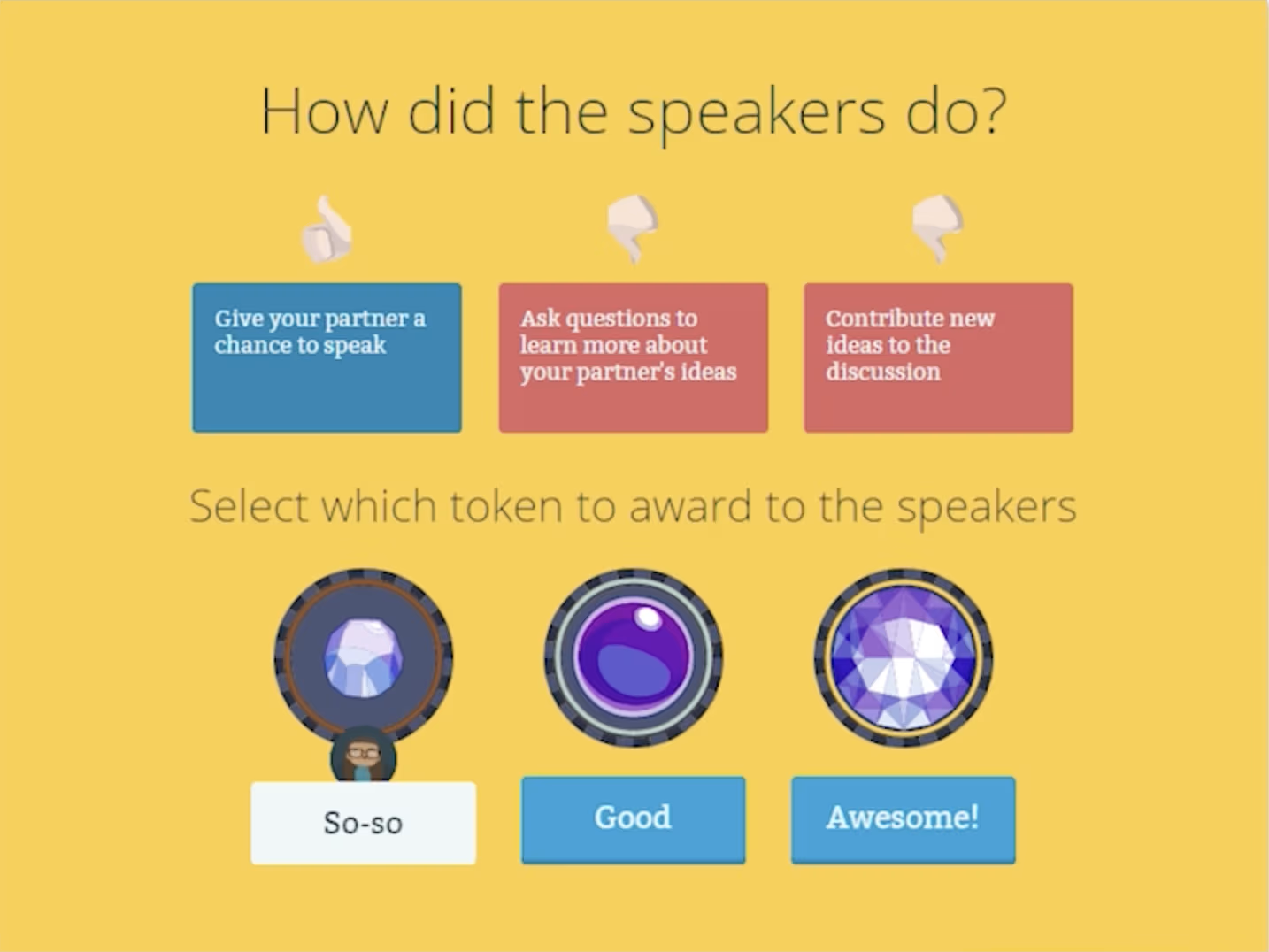
Discussion Maker is a multiplayer mobile game developed by Filament Games that teaches speaking, listening, and argumentation skills. Designed for face-to-face classroom use, the game enables teachers to facilitate structured small-group discussions at scale.
Explore →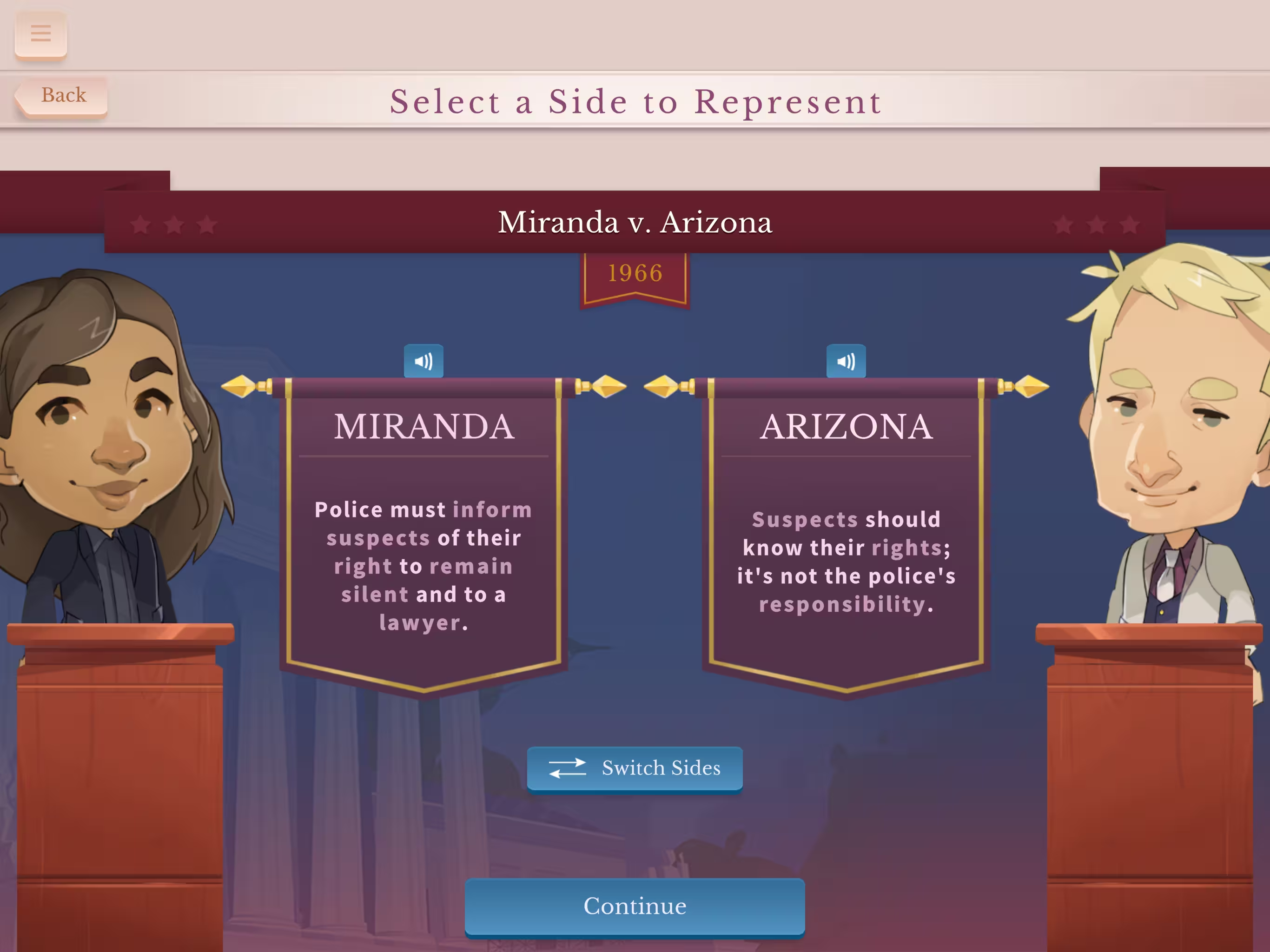
Argument Wars is a civics learning game developed with iCivics that puts learners in the role of an attorney arguing real Supreme Court cases. Using card-based mechanics, players face off against rival lawyers in landmark decisions to build persuasive skills and learn constitutional law.
Explore →Most CSR initiatives struggle with the same structural problem: they rely on formats that compete poorly for attention. Campaigns, microsites, and short-form educational content assume audiences will pause what they are already doing to absorb a message. Decades of research on digital learning and engagement suggest that assumption is optimistic at best. By contrast, interactive environments consistently hold attention longer than passive media. A large meta-analysis of digital games and learning found that interactive formats requiring active problem solving and decision-making consistently produce higher engagement and longer time-on-task than passive instructional media, particularly when learning goals involve applied or higher-order skills. Games succeed here because they transform responsibility from something to be acknowledged into something to be navigated and applied.
CSR programs often aim for behavioral outcomes while relying on awareness-driven delivery. That mismatch shows up in results. Research on serious games across environmental education, professional training, and public policy consistently finds stronger retention and transfer when learners are required to act repeatedly within a system that reflects real-world constraints. Games force engagement at the level of decision-making rather than recognition, which matters when the goal is sustainable behavior rather than momentary agreement. Responsibility experienced through action becomes procedural knowledge.
One of the most practical advantages of games as a CSR format is distribution. Games can be deployed inside platforms and ecosystems that already command large, voluntary audiences, reducing friction and accelerating reach. Roblox is a clear example of this dynamic, with more than 100 million+ daily active users globally, but it is best understood as an illustration rather than a requirement. Salvage Safari’s rapid uptake within an existing game ecosystem demonstrates how CSR-aligned experiences can achieve meaningful exposure when embedded in play rather than launched as standalone educational destinations. The underlying principle applies equally to mobile, browser-based, PC, and console ecosystems when access is prioritized.
CSR initiatives frequently aim to reach broad or underserved audiences, yet rely on formats that presuppose time flexibility, prior knowledge, or formal instruction. Research in public health, workforce development, and adult education shows that serious games lower these barriers by teaching through interaction, supporting asynchronous participation, and minimizing dependence on facilitation. This makes games particularly effective for engaging nontraditional learners and younger audiences who disengage from lecture-based or text-heavy approaches. For CSR efforts concerned with equity and access, this design property is not incidental. It is central.
–
As a delivery channel for CSR outcomes, games combine voluntary attention, participatory learning, scalable reach, and measurable outcomes in a way few alternatives can. Whether deployed through large platforms like Roblox or custom-built experiences using engines like Unity or Unreal, games allow CSR initiatives to move beyond awareness and toward sustained engagement. For organizations serious about impact rather than optics, that distinction matters. Interested in building your own CSR experience? Let’s talk.
Best practices for preventing motion sickness while maximizing learning outcomes.
Best practices for preventing motion sickness while maximizing learning outcomes.
Get the latest Game-Based Learning Review content delivered to your inbox, including new articles, videos, and industry insights.