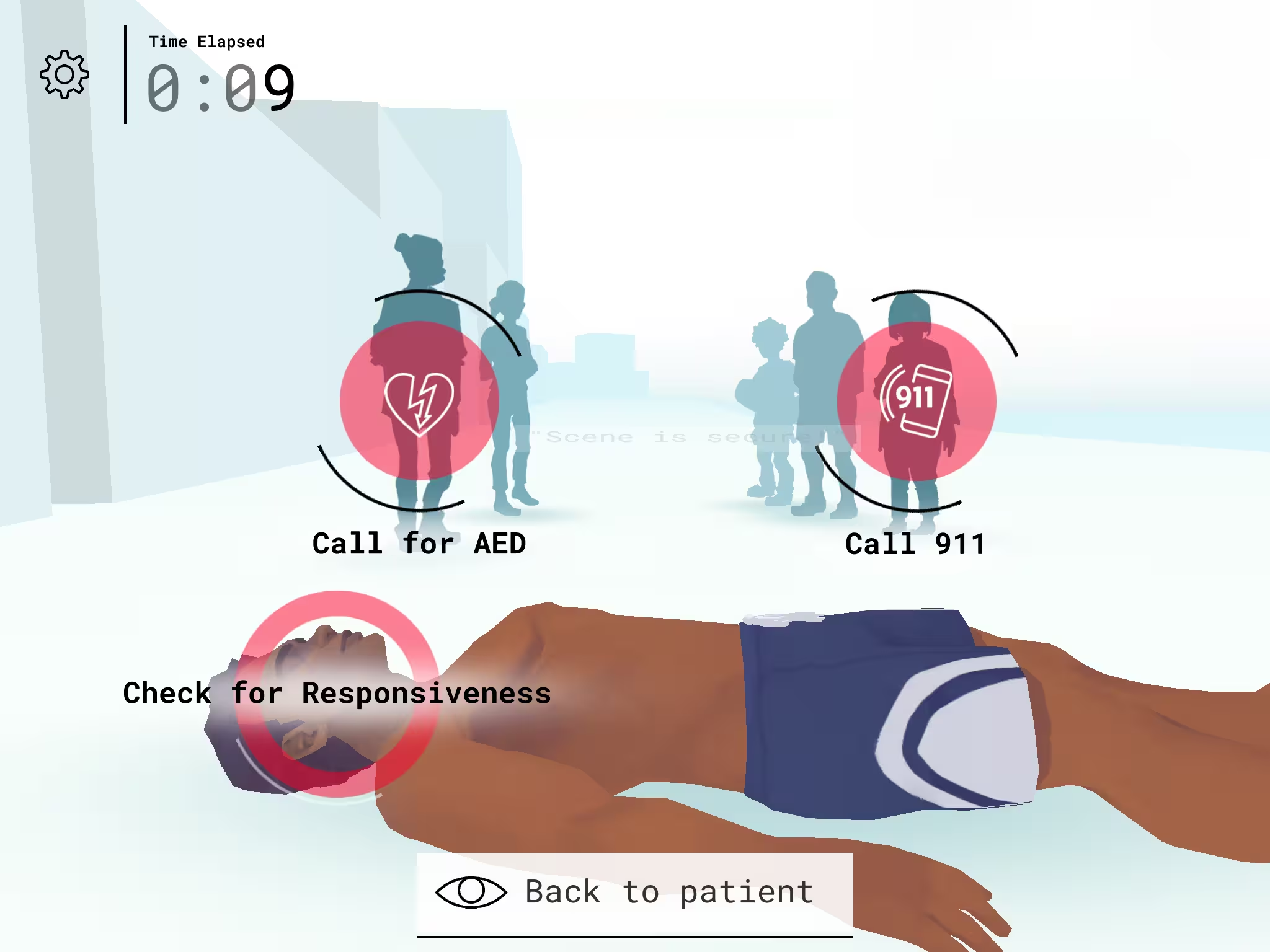
Saving Lives! trains professionals in AHA best practices for CPR and life support. Players master compressions and AED use in real-time simulations, building the muscle memory needed for high-stakes emergencies.
Saving Lives! is a healthcare simulation teaching AHA best practices for CPR and life support, developed for Adtalem. Players manage real-time emergencies, practicing compressions and AED use. By responding to dynamic patient conditions, professionals build the clinical confidence required for high-stakes interventions, bridging the gap between classroom theory and real-world application.
CPR, Basic Life Support, AED


Perform chest compressions at the correct rate and depth while monitoring patient response.
Adjust actions based on real-time feedback as patient condition changes during the emergency.


Apply automated external defibrillator procedures to resuscitate unresponsive patients.
Learn through contextual guidance tied directly to performance and patient outcomes.

Effective CPR and AED use are time-critical skills where procedural accuracy directly impacts patient outcomes. By providing a realistic, interactive environment for repeated practice, Saving Lives! supports skill retention and confidence for medical professionals who must be prepared to act quickly and correctly in real-world emergencies.
If you’re exploring educational games, digital learning tools, or interactive simulations, Filament Games can help you design and build experiences that deliver measurable impact.
Start a project
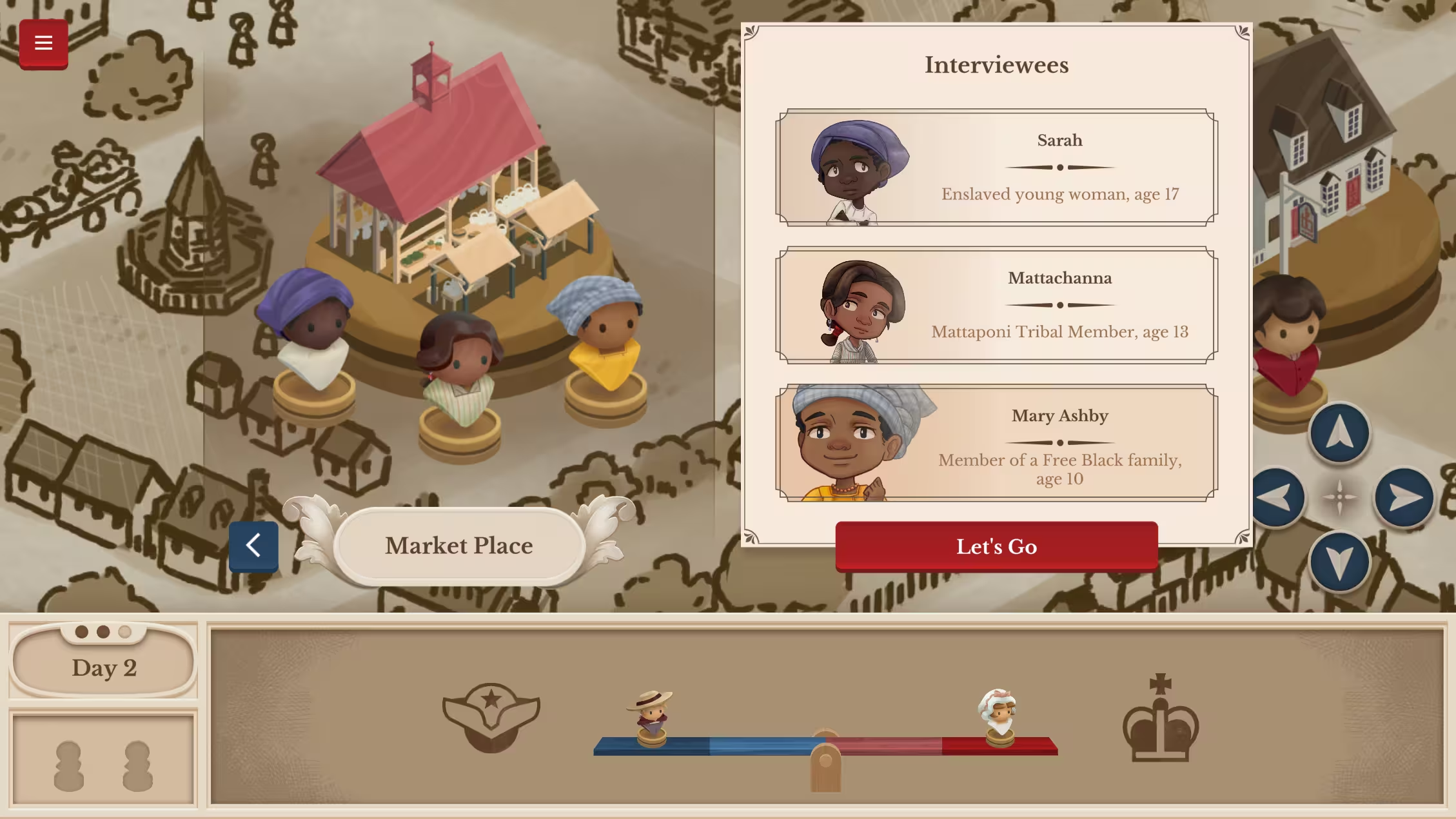
Uncovering Loyalties with Colonial Williamsburg is a history learning experience set in 1774 in pre-revolutionary Virginia. Commissioned by Lord Dunmore, players question townspeople to determine where loyalties lie as tensions around independence rise.
Explore →
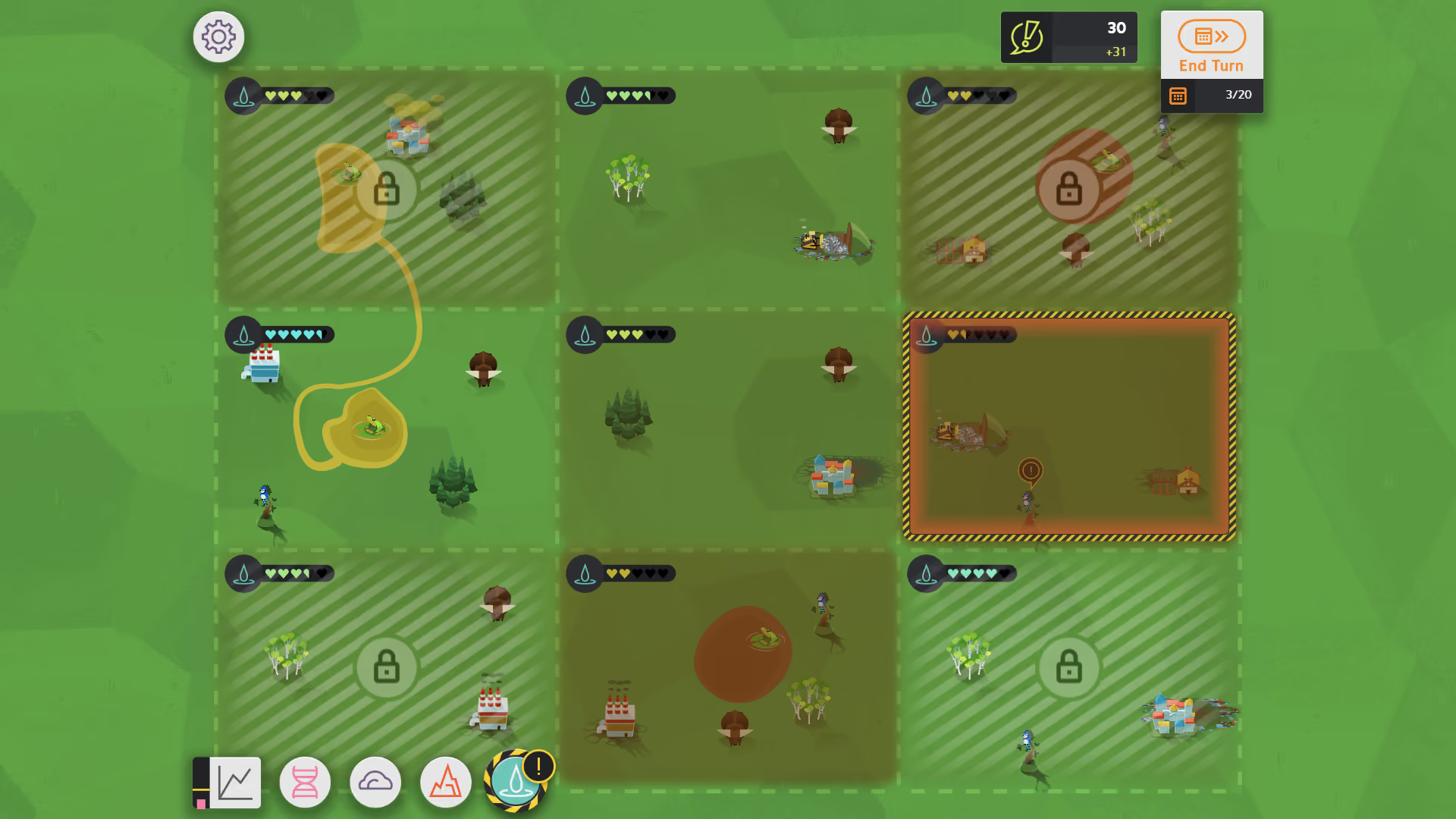
Save Our Spheres is an environmental science learning game developed with McGraw-Hill that focuses on how pollution affects Earth’s major systems. Players make turn-based decisions that influence the atmosphere, geosphere, hydrosphere, and biosphere while observing how these systems respond over time.
Explore →