
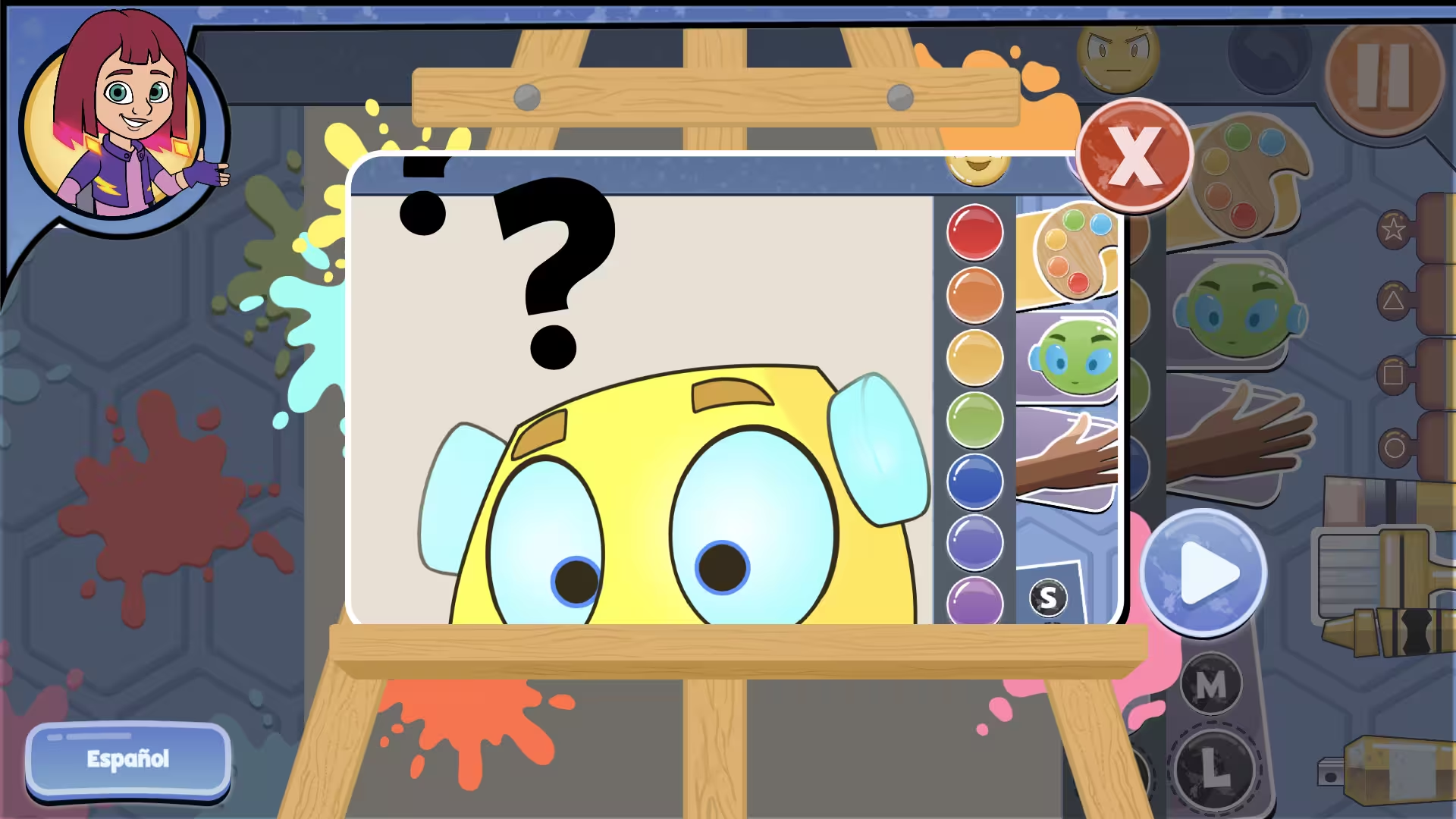
Works of Heart is an arts learning game developed with Twin Cities PBS that focuses on self-expression through painting. Players identify emotions through guided prompts and create artwork using a range of tools and colors.
Explore →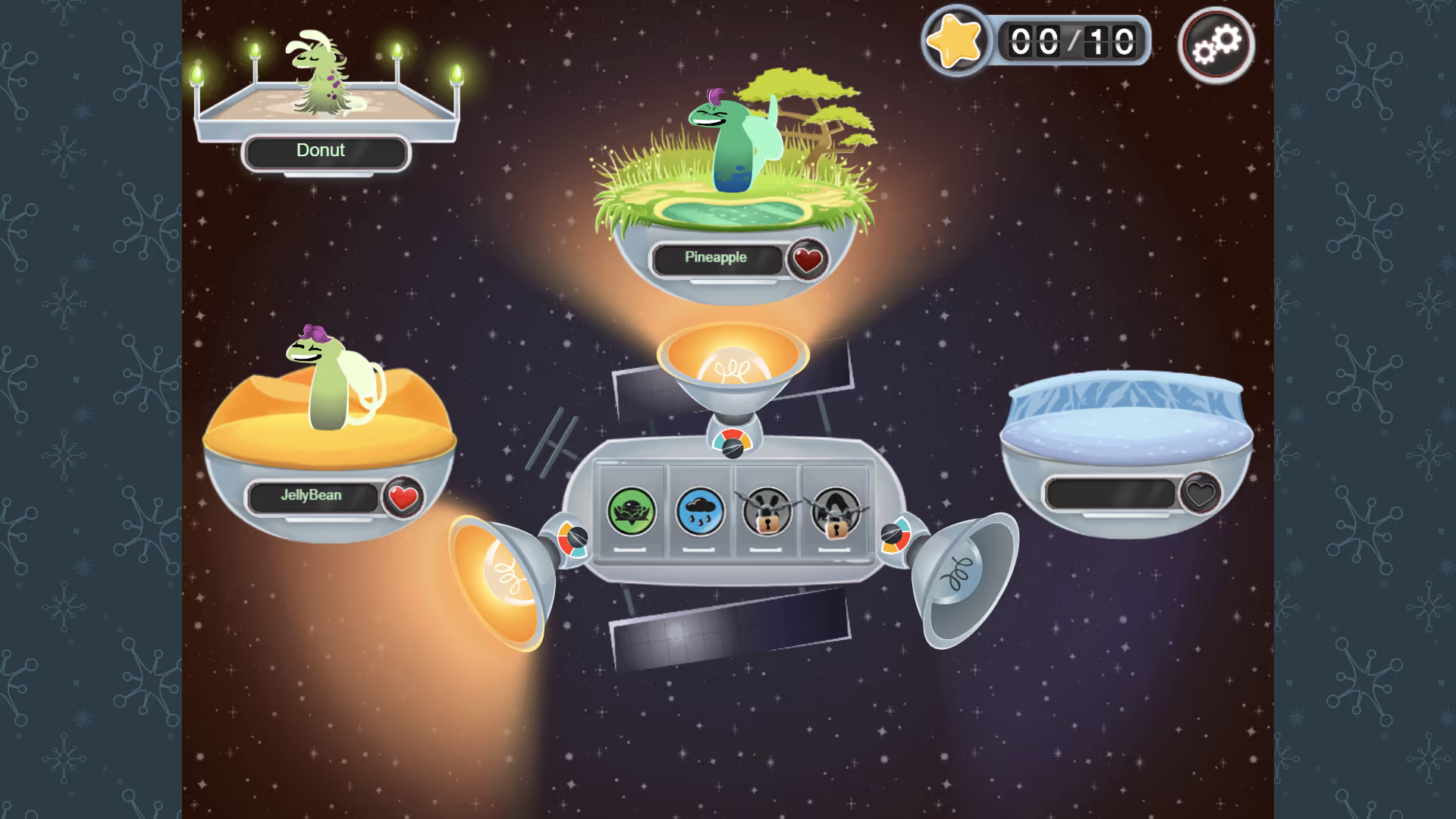
Cosmic Pet Pods is a science learning game developed with McGraw-Hill that focuses on how animal traits are adapted to specific environments. Players manage an intergalactic animal hotel, placing animals into habitats and observing how trait–environment matches affect their success.
Explore →Communication team building activities tend to follow a familiar pattern. Someone explains the rules, the group talks for a few minutes, and everyone heads back to their desks. Those moments can help a team warm up, but if you want communication skills that carry into daily work, the strongest communication skills games make communication the only way to win. When a game's core player verb is explaining or listening, every round becomes practice for the conversations your team has every day. As part of our month-long look at employee engagement games, we pair the research on communication training with the design choices that make these games effective.
In a 2025 article in the Journal of Leadership Education, Brett Whitaker and Whitney Whitaker of Fort Hays State University describe how they use the cooperative game Keep Talking and Nobody Explodes to teach communication under pressure. One player can see a bomb but has no manual, while teammates hold the defusal manual but can't see the bomb, so the team succeeds only when instructions are relayed clearly and confirmed. Roles rotate after each round, and observers take notes for a debrief on communication errors and group conflict. That structure is a clear example of information asymmetry, and it works because the game withholds the information each player needs until a teammate communicates it well. The authors also point out that the game needs a facilitated debrief to deliver its lessons, so when you plan a communication game for your team, build reflection time into the session.
Active listening responds well to training, and the benefits extend well beyond a single conversation. In two quasi-field experiments published in Human Resource Management, Guy Itzchakov, Netta Weinstein, and Arik Cheshin found that employees who completed group listening training reported stronger relatedness with their colleagues, lower burnout, and lower turnover intentions than a control group. Those effects held when the researchers checked again three weeks later. For organizations focused on engagement and retention, that makes active listening games a practical investment, since a game can give employees the repeated, low-stakes practice that helps a new habit last.
We designed Discussion Maker as a multiplayer game that builds discussion and argumentation skills through face-to-face conversation in middle and high school classrooms. Small groups move through structured phases, from choosing characters and topics to discussing and resolving the question at hand, and the game is built so that every participant has a voice. Turn-taking and role assignment carry much of the facilitation work, which keeps any single speaker from dominating the conversation. The same structure translates well to workplace teams, where defined roles help quieter colleagues contribute and give everyone practice building on one another's ideas.
A 2025 systematic review in Frontiers in Education by researchers at G. d'Annunzio University of Chieti-Pescara examined serious games used to train psychologists and psychology students, many of them focused on communication-heavy professional skills such as counseling and interviewing. Games that included feedback and modeling were associated with better training outcomes. In one randomized controlled trial, participants who received feedback during simulated interviews with avatars drew out more than twice as many correct details as the control group. For your next communication game, that means pairing every conversation with a clear signal about what worked and a model of what strong communication looks like.
~
Strong communication grows through practice, and the right game gives your team a reason to keep practicing. When you evaluate or commission a communication game, look for mechanics that make communication necessary to win, such as information split across players or roles that rotate from round to round. Plan for synchronous play when the skill depends on live conversation, and set aside time for a facilitated debrief after each session. Make sure the game gives players clear feedback, and decide up front which behaviors you want to measure so you can report progress to your stakeholders. For more on building play into a broader engagement strategy, read our recent look at employee engagement games that build lasting skills. Interested in a communication game designed around your team's goals? Let's talk.
Best practices for preventing motion sickness while maximizing learning outcomes.
Best practices for preventing motion sickness while maximizing learning outcomes.
Get the latest Game-Based Learning Review content delivered to your inbox, including new articles, videos, and industry insights.