
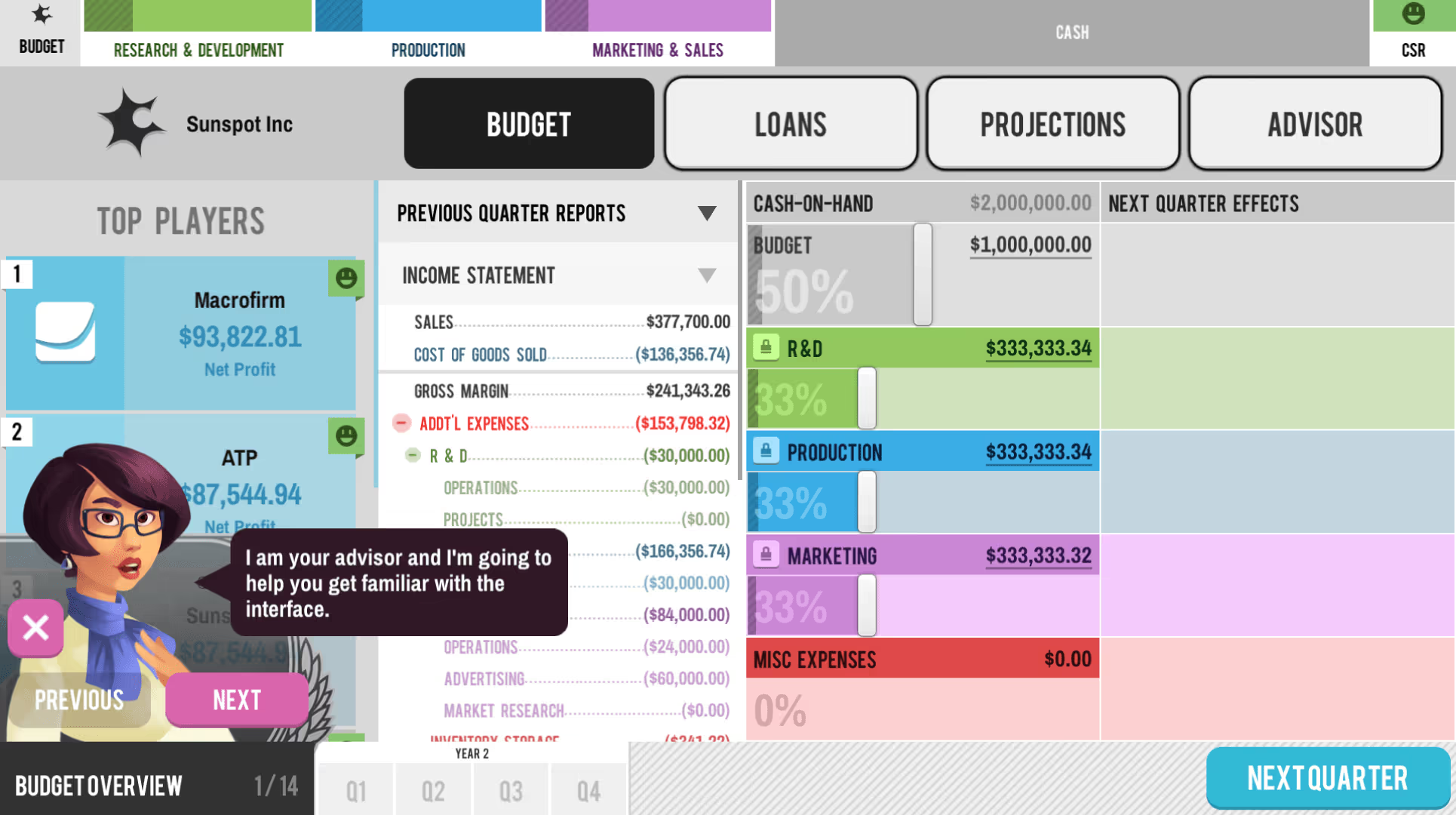
JA Titan is a financial literacy and business administration learning game developed with Junior Achievement that focuses on corporate decision making in a competitive market. Players take on the role of a company executive, making quarterly decisions about budgeting, production, and stakeholder priorities to improve business performance.
Explore →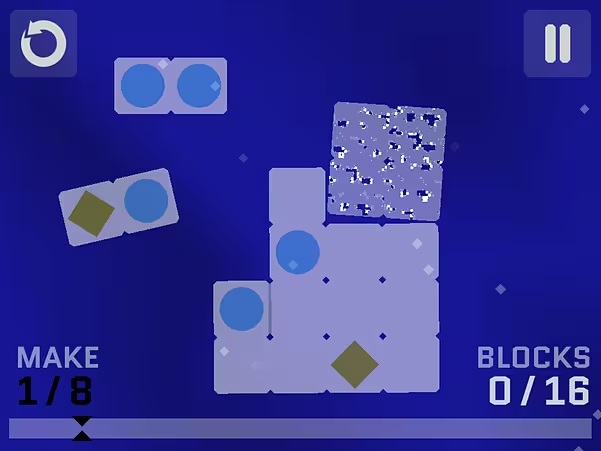
Diffission is a touch-based fractions learning game developed by Filament Games for web browsers, tablets, and mobile devices. Players solve procedurally generated puzzles by slicing shapes into equal parts to create specific fractions through intuitive, gesture-driven play.
Explore →Most teams have taken part in an icebreaker that drew a few laughs and was forgotten by the next stand-up. Employee engagement activities like these have their place, and a good one can warm up a room in five minutes. But if you’re looking for more than just a warmup, employee engagement games built around a clear learning goal deliver something more durable. They give your people a skill worth practicing and give your stakeholders results they can measure. After more than 20 years designing serious games for schools and workplaces, we've seen firsthand how much that design intent matters. Below, we pair the latest research on engagement and game-based training with examples from our own portfolio, along with practical takeaways for your next engagement initiative.
Gallup's State of the Global Workplace: 2026 Report found that 20% of employees worldwide were engaged at work in 2025. Managers fared only slightly better at 22%, compared with 19% of individual contributors. Those figures represent an opportunity for any organization ready to rethink the experiences it offers employees between performance reviews. Team engagement activities held once a quarter can lift morale for an afternoon, while lasting engagement tends to come from work that feels purposeful and from regular chances to grow. A well-designed game can deliver both, which is why it belongs in your engagement strategy.
A meta-analysis published in Personnel Psychology by Traci Sitzmann of the University of Colorado Denver examined 65 studies covering 6,476 trainees. Trainees who learned through computer-based simulation games scored 11% higher on factual knowledge, 14% higher on skill-based knowledge, and 9% higher on retention than comparison groups. Games that asked players to act outperformed those that delivered content passively, and the strongest results came when the game served as one part of a broader program with instruction before and after play. For your next project, that means designing gameplay around the skills you want employees to have and building the game straight into your training program.
Onboarding is one of the most important moments to build engagement, and a game gives new employees a confident start. We built MSI Retail Sim with the McKinsey Social Initiative for adult learners entering retail careers. Players respond to the situations that come up in a store's daily operations, make customer service decisions, and watch store performance change with every choice. Weighing customer experience against operational outcomes is the core player verb, which gives new hires repeated practice with conflict resolution and workplace professionalism before they ever meet a customer.
Be Scam Ready, the free browser-based game we developed in partnership with Google, asks players to identify the manipulation techniques behind common online scams through short, interactive scenarios. Players follow four characters through choice-and-consequence stories and learn to recognize the building blocks of social engineering wherever they appear. The same design approach translates directly to security awareness and compliance training, where employees benefit most from a safe place to make mistakes and learn from them before the stakes rise.
Earlier this year, we looked at how learning-first games for corporate upskilling shorten time-to-competency and support retention in high-turnover roles. Measurement is what turns a promising pilot into a lasting program. Because a game records every decision a player makes, you can see how employees apply new skills over time and report that progress to your stakeholders with confidence. When you plan your next engagement initiative, define the behavior you want to see first and design the game to capture it.
~
Engagement grows when employees feel capable and connected, and a game designed around your goals can support both. Over the rest of November, we'll take a closer look at communication skills games, leadership development, escape room puzzle design, and online team building games for distributed teams. Whether you're planning onboarding for next year's hires or searching for an engagement activity with lasting value, the strongest results start with a clear learning goal and a development partner who knows how to design around it. Interested in exploring employee engagement games for your organization? Let's talk.
Best practices for preventing motion sickness while maximizing learning outcomes.
Best practices for preventing motion sickness while maximizing learning outcomes.
Get the latest Game-Based Learning Review content delivered to your inbox, including new articles, videos, and industry insights.