

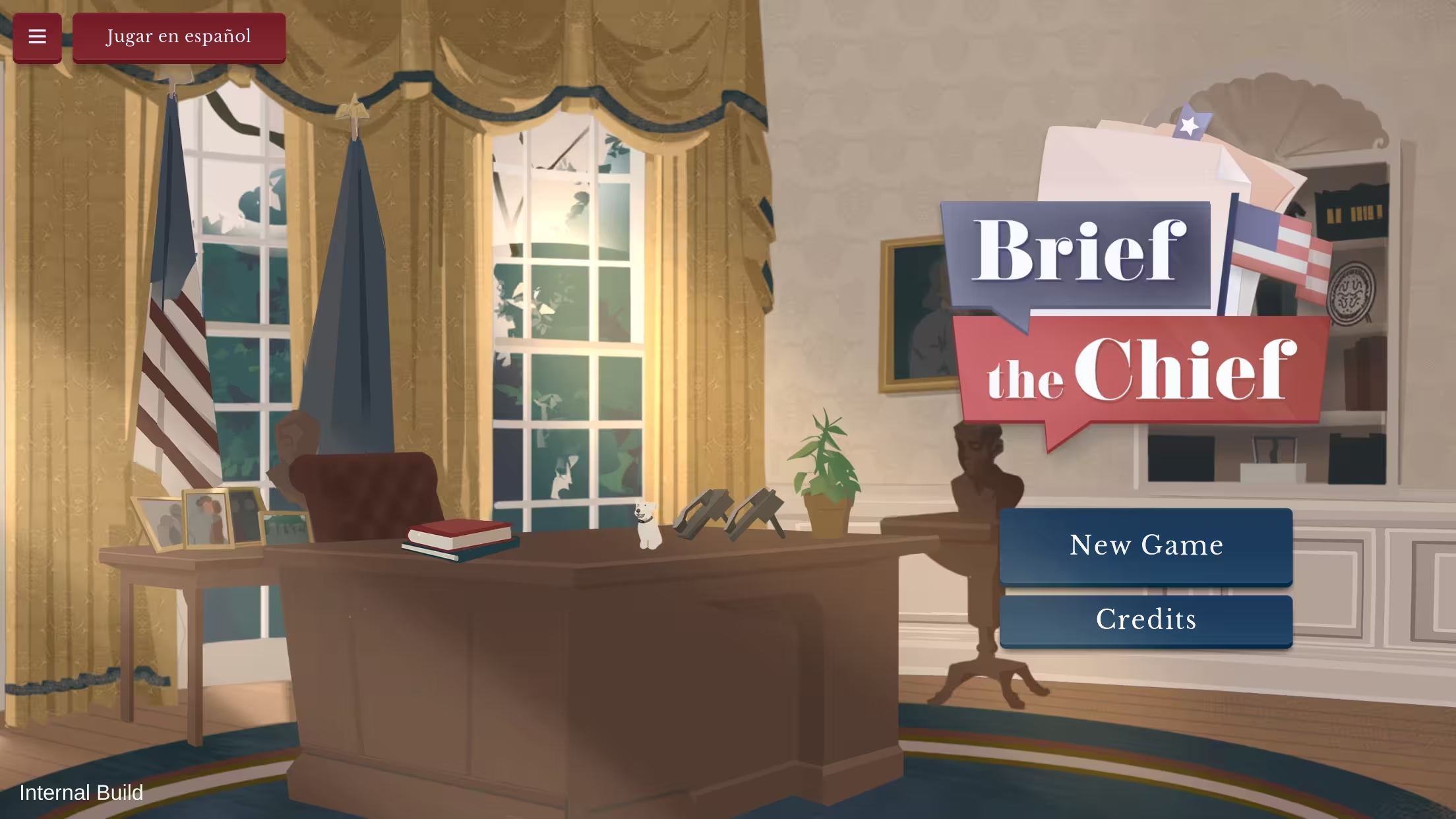
Brief the Chief is a history and civics learning game developed with iCivics that challenges students to advise U.S. presidents through major historical events. Players consult with White House figures and use evidence-based reasoning to deliver presidential briefings to Presidents Jefferson, Lincoln, and Johnson.
Explore →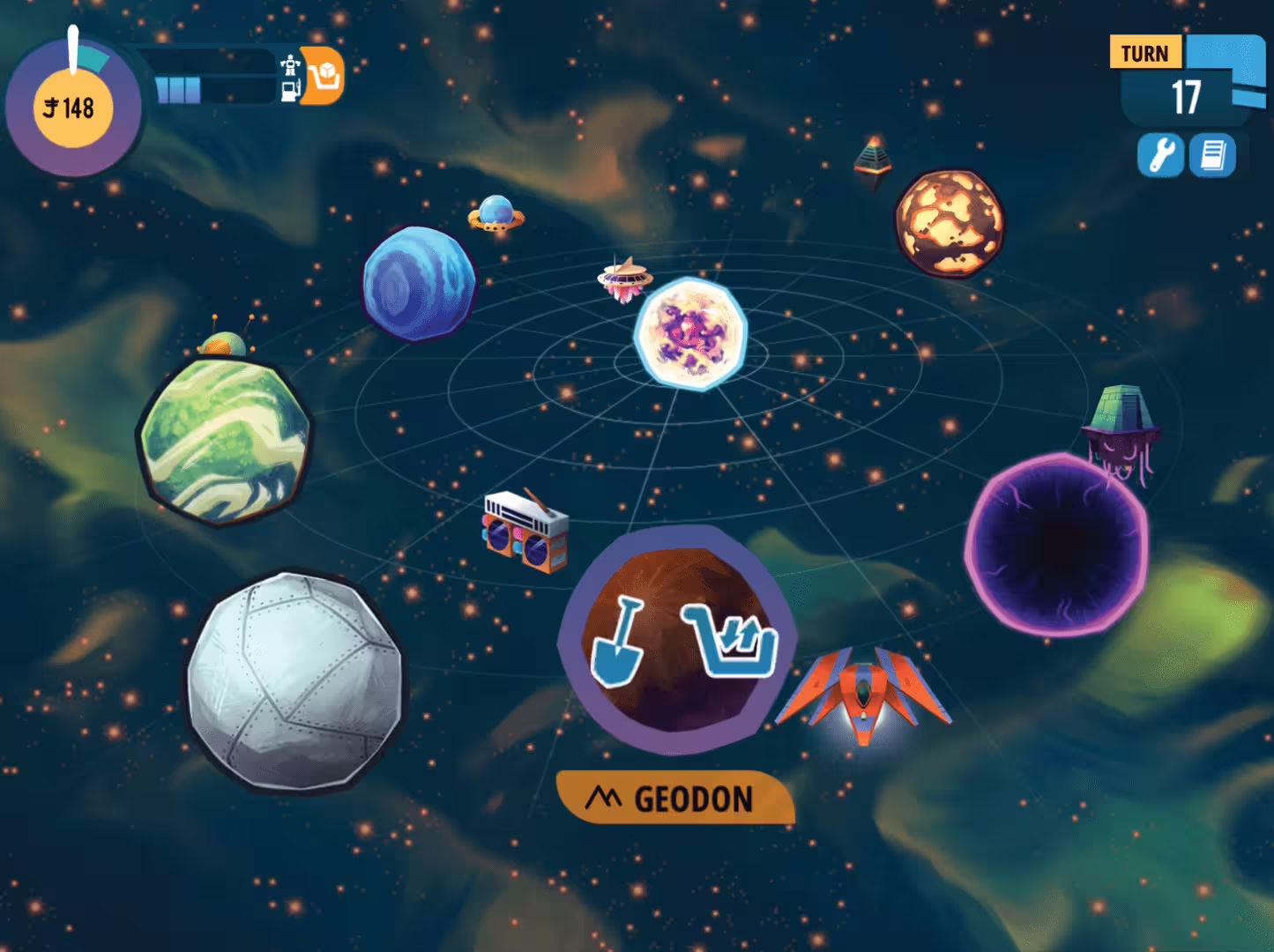
RoboSellers is an economics and entrepreneurship learning game developed with Junior Achievement that focuses on the role of money in business decisions. Players operate a robot parts business, traveling between planets to buy and sell inventory while managing costs, pricing, spending, and saving.
Explore →Every game we build for a classroom is built for kids, and that single fact shapes the software long before anyone writes a privacy policy. It pulls a whole body of law into the room, from COPPA to FERPA to GDPR, and it changes design decisions from the very first sprint. For the studios, publishers, and institutions we work with, handling student data well is a mandatory consideration to make games that are usable in their target environments. Districts have to know exactly where their students' information goes, and that data has to get engineered into the architecture from the start.
These regulations have been on the books for years, and the expectations around them keep climbing. COPPA governs how any online service collects data from children under 13, and its first major overhaul since 2013 is now in effect. As of April 2026, the updated rule requires separate, verifiable parental consent before a child's information is shared with third parties, limits how long that data can be kept, and expands the definition of personal information to include biometric and government identifiers. FERPA sits alongside it, governing the education records a school controls and the terms under which a vendor is ever allowed to touch them. Factor in California's CCPA and the EU's GDPR for any product that travels, and you have an expansive compliance landscape which requires thorough consideration. CoSN's 2026 survey ranks data privacy second only to cybersecurity among district technology priorities, and they scrutinize it in equal measure with that prioritization.
The principle that ties all of this together earned a place in law when the GDPR named it data protection by design and by default. The idea is to build privacy protections into the architecture at the moment you decide how the system works, setting the most protective setting as the default. This approach also requires data minimization, where developers collect only what the game needs to function, shrinking the privacy burden - you can’t mishandle data you don’t have! This principle also applies beyond collection - keep data only as long as the learning goal requires, stay deliberate about who and what can reach it, and treat every third-party SDK you add as part of your data footprint. Building privacy in from the start costs far less than retrofitting it into a system designed to collect everything first.
Well engineered privacy protection still needs to prove itself to buyers, so vendors typically sign a data privacy agreement, which is a contract spelling out exactly what you collect, how you protect it, who else sees it, and when you destroy it. For years that meant negotiating a separate agreement with each district, an expensive slog for studios and districts alike. The Student Data Privacy Consortium solved much of that with the National Data Privacy Agreement, a standardized contract a district and a vendor can sign once and reuse. The Consortium's registry now holds more than 130,000 signed agreements between over 12,000 districts and thousands of providers, and the standardized approach has saved the ecosystem an estimated $111 million in legal costs since 2016. For a studio, learning the NDPA and appearing in that registry is one of the most direct ways to make your game easy to buy. A district that finds you already covered by an agreement it trusts can skip straight to getting the game in front of students.
~
When you design a learning game for students, privacy belongs in the architecture, the defaults, and the contracts from the very start. Two decades of building for classrooms has taught us that the games schools and districts trust are the ones that made protecting student data a first-order goal. If you're planning a game-based learning product and want it built to earn that trust, let's talk.
Best practices for preventing motion sickness while maximizing learning outcomes.
Best practices for preventing motion sickness while maximizing learning outcomes.
Get the latest Game-Based Learning Review content delivered to your inbox, including new articles, videos, and industry insights.