
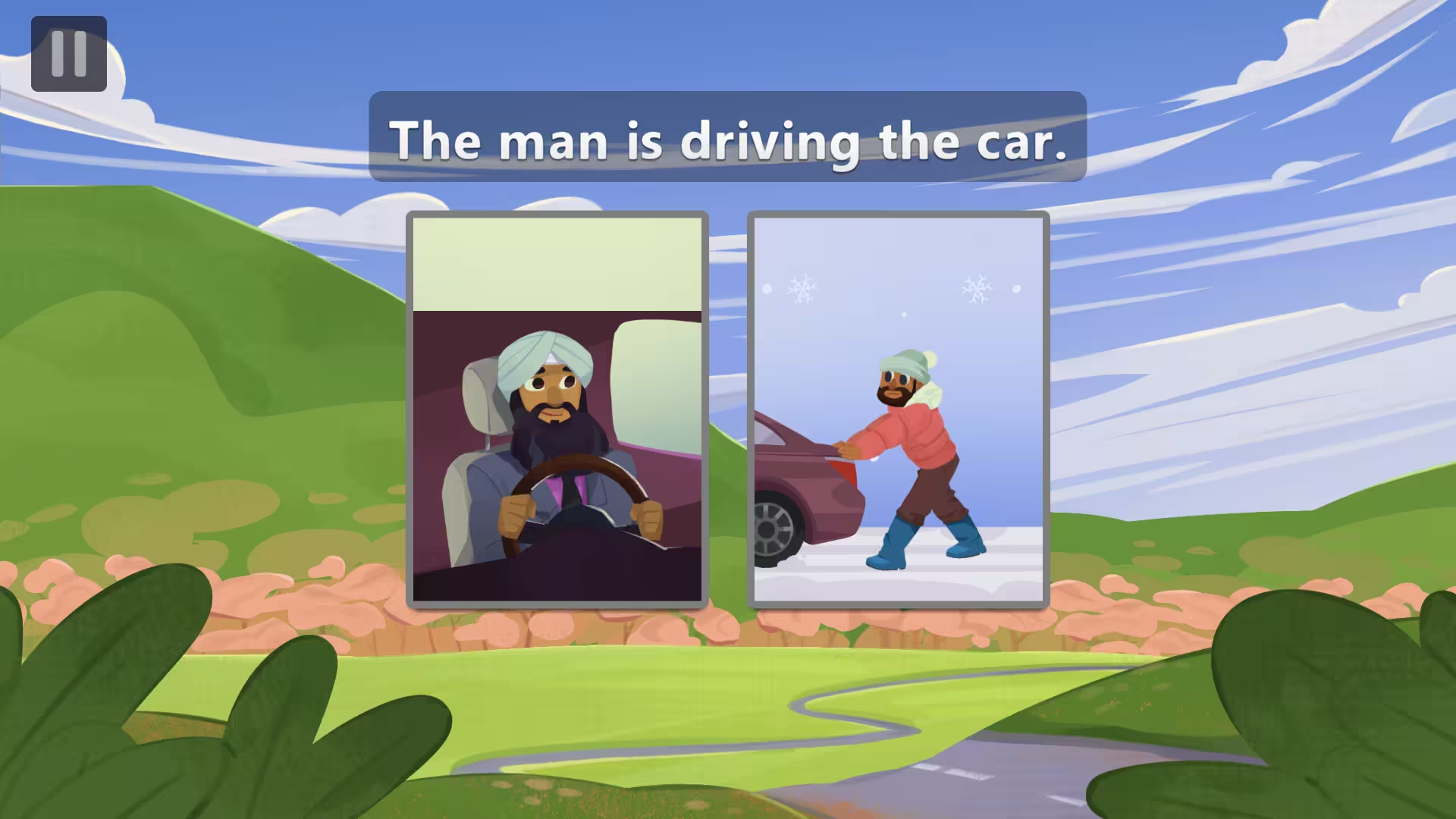
Laureate Learning is an English Language Arts series for young learners with functional needs. Originally a CD-ROM series by Attainment Company, it was ported to Unity by Filament Games with updated art and animations while preserving its research-based pedagogical foundation.
Explore →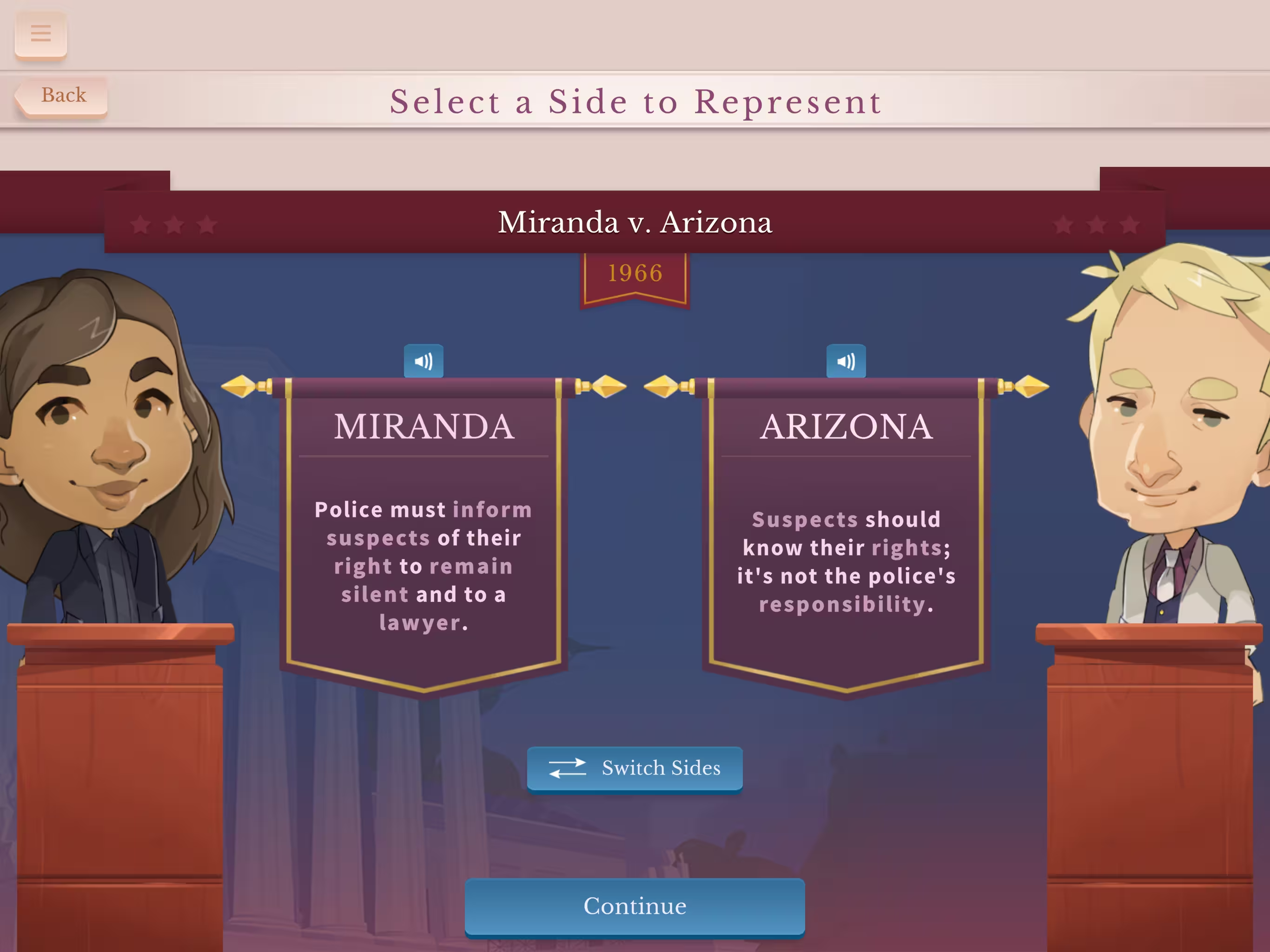
Argument Wars is a civics learning game developed with iCivics that puts learners in the role of an attorney arguing real Supreme Court cases. Using card-based mechanics, players face off against rival lawyers in landmark decisions to build persuasive skills and learn constitutional law.
Explore →Career and technical education trains students to operate with precision before they have access to real equipment, real stakes, or real time in the field – a gap that has always asserted itself when the granularity of professional realities meet the abstractions of what one learns from curricula. Fortunately for us and learners everywhere, immersive simulations are a great way to close this gap. Schools are using virtual environments to stage complex tasks, compress timelines, and give learners repeated exposure to systems they would otherwise only see once or twice. The result is career readiness – students arrive at hands-on work with context, confidence, and a clearer sense of what the job actually demands. Four recent signals point to where this is heading and how classrooms are adapting in response:
Transfr shows how virtual environments can expand access to trade pathways by placing students directly inside simulated workplaces. Learners step into an automotive shop, handle tools, and complete procedures without the cost or risk tied to physical equipment. This changes how early exposure works. Instead of describing a career, schools can stage it and immerse students in its realities and decision points. Students build familiarity with workflows, safety expectations, and task sequencing before ever entering a lab. That early contact drives interest and helps educators justify broader program offerings.
ClassVR reports strong gains in learner confidence alongside faster completion times for training modules. Students practice communication-heavy roles such as hospitality by running through realistic interactions and receiving immediate feedback. These scenarios allow repetition without social friction, and allow learners to adjust tone, posture, and decision-making in a controlled setting. That kind of iteration is difficult to achieve in a live classroom. This type of virtual experience means that when students move into real conversations, they carry a baseline of familiarity that shortens the ramp to competence.
A meta-analysis from MDPI connects interactive digital learning with higher motivation and stronger self-efficacy in science education. Students who believe they can solve problems tend to set higher goals and persist longer when challenges increase, which is a particular strength of game-based systems that foster this confidence through structured difficulty and visible progress. Learners see cause and effect in their decisions, testing test approaches, adjusting, and trying again. That loop builds habits that transfer into technical coursework and certification prep, where persistence often determines outcomes.
New York University has introduced a graduate course focused on designing learning through play. Educators learn how to construct systems that reward experimentation, surface consequences, and give students agency inside the lesson, allowing teachers to pivot from content delivery toward experience design. When instructors understand how rules, feedback, and progression shape behavior, they can tailor simulations to match the realities of specific trades. That flexibility matters in vocational programs where tools, standards, and workflows vary across industries.
–
Immersive simulations are part of the broad suite of turnkey digital tools that give CTE programs a way to scale practice, reduce risk, and build readiness before students reach physical equipment. Schools that integrate these systems are seeing stronger engagement and more confident learners entering hands-on work. If you’re exploring creating a custom immersive experience for your audience, let’s talk!
Best practices for preventing motion sickness while maximizing learning outcomes.
Best practices for preventing motion sickness while maximizing learning outcomes.
Get the latest Game-Based Learning Review content delivered to your inbox, including new articles, videos, and industry insights.