


Super Seasons Snapshots is a life science learning game developed with Twin Cities PBS that focuses on seasonal changes and their effects on ecosystems. Players observe environments across different times of year and capture photographs to document shifting conditions.
Explore →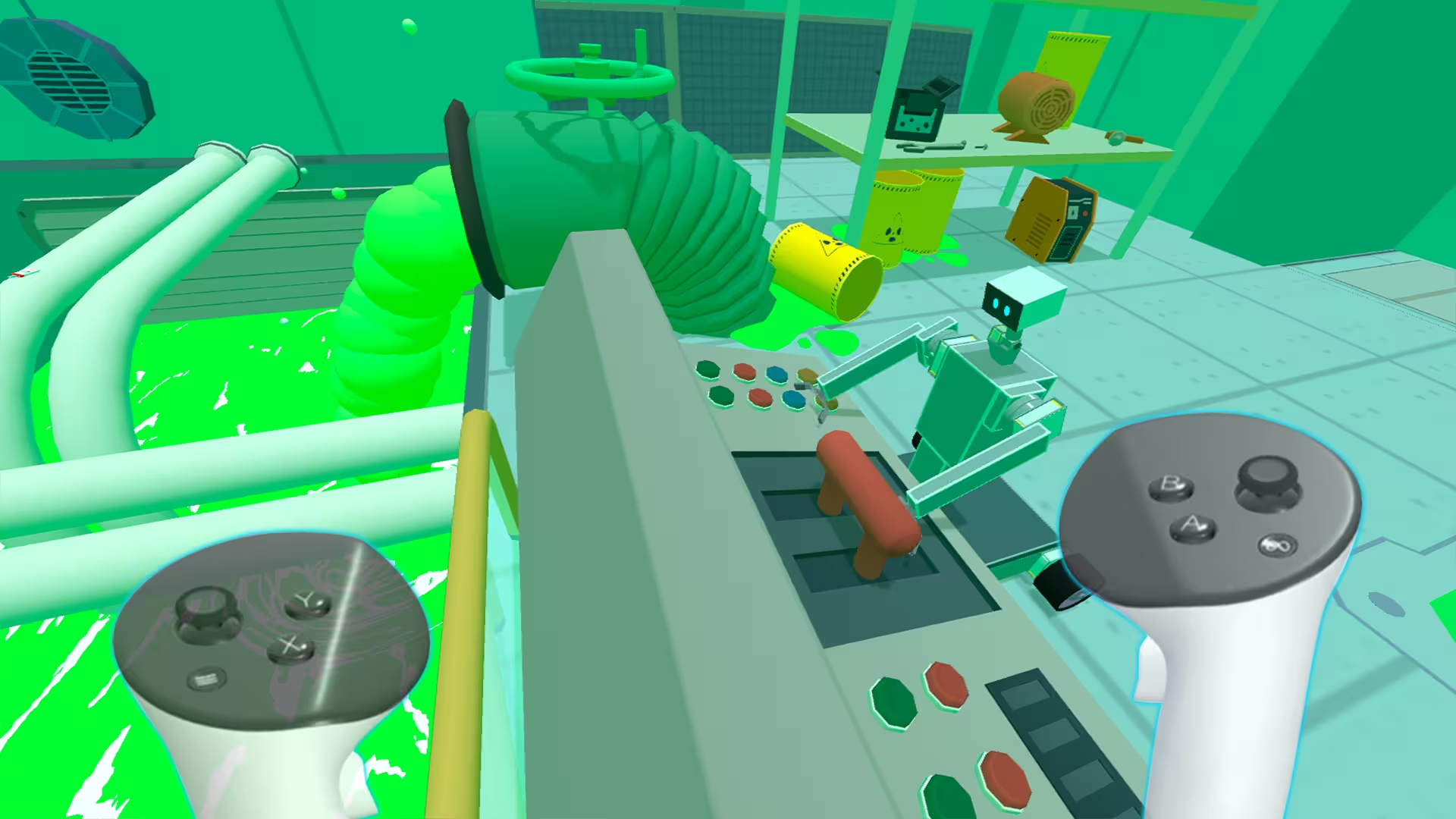
Some Assembly Required is a VR robotics sandbox game developed by Filament Games for Meta Quest 2 and 3. Players design and build robots with intuitive hands-on controls to complete mechanical challenges and explore a secret-filled warehouse.
Explore →A review of current trends in game-based learning suggests that the industry is moving away from the novelty of play and toward the utility of systems and of course, impact! While that might sound like dull or perhaps even grim tidings, this sounds like good news to us. Instead of debating whether games can teach, we’re pushing the boundaries of what games can do, expanding out into exciting new realms like brand building, operational efficiency, and clinical intervention. At Filament Games, our recent work reflects this shift toward high-stakes, high-impact digital experiences. From financial literacy to physical rehabilitation, the following trends represent the next phase of the medium.
Modern consumers expect brands to provide value beyond the point of sale, and games offer a unique opportunity to provide that value through education. Our recent partnership with the industry titans at Intuit on Credit Climber demonstrates how a brand can address a serious systemic issue like financial literacy while simultaneously strengthening its relationship with a younger audience. By guiding players through the nuances of credit scores within a narrative framework, Intuit provides a tool for social mobility, positioning the brand as a mentor rather than a vendor. This approach transforms corporate social responsibility from a passive report into an active, helpful experience that players actually want to engage with.
The push toward automating corporate training is often driven by a need for consistency and scale, but research from Columbia Business School highlights a more compelling driver: performance. Their study on gamified training found that offices implementing these systems saw a 35.8% increase in fees collected and a 22.3% boost in new client opportunities. By replacing static manuals with interactive challenges, organizations can automate the feedback loops that are usually the most labor-intensive part of mentorship. This allows companies to upskill their workforce with a level of precision and speed that traditional methods simply cannot match. It turns out that when you stop lecturing and start letting people play, the bottom line tends to follow.
One of the most rigorous applications of game-based learning exists within the framework of Software as a Medical Device (SaMD). In this clinical space, the software operates directly as the prescribed treatment. A recent perspective published in npj Mental Health Research examines the growing landscape of FDA-authorized software interventions, emphasizing the need for robust clinical evidence to navigate modern regulatory challenges and prove efficacy. Our work on Mindful Market for Penumbra illustrates this clinical reality. By placing patients in a virtual grocery store to practice executive function, we transform a repetitive therapeutic necessity into an engaging challenge. This methodology solves the chronic problem of patient noncompliance, ensuring patients stick with the protocol until they achieve a measurable recovery.
–
As these trends mature, the distinction between a game and a professional tool will likely continue to blur. Whether the goal is to improve a credit score, increase office revenue, or recover cognitive function, the underlying mechanism remains the same: well-designed play leads to well-learned skills. We’re excited to see where these systems take the industry next, and we remain committed to building the games that make these outcomes possible. By the way – if your organization is ready to move beyond the whiteboard, we should talk!
Best practices for preventing motion sickness while maximizing learning outcomes.
Best practices for preventing motion sickness while maximizing learning outcomes.
Get the latest Game-Based Learning Review content delivered to your inbox, including new articles, videos, and industry insights.