


Superkids Online Fun! is a literacy learning game suite developed with Zaner-Bloser that supports the Superkids Reading curriculum for kindergarten through second grade. Players engage with read-aloud books and complete interactive activities that reinforce spelling, phonics, and vocabulary.
Explore →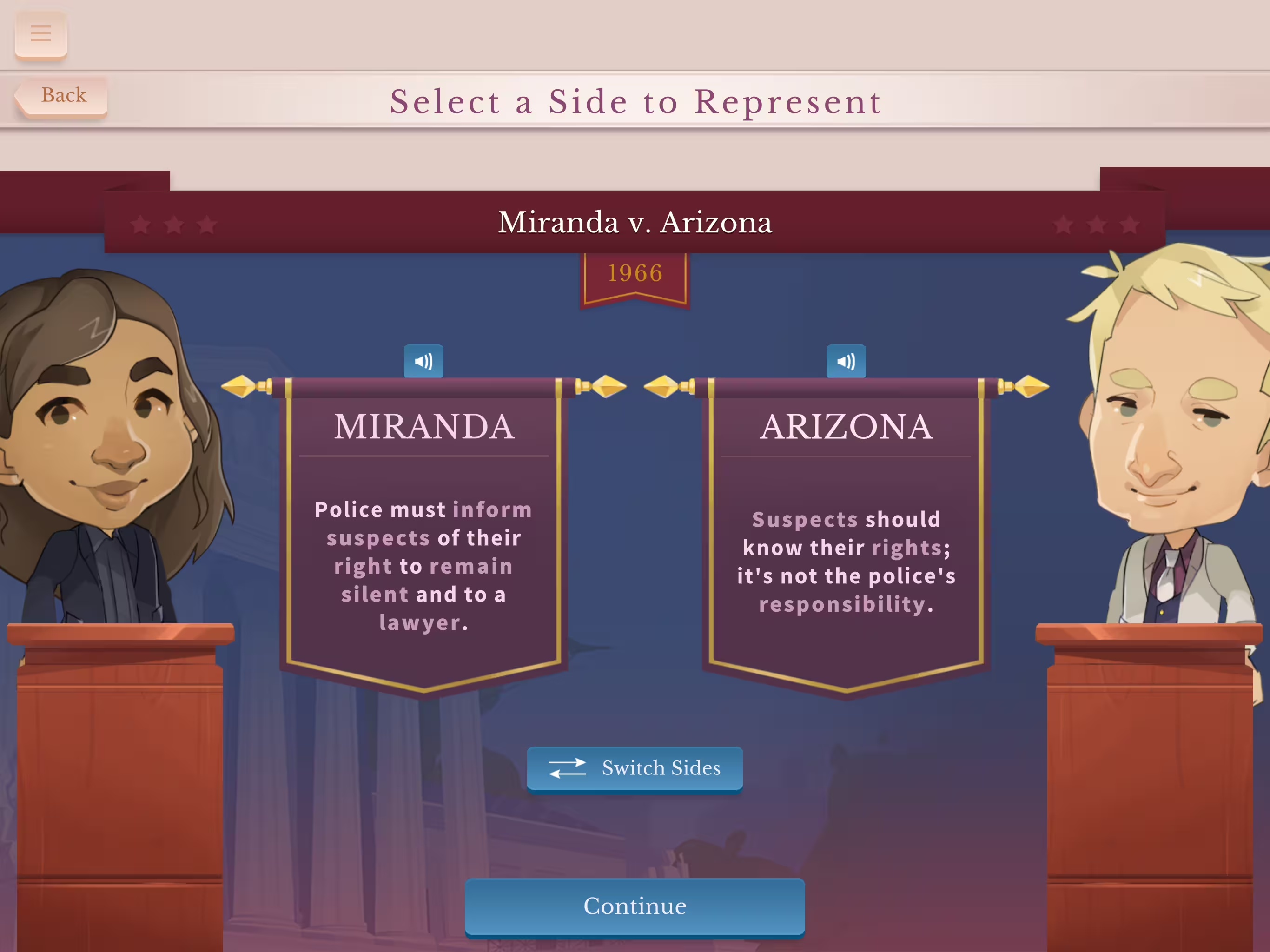
Argument Wars is a civics learning game developed with iCivics that puts learners in the role of an attorney arguing real Supreme Court cases. Using card-based mechanics, players face off against rival lawyers in landmark decisions to build persuasive skills and learn constitutional law.
Explore →In 2026, education technology policy is entering a more enforceable phase. Many of the conversations that dominated the last few years around accessibility, student data, and AI use are now crystallizing into concrete requirements with real deadlines. For schools, districts, and the organizations that build learning technology, 2026 marks a point where compliance, design decisions, and long-term strategy converge. Below are several policy shifts that will materially shape how educational games and digital learning tools are designed, purchased, and deployed.
In April 2026, updated ADA Title II regulations will require public colleges, universities, and other public entities to ensure that digital content meets WCAG 2.1 Level AA standards. This applies to websites, mobile apps, learning platforms, and course materials. For EdTech developers, accessibility can no longer be treated as a post-launch enhancement or limited to surface-level UI changes. Games and interactive learning experiences must account for keyboard navigation, screen reader compatibility, color contrast, captions, and input flexibility from the start. Procurement teams are already responding by tightening accessibility language in RFPs and contracts, increasing scrutiny of VPATs and internal testing practices.
The Federal Trade Commission finalized updates to the Children’s Online Privacy Protection Act in 2025, with phased compliance timelines that extend into 2026. These changes strengthen requirements around parental consent, data minimization, and transparency in how children’s data is collected and used. For game-based learning products, this affects analytics design, account creation flows, third-party integrations, and how adaptive systems store learner data. Districts are increasingly cautious about platforms that rely on opaque data practices, which raises the bar for vendors to clearly document what data is collected, why it is collected, and how long it is retained.
By 2026, many states are expected to require districts to adopt formal policies governing AI use in classrooms. These policies cover student use, teacher use, academic integrity, and transparency around automated decision-making. While these rules are still evolving, the direction is clear. Schools want tools that support learning without obscuring how recommendations are generated or how student behavior is evaluated. For educational games that incorporate AI tutors, personalization, or adaptive feedback, explainability and guardrails are becoming as important as performance.
Federal higher education policy discussions around accountability, student outcomes, and funding models are shaping how institutions evaluate technology investments. As reporting and compliance requirements increase, colleges are prioritizing tools that integrate cleanly with existing systems and demonstrate clear instructional value. This has implications for simulation-based learning, virtual labs, and serious games that support workforce preparation. Products that align with measurable learning objectives and institutional reporting needs are better positioned as budgets tighten and scrutiny increases.
With federal policy in flux, states are stepping in to define their own expectations around data governance, digital citizenship, professional development, and equitable access. This patchwork approach means EdTech providers must design with flexibility in mind. A solution that works in one state may require adjustments in another, particularly around privacy disclosures and accessibility assurances. For developers, this reinforces the value of building against widely recognized standards rather than minimum compliance thresholds.
Taken together, these policy changes signal a shift away from experimentation toward durability. Schools and institutions want learning tools that can stand up to audits, legal review, and long-term use. Educational games are well positioned to meet this moment when they are designed with accessibility, privacy, and instructional clarity embedded into the core experience. The teams that treat policy awareness as part of good design practice will be better prepared for the procurement and partnership environment of 2026. At Filament Games, we build educational experiences with these realities in mind. If you are planning a new learning product or evaluating how policy changes may affect an existing one, let’s talk.
Best practices for preventing motion sickness while maximizing learning outcomes.
Best practices for preventing motion sickness while maximizing learning outcomes.
Get the latest Game-Based Learning Review content delivered to your inbox, including new articles, videos, and industry insights.