

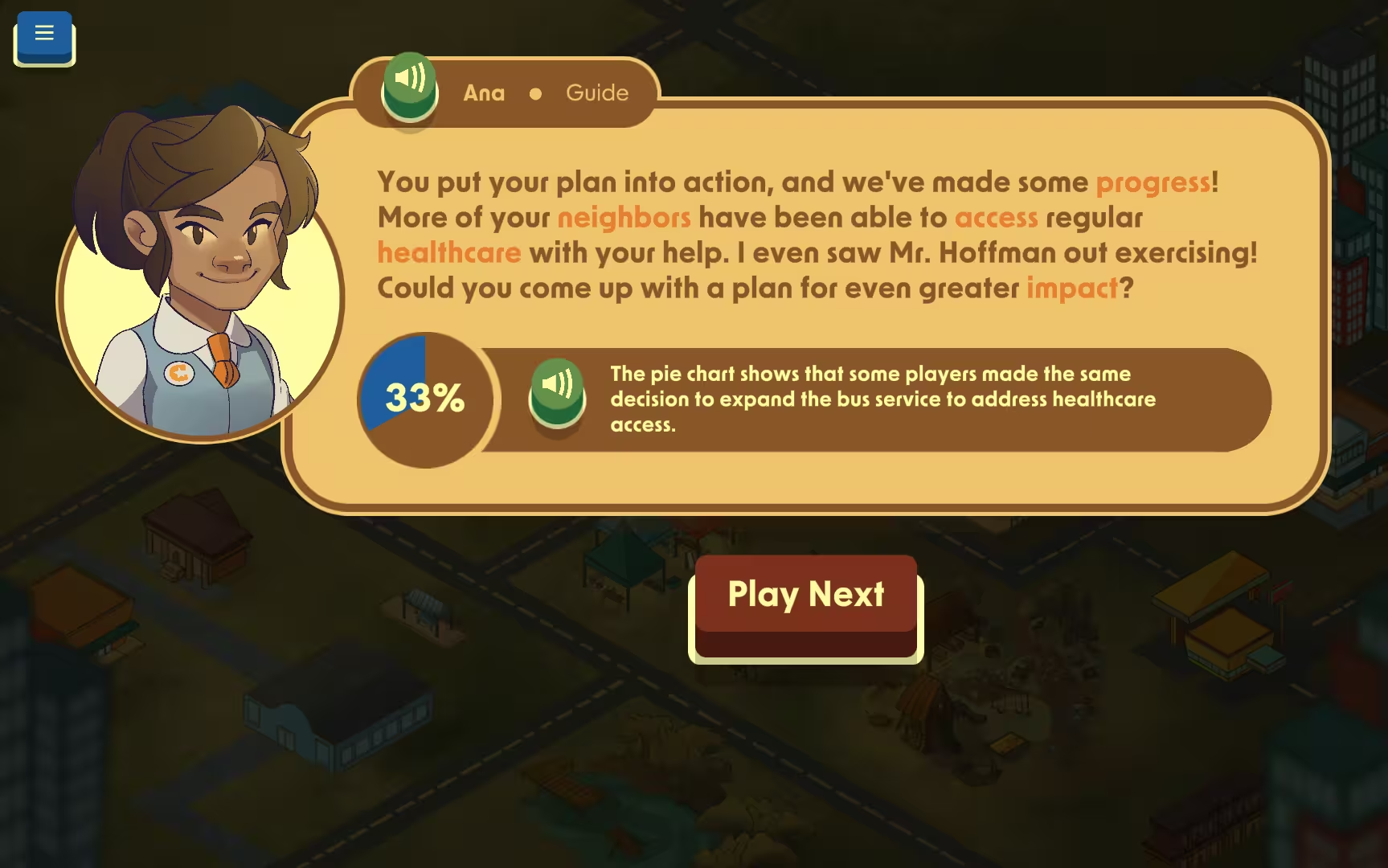
Neighborhood Good is a civics learning game developed with iCivics that introduces students to community-level civic engagement. Players select issues within a fictional neighborhood, talk with residents to understand different perspectives, and develop plans of action using available community resources.
Explore →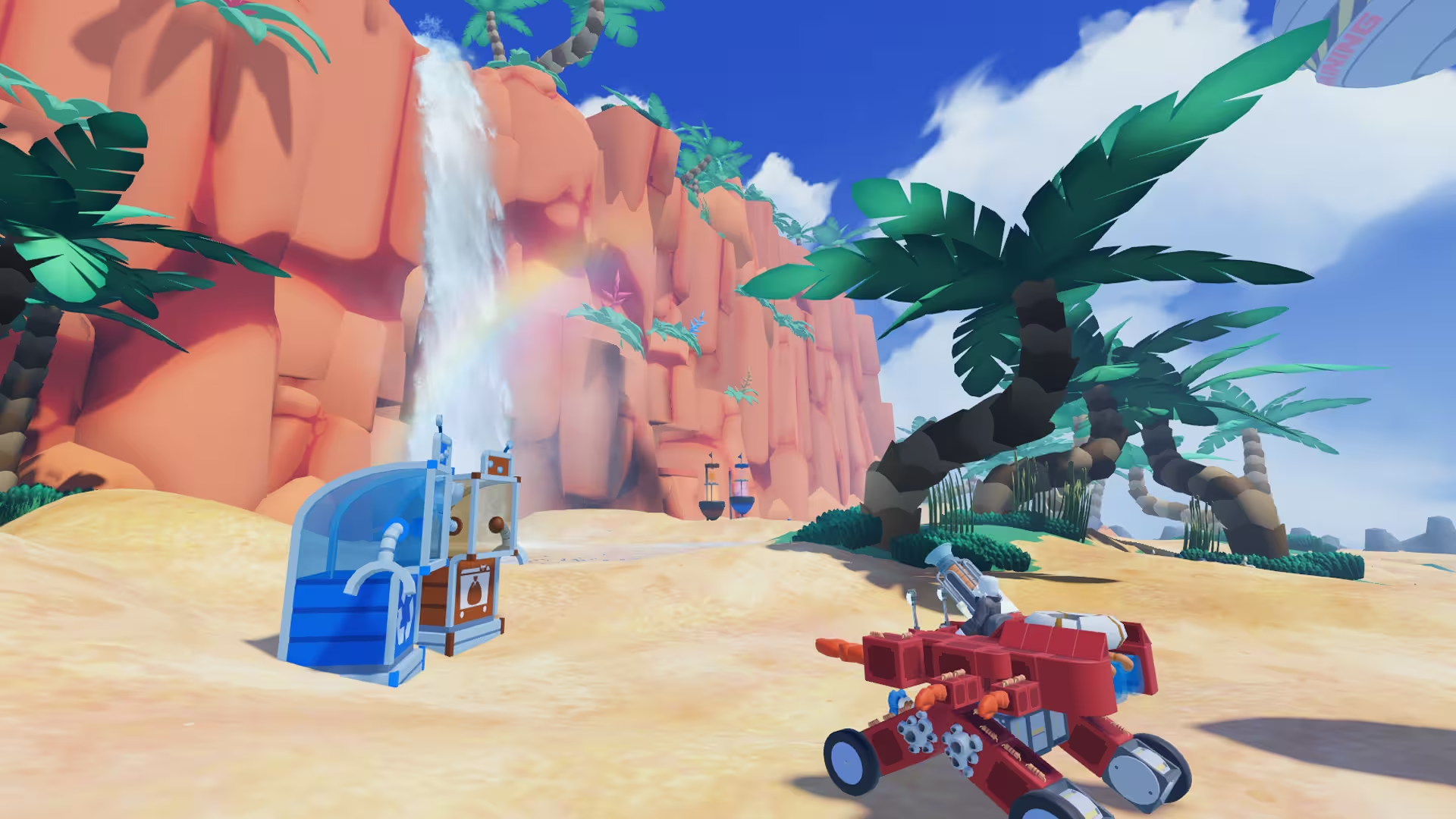
Salvage Safari is a sustainability learning game developed with Niagara Cares that focuses on recycling practices and the circular economy. Players participate in multiplayer challenges within a shared environment, collecting, sorting, and disposing of waste to support environmental goals.
Explore →Creating educational games requires a deep understanding of pedagogy and mechanics, but it also requires something else, every single time - electricity ⚡. The video game industry consumes vast amounts of energy, and the cloud integrations required for modern learning platforms only increase that energy draw. If you're commissioning game-based learning tools, you need to understand these hidden costs. Prioritizing sustainable software architecture lowers long-term operational expenses and aligns with corporate ESG standards. We've been reviewing recent industry reports on the carbon complexities of game development and publishing, covering new compliance regulations, the cost of cloud infrastructure, and the ways games themselves teach sustainability. Read on to see what we’ve found!
A 2026 article in IEEE Software lays out just how energy-hungry modern digital infrastructure has become. Training AI models and running cloud services drastically inflate the carbon footprint of software systems, and the authors point out that a single medium-length query on an advanced AI platform can burn between 18 and 40 watt-hours. That matters for education, where titles increasingly lean on cloud infrastructure to personalize the learning experience. To get a handle on it, developers are adopting standardized metrics that quantify energy use during production. Tracking something like joules per frame lets a team deliver rich, interactive experiences while keeping server costs and emissions in check. Bring those habits to your projects and your game-based learning portfolio stays efficient and responsible.
The Playing for the Planet Alliance takes a wide-angle look at these accounting headaches in its report Untangling the Carbon Complexities of the Video Gaming Industry, mapping the greenhouse gas barriers that face the sector. Making and distributing video games generates a heavy carbon footprint across the whole supply chain; by the report's own math, even an hour with a digitally downloaded console game works out to roughly 50 grams of carbon dioxide equivalent. If you're funding educational games, getting a clear picture of those Scope 3 emissions is essential for accurate environmental reporting. The report's core takeaway recommends that we optimize software to draw less power from the hardware, directly limiting emissions. Partnering with studios that measure and manage these variables keeps your digital learning projects aligned with global decarbonization efforts.
Regulation is starting to catch up too. This article from GreenShot walks through a new mandate from the French CNC that requires studios to submit formal carbon assessments before they can qualify for production funding. Streaming and cloud gaming come in for particular scrutiny, since they shift the energy burden onto remote data centers, and the piece is specific about the fix, recommending that developers optimize code, simplify server architectures, and compress files to cut data transfer. As governments worldwide tighten environmental standards, clients funding educational games will feel the same pressure. Working with developers who already bake carbon calculators into their pipelines helps your applications clear those requirements without derailing production timelines.
For a look at the flip side, a study in Frontiers in Psychology explores what these simulated ecosystems can actually teach. Researchers watched how players engaged with Eco, a multiplayer game we’ve covered a few times before, where you build technology to stop an incoming meteor while keeping pollutants from wrecking the world around you. Seeing the direct consequences of resource depletion play out on screen helped reinforce systems thinking, and the game gave players a hands-on feel for the Tragedy of the Commons, nudging them to put group survival ahead of individual resource hoarding. For anyone building game-based learning, that's encouraging evidence that even complex sustainability topics can be taught through interactive media. A well-designed simulation lets learners live out the results of their environmental choices in a space where the stakes stay safe.
~
Taken together, these reports show that sustainable software engineering will let us scale game-based learning worldwide without handing massive energy bills to the next generation. Building on efficient digital infrastructure allows your organization to deliver high-quality learning experiences that hold up against modern ESG standards. Interested in developing energy-efficient educational games for your learners? Let's talk.
Best practices for preventing motion sickness while maximizing learning outcomes.
Best practices for preventing motion sickness while maximizing learning outcomes.
Get the latest Game-Based Learning Review content delivered to your inbox, including new articles, videos, and industry insights.