
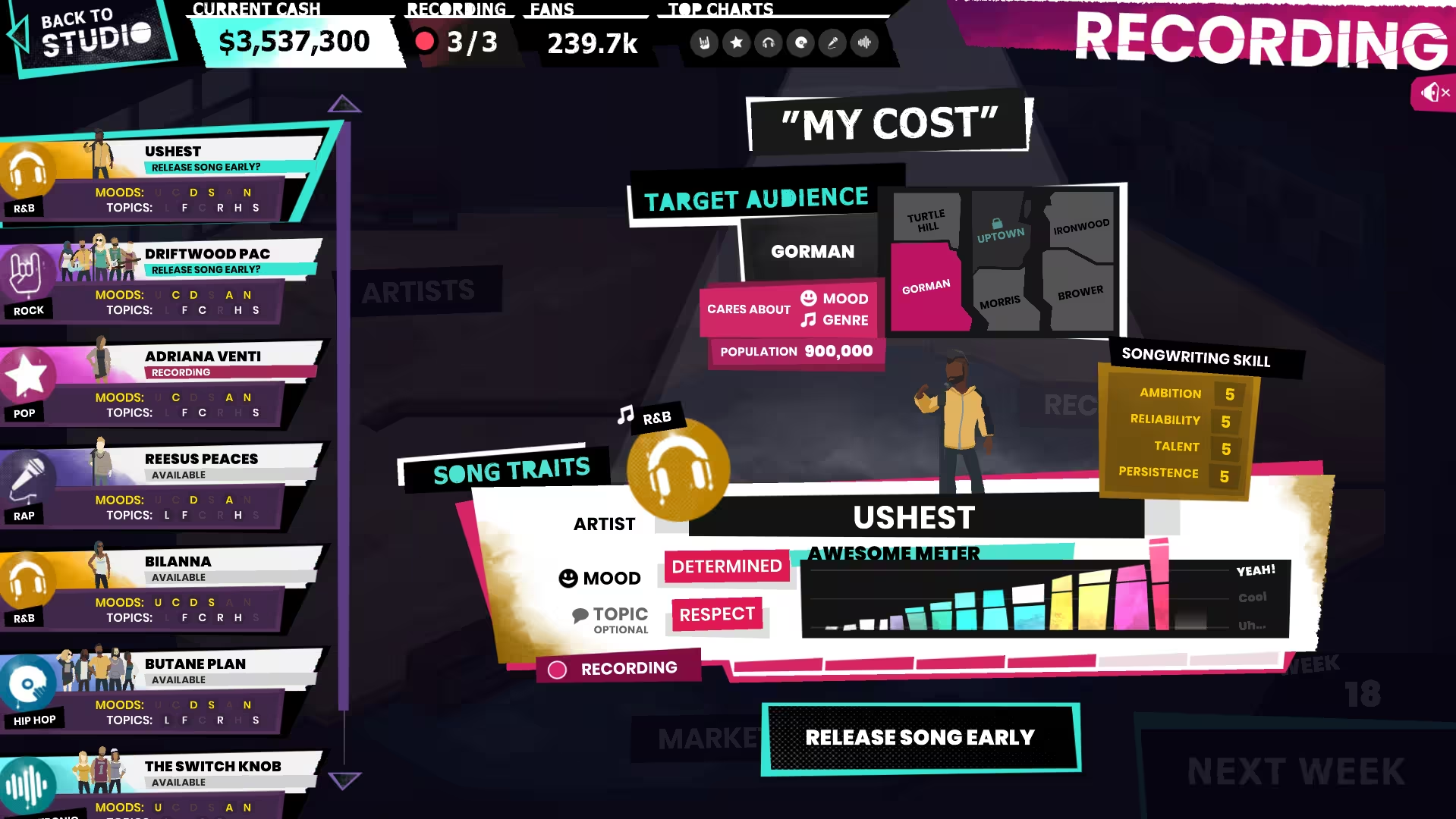
Beats Empire is a turn-based computational thinking and data analysis game developed for Columbia University and delivered through web browsers. Players run a music studio and record label, using market data from a fictional city to guide business decisions.
Explore →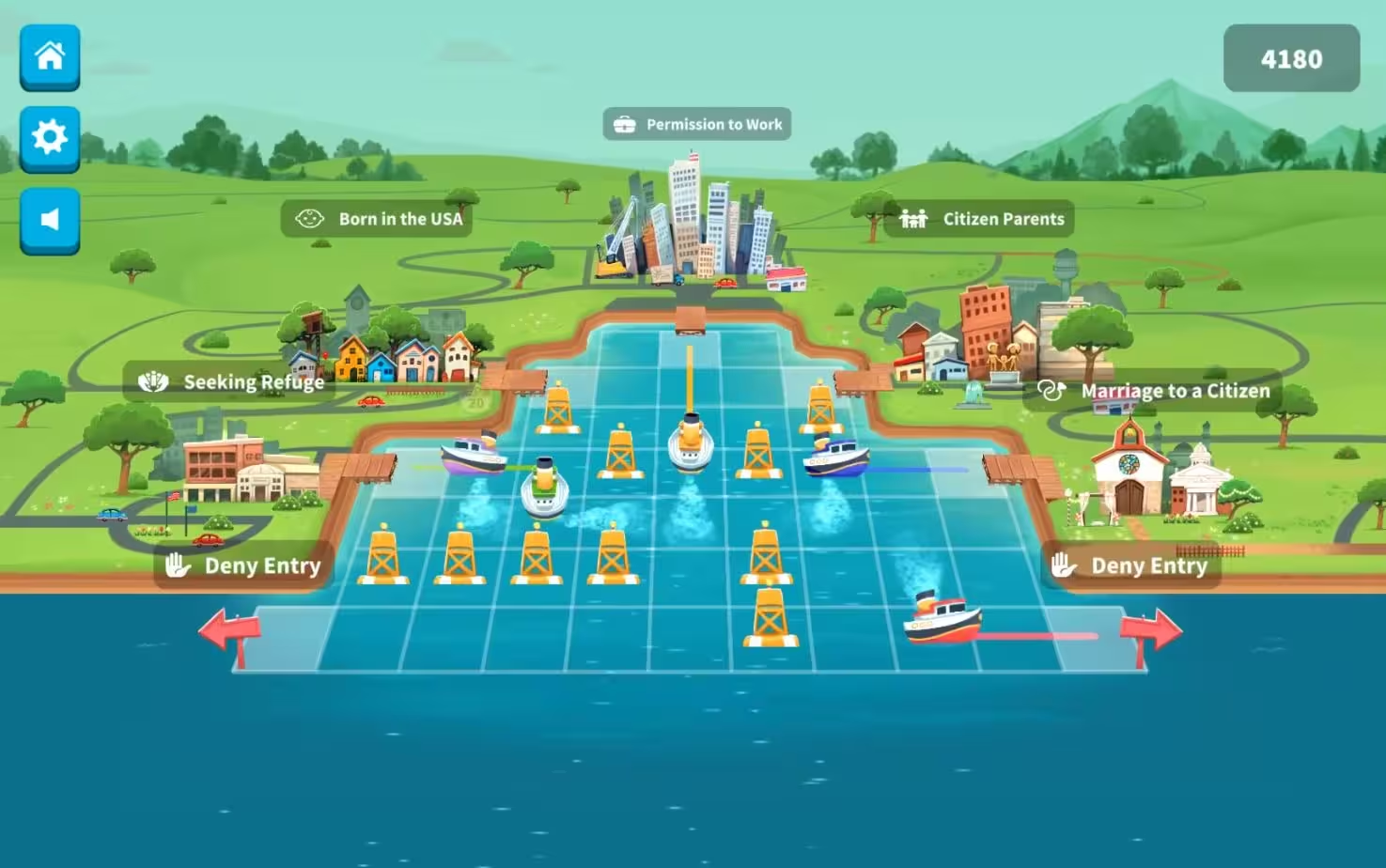
Immigration Nation is a civics learning game developed with iCivics that focuses on the U.S. immigration and naturalization process. Players guide individuals through pathways to legal residence and citizenship by applying eligibility rules and making decisions within a turn-based system.
Explore →Happy Wednesday, Filafriends! September is a wrap, and this month we explored the educational game design and engineering questions we field on nearly every project. As much as we love to emphasize the transformative power of play, bringing games into classroom and professional learning environments also includes an entire plethora of practical considerations. Read on for a quick recap of each area we tackle when developing educational games!
This post sorts the numbers from our own portfolio into the kinds of claims each one can support. Mission: Mars, our Roblox game with the Museum of Science, demonstrates reach with 7.9 million visits, and Salvage Safari, built with Niagara Cares, shows competency through an 83.9% sorting accuracy rate drawn straight from its core gameplay loop. Do I Have a Right?, from our long partnership with iCivics, offers both kinds of evidence at once, pairing more than 200 million plays with a 26% increase in student civic knowledge. When the central verb of a game is the learning objective, the telemetry produces evidence of learning as a byproduct of play.
Once you have evidence of learning, it has to reach the teacher in a form they can use. This post draws on research in Technology, Knowledge and Learning showing that teachers want dashboards that point toward their next instructional move, and that involving teachers throughout the design process improves adoption. From there it covers placing reports inside the LMS through LTI Advantage and organizing views around the competencies that the game is designed to address.
For educational game designers, stealth assessment is an enticing concept, aiming to measure learning without pausing the game for a quiz. This post traces the approach back to Valerie Shute's work and to the evidence-centered design framework formalized by Mislevy, Steinberg, and Almond in 2003, which links a competency model, an evidence model, and a task model. We relate this to Beats Empire, the NSF-funded formative assessment game we built with Teachers College at Columbia University, where every data-driven decision a player makes to grow their music studio doubles as evidence of how they interpret data. The task model maps neatly onto level design, with each situation offering choices that reveal how the player thinks.
Soft skills carry a reputation for being hard to measure, and this post shows how a well-designed simulation makes them observable. The process starts with the business metric a training program is meant to move, then defines the target behavior in verbs a design team can build against, such as resolving an upset customer's complaint without transferring the call. Mooving Cows, our low-stress cattle handling game with the University of Wisconsin-Madison, turns frustration regulation into a sequence of handling decisions the game can record. Naming the metric up front gives corporate buyers a measurement plan that holds up in a budget review!
We closed the month on the engineering side with a look at data pipelines. Classroom telemetry arrives in synchronized bursts when a class period begins, so this post makes the case for planning around peak concurrency and walks through standard event formats like 1EdTech's Caliper Analytics and an architecture that keeps the ingest buffer separate from the analytical store. It closes on designing for deletion, with one pseudonymous key per learner so a district's removal request can reach every copy of the data. Building the pipeline alongside the game is a tried-and-true way for a team to deliver the evidence it promised at kickoff.
~
Each of these practical considerations builds on the others, from the verbs designed into a game's core loop to the dashboard a teacher opens between periods. When your team plans for them during preproduction, they become part of the game's design from the start and pave the way towards efficacious gameplay with your target learners. We find this work every bit as rewarding as designing the play itself, since it's how a great game reaches the learners it was built for. Interested in building a custom educational game for your organization? Let's talk!
Best practices for preventing motion sickness while maximizing learning outcomes.
Best practices for preventing motion sickness while maximizing learning outcomes.
Get the latest Game-Based Learning Review content delivered to your inbox, including new articles, videos, and industry insights.