
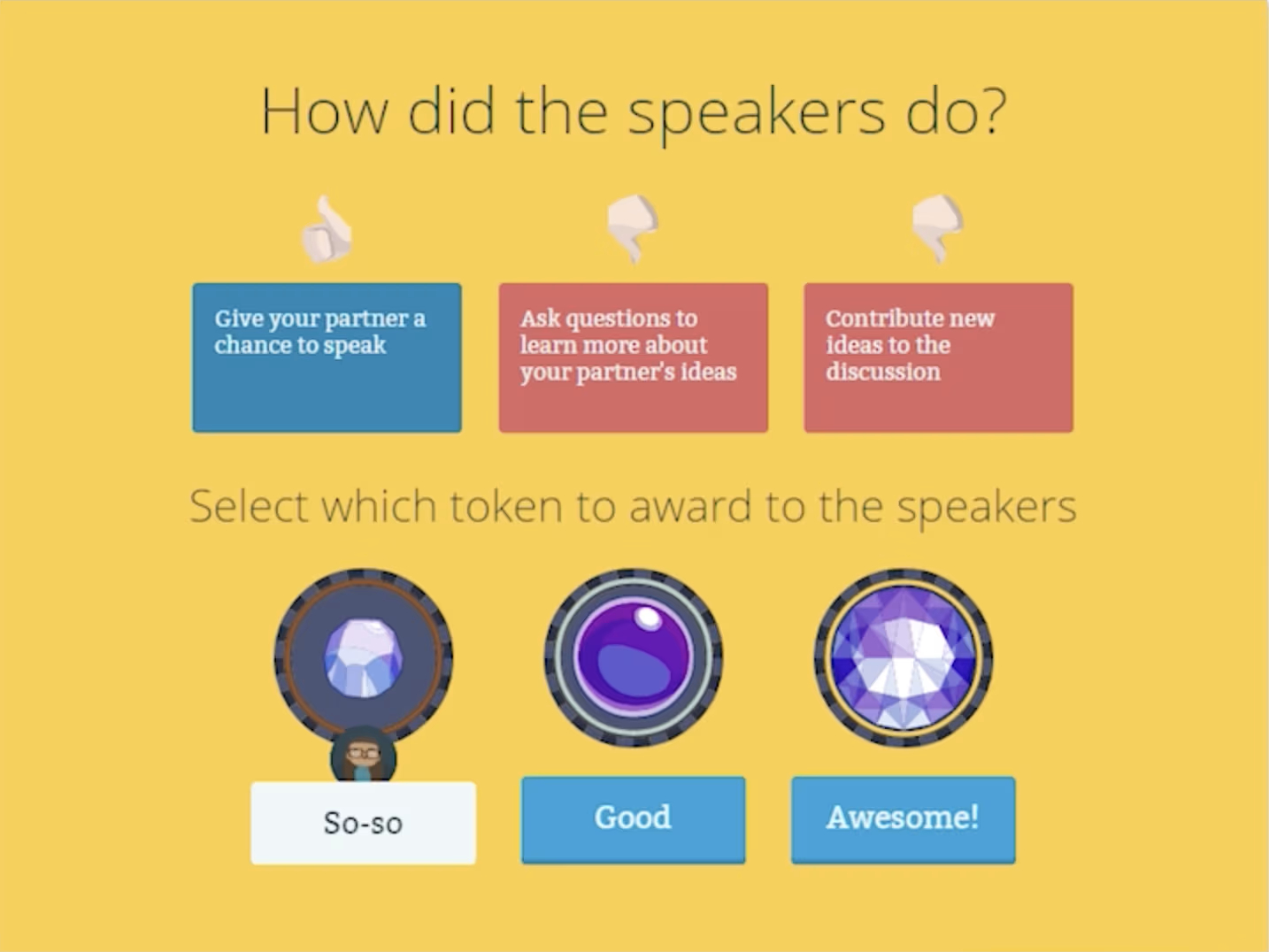
Discussion Maker is a multiplayer mobile game developed by Filament Games that teaches speaking, listening, and argumentation skills. Designed for face-to-face classroom use, the game enables teachers to facilitate structured small-group discussions at scale.
Explore →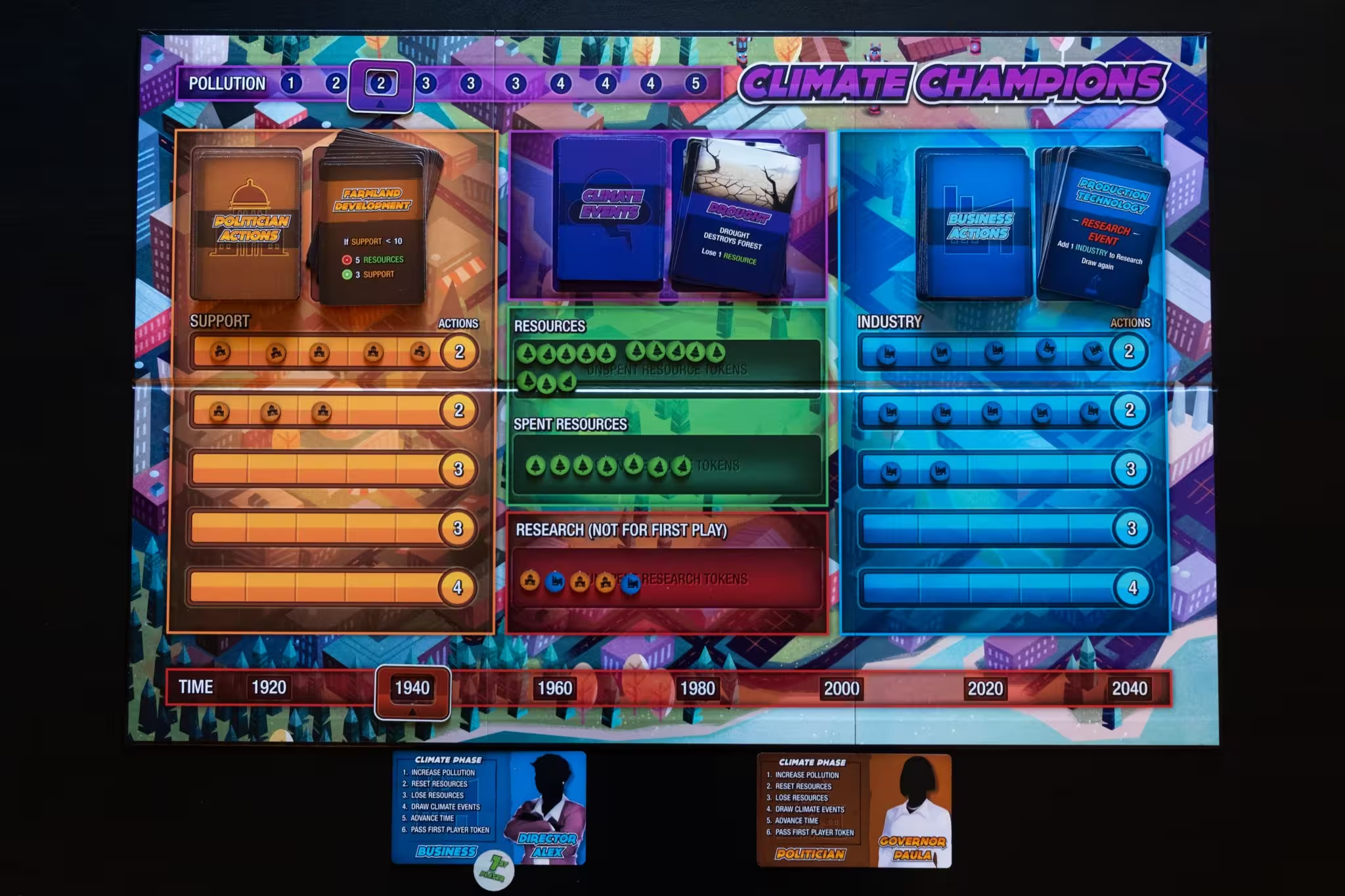
Climate Champions is a climate science learning board game developed with Educational Service District 101 that focuses on the environmental and economic impacts of climate change. Players collaborate to grow Washington State’s economy while managing resources.
Explore →This month we covered what counts as proof that a learning game works, how to report that evidence to teachers, and how the same approach applies in corporate training. All of it depends quite heavily on a pipeline that absorbs and processes events without dropping them. Another unique aspect of classroom telemetry is the way it arrives in synchronized bursts, since a period begins and thirty devices launch the same activity within seconds of one another, with every school in the time zone running a similar bell schedule. Average events per second is a poor capacity number under those conditions, so today we’re exploring how to plan for peak concurrency instead!
Caliper Analytics from 1EdTech (a nonprofit EdTech consortium) provides a structured approach to describing, collecting, and exchanging learning activity data, establishing a common vocabulary for learning interactions. They also provide the Sensor API for transmitting event data from instrumented applications to endpoints for storage and analysis. 1EdTech has separately published a comparison with xAPI concluding that the two standards are not equivalent and that the choice between them depends on your use case. Adopting an established envelope before designing a schema of your own costs a few days and shortens every integration conversation you will have with a district data platform, particularly if you are already deploying through the LTI standard.
AWS publishes a reference architecture for game analytics built as a modular serverless pipeline that collects both real-time and batch telemetry from game clients and backend services, deployable through CDK or Terraform and scaling with usage from early playtesting through full production. The important lesson here is their separation between a durable ingest buffer sized to absorb a burst before backpressure reaches the client and an analytical store partitioned to match query patterns. For classroom data that usually means partitioning by date and clustering by section or district, with client-side batching placed in front of the whole arrangement so a synchronized launch does not become thirty simultaneous connection setups per room.
ClickHouse documents a rollup pattern for high-volume event data built from three objects, consisting of a raw events table, a rollup table holding aggregate states, and a materialized view that writes into the rollup automatically on insert. The stated use case is an append-only event stream where most queries aggregate over time ranges and consistent sub-second reads matter more than access to every raw row. A teacher opening a class view during the passing period is precisely that query, which is why reporting design has to settle which questions the dashboard answers before the rollup can be defined.
The handling of student data is governed by COPPA and FERPA, and district agreements routinely require removal of a learner's records on request. Deletion has to reach raw events, rollups, exports, and backups, which is difficult to retrofit onto a pipeline that has scattered learner identifiers across denormalized tables. Keep one pseudonymous key per learner, hold identifying information in a single system you can purge, and set retention windows per data tier at the outset, which costs very little during design and clears an obstacle that can otherwise stall procurement.
~
Telemetry infrastructure rarely appears in a project pitch, and it determines whether the evidence promised at kickoff can be produced at all. Building the pipeline alongside the game keeps those options open through launch and past it. Interested in building a telemetry pipeline that holds up in classrooms? Let's talk!
Best practices for preventing motion sickness while maximizing learning outcomes.
Best practices for preventing motion sickness while maximizing learning outcomes.
Get the latest Game-Based Learning Review content delivered to your inbox, including new articles, videos, and industry insights.