
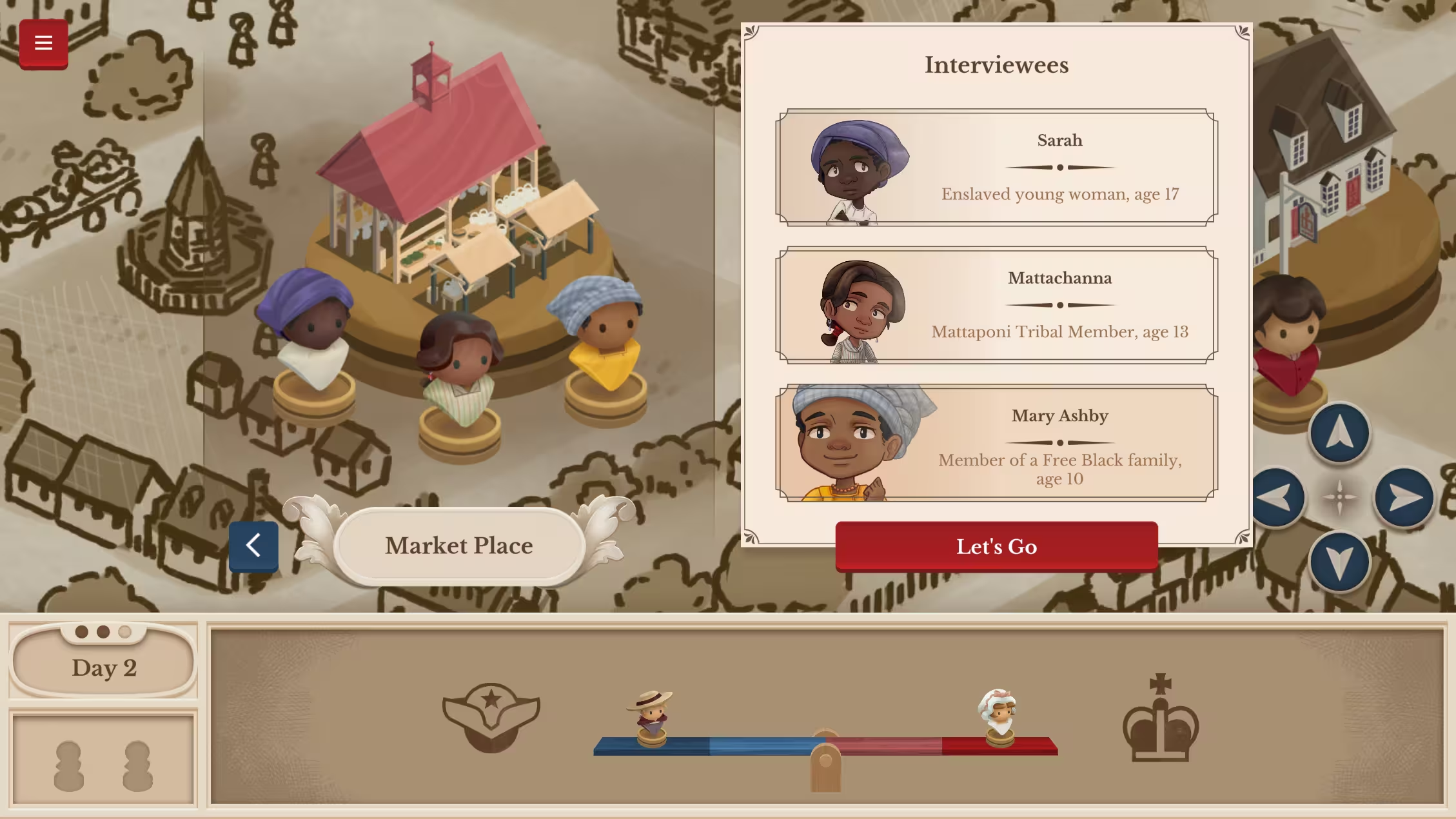
Uncovering Loyalties with Colonial Williamsburg is a history learning experience set in 1774 in pre-revolutionary Virginia. Commissioned by Lord Dunmore, players question townspeople to determine where loyalties lie as tensions around independence rise.
Explore →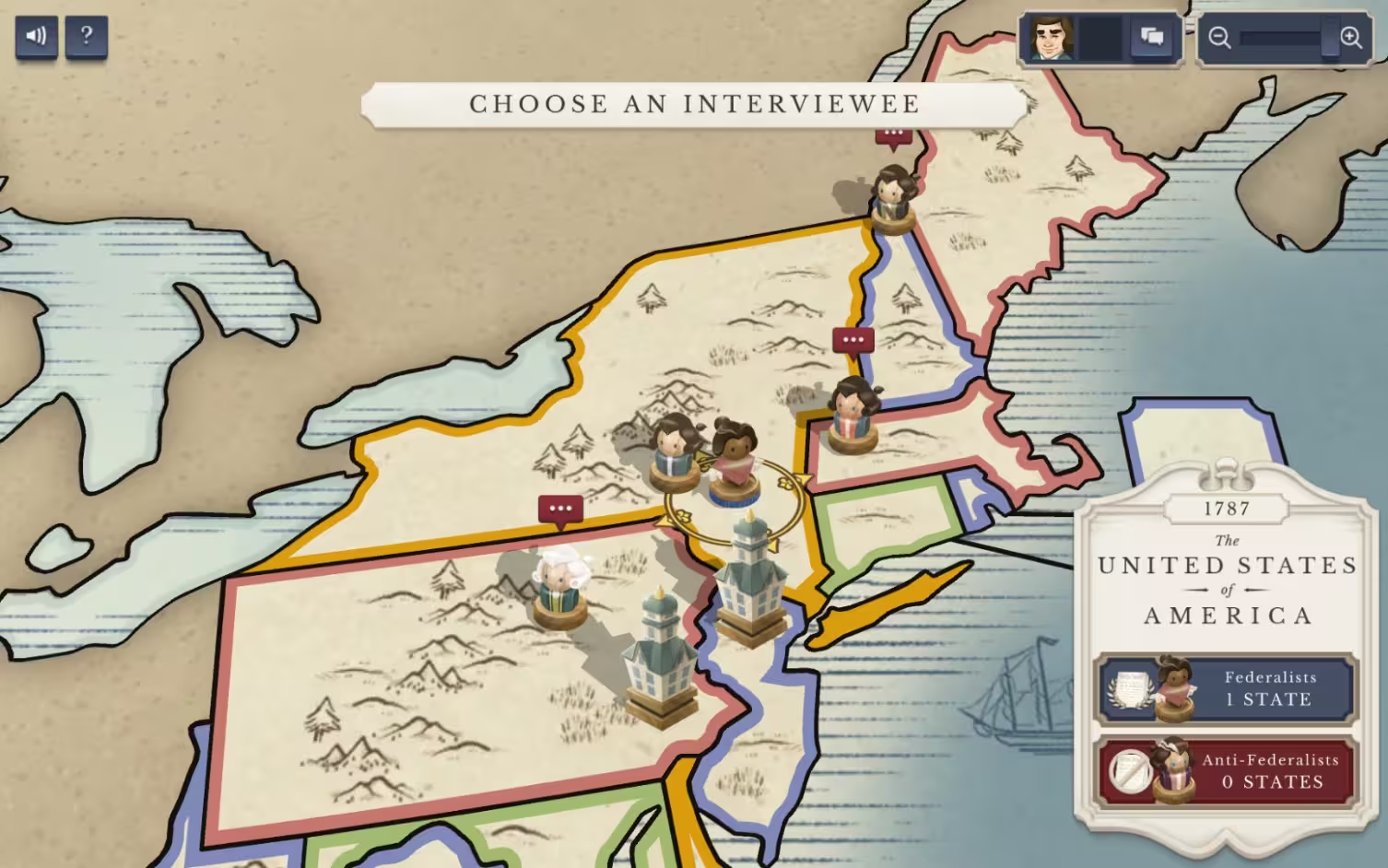
Race to Ratify is a civics learning game developed with iCivics that focuses on the debate over ratifying the U.S. Constitution. Players take on the role of a pamphleteer aligned with either the Federalists or Anti-Federalists, traveling across the thirteen states to gather arguments and influence public opinion.
Explore →The conversation around artificial intelligence in education is about everything - principles, strategy, opportunity, risk, and the latest breakthroughs in capability and reach. This month, we’re turning our attention to rigorous application. Across higher education and K-12, developers are releasing specialized capabilities built specifically for learning, and evaluating them means looking closely at how students actually interacted with the technology. The goal hasn't changed. Educators still want students to build deep comprehension and stay cognitively engaged. Our August 2026 research roundup gathers the most useful findings and strategic shifts from the past month, as the field worked to embed analytical thinking and ethical reasoning into every layer of instruction. Here's what stood out to us.
The Center for Data Innovation highlighted how universities were moving away from isolated computer science programs and integrating AI literacy directly into specialized domains like bioinformatics, engineering, and agriculture. The University of Washington will launch an interdisciplinary minor in Spring 2027 that asks students to tackle real-world problems with AI tools, then assess how the AI-assisted result differs from what they could have produced on their own. Syracuse University took an early-immersion approach, with a peer-led bootcamp that introduced these workflows to students in their first days on campus. There are clear parallels here for educational game developers. Simulated environments and applied problem-solving modules can deliver this kind of contextual, hands-on experience that mirrors the way technologies are applied in professional environments.
The Brookings Institution noted a significant shift in how researchers evaluate educational technology. Traditional randomized controlled trials assumed a stable intervention applied consistently across contexts, and that assumption breaks down when the thing being tested is a dynamic, frequently updated model - as we know, this describes any AI product. Brookings points instead to implementation research and development, which relies on rapid cycles of testing and refinement using real-time data the tools capture themselves. For teams building game-based learning experiences, this is familiar territory. We already lean on iterative telemetry and continuous testing to isolate specific design choices and watch how they change behavior. Building those feedback loops into educational tools keeps them effective and verifiable even as the underlying architecture keeps changing.
Tom's Guide interviewed Ashish Bansal, founder and CEO of StarSpark AI, about the fundamental flaws in using general-purpose chatbots for education. He argues that consumer models optimize for engagement, while a real educational platform has to optimize for productive struggle. (I would argue that we could dispense with the engagement/personalization aspects of AI entirely and experience immediate, universal societal benefits, but that’s another article.) Anyhow, StarSpark is built around delivering the smallest possible nudge to keep students working at the edge of their capabilities - something we have previously highlighted as the Zone of Proximal Development. The system detects when a learner is genuinely stuck and steps in with a short reteach targeted at the specific misconception. Educational studios know this balance well. Scaffolding challenges and offering grade-aligned feedback mirrors the core mechanics of effective game-based learning, the kind that gets players to internalize concepts on their own.
OpenAI recently introduced a set of specialized education plugins designed for distinct classroom roles, connecting directly to approved learning management systems and the course materials teachers and students already use. The College Student plugin draws on learning science to build study guides, flashcards, and interactive visual explanations from sources chosen by the student. The K-12 Educator plugin helped teachers plan differentiated resources and build practice tests aligned to local academic standards. OpenAI reports that more than 200 million young adults are using ChatGPT every week, yet most have used only a fraction of what the tool can do. Structured, bounded access is how you close that capability overhang and push students toward greater literacy.
MSU Denver RED reported that senior talent leaders increasingly see AI as a catalyst for entry-level hiring. Data from the Strada Education Foundation showed new employees taking on more analytical work while routine administrative tasks fell away. That raises the premium on students who can spot inefficiencies and frame complex problems clearly. MSU Denver answered with a campus-wide elective, open to any major, teaching practical AI literacy through applied case studies and ethical reasoning. The implication for educational game development is direct. Digital learning environments need to prioritize complex decision-making and systems thinking, preparing graduates for work that rewards high-level human judgment alongside technical skill.
Science News examined the skill atrophy that can come with heavy reliance on digital assistance. A Wharton School study, published in the Proceedings of the National Academy of Sciences, split nearly a thousand high school math students into three groups, and the results were telling. Students who used a standard chatbot to practice performed worse once they lost access to it, having leaned on the tool instead of learning the mechanics. Students who used a version that offered hints and encouragement while withholding full solutions did about as well as those who studied the traditional way. Researchers called this staying in the cognitive loop, keeping your brain engaged instead of handing the thinking over. That's the design philosophy behind the best educational games. Authentic learning takes deliberate friction, and digital experiences have to push learners to synthesize information on their own to build durable competencies.
~
As usual, this month’s research shows that bringing advanced technology into education works best inside structured, engaging environments that actively challenge learners. Game-based learning is a natural fit for that balance, giving institutions and curriculum designers a way to deploy real technical assistance while protecting the cognitive struggle that real skill-building requires. Interested in building interactive digital experiences that challenge and engage your learners? Let's talk.
Best practices for preventing motion sickness while maximizing learning outcomes.
Best practices for preventing motion sickness while maximizing learning outcomes.
Get the latest Game-Based Learning Review content delivered to your inbox, including new articles, videos, and industry insights.