

Constitutional Compromise is a history and civics learning game developed with iCivics that places students at the center of the Constitutional Convention of 1787. Players engage with competing viewpoints, identify agreement and conflict, and build compromises to explore how those decisions shaped the U.S. government.
Explore →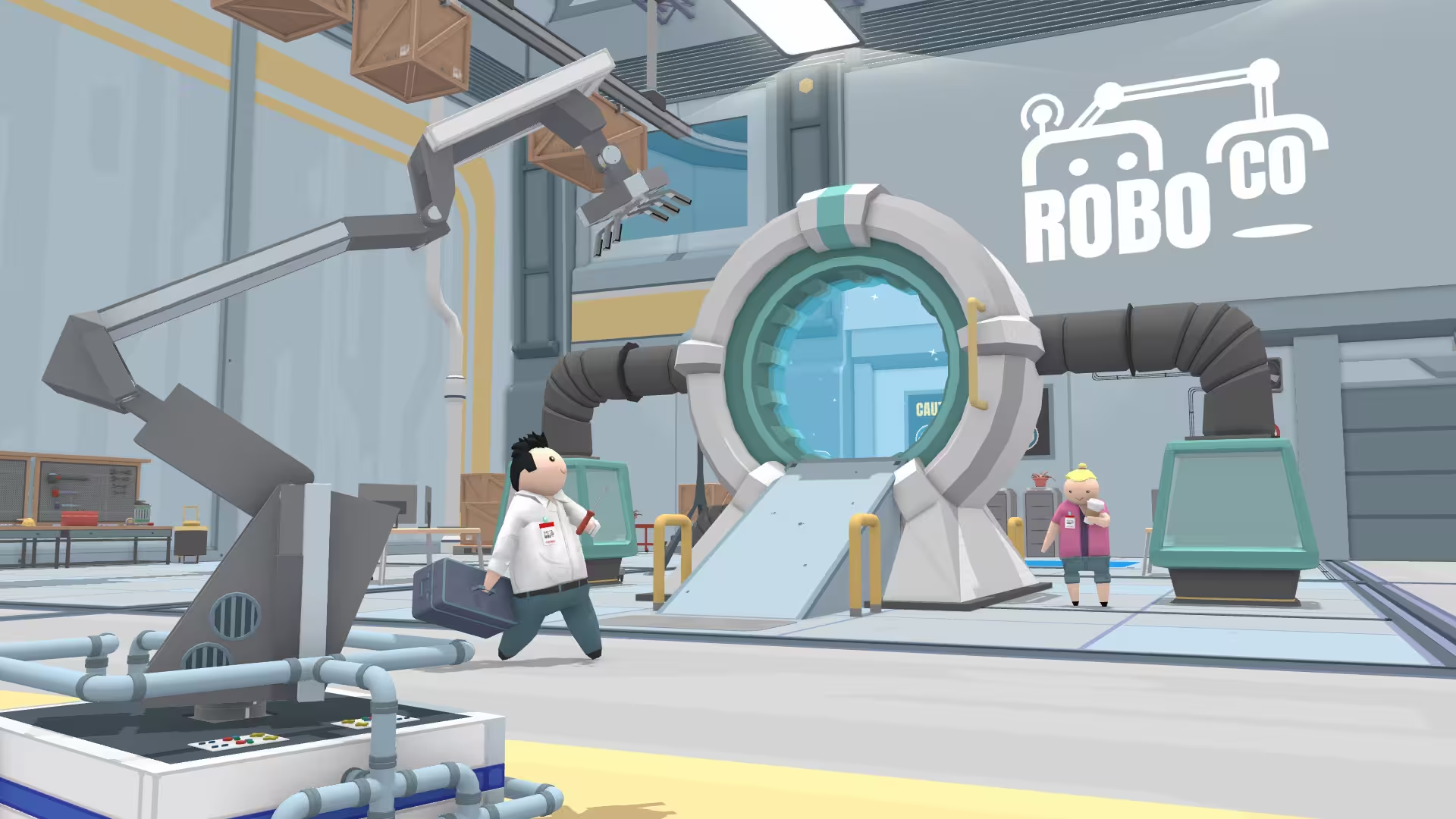
RoboCo is a PC-first robotics sandbox game developed by Filament Games. Players design and build robots piece by piece to solve open-ended challenges and complete engineering courses through creative problem solving.
Explore →Welcome back to our monthly roundup of the most pressing research and news at the intersection of AI and edtech! As we dive into our findings from July 2026, we are navigating a dynamic landscape of emerging perspectives on artificial intelligence in the classroom. There’s an intriguing mix of enthusiastic adoption and understandable caution from global organizations, and we’re keeping a close eye on what it all means for the types of games and training simulations we build. Through all the hype, one theme remains constant: the critical importance of keeping humans in the loop. With that lens before us, let's explore what researchers and professionals in the field are discovering about the intersection of algorithms and active learning this month.
At a recent regional conference in Sarajevo, UNESCO gathered educators to tackle the ethical dilemmas of digital learning. During the event, the organization launched global resources on artificial intelligence in multiple local languages to expand regional access and equip teachers with practical guidance. Discussions highlighted the necessity of safeguarding educational integrity and learner well-being as these tools become more prevalent. The consensus from the conference underscored that technology must ultimately serve learning and strengthen critical thinking. For studios building digital learning environments, this is a clear reminder that software should uphold human values. The findings explicitly state that while AI tools are powerful allies, teachers will continue to be the most essential resource in any classroom.
The World Economic Forum is highlighting a growing risk where students treat algorithmically generated information as unquestioned authority. Because most large language models are trained on Western-dominant, English-language datasets, they often carry cultural biases and linguistic blind spots. The report notes that treating these outputs as absolute facts can introduce significant distortions and oversimplified explanations. Evidence from Saudi Arabia shows educators are already actively correcting these biased outputs in their teaching. This data indicates a strong need for educational tools that encourage students to systematically critique information rather than passively consume it. Software developers have an opportunity to design mechanics that require active examination, reinforcing critical inquiry rather than simply delivering answers.
Microsoft recently released its 2026 special report, revealing that 92% of students and education leaders have already used artificial intelligence for school-related purposes. Despite this massive adoption rate, roughly 77% of students report having no formal training on the technology. The research also shows academic integrity remains a major worry for 42% of educators. In response, Microsoft is rolling out new capabilities designed to support student independence and critical thinking without doing the actual work for them. The demand for practical, role-based training is skyrocketing across all demographics. These statistics prove that users are hungry for structured, guided experiences that define clear guardrails for responsible classroom integration.
A new analysis from GIS Reports explores how automated tools threaten to undermine the development of core cognitive skills like reading, numeracy, and analytical thinking. The report argues that software instantly generating text or completing assignments supplants the intellectual effort required for genuine comprehension. The authors suggest that education systems must allow for institutional diversity and competitive experimentation to discover the best integration methods, and argue that centralized planning runs the risk of locking entire generations into ineffective models. For the educational game industry, this perspective points to the need for varied, specialized tools that target specific learning contexts. It is vital that we build software that embraces the productive struggle of learning rather than removing it.
A recent NPR and Ipsos poll provides hard numbers on how K-12 teachers are reacting to the influx of classroom algorithms. While 60% percent of surveyed teachers use the tech for work tasks, 54% believe it makes it harder for students to learn critical thinking skills. The data shows 59% of educators feel the technology is actively eroding the level of trust between students and teachers. Nearly 80% of respondents think schools should explicitly teach responsible use of these tools. Teachers are adapting by requiring more assignments to be done by hand or during class time. These findings highlight a massive opportunity to create verifiable, play-based assessments that rebuild trust and prove genuine skill acquisition.
~
The data is clear that while artificial intelligence offers incredible personalization, keeping the human in the loop through active, verifiable assessment is paramount to preserving cognitive development. Game-based learning is perfectly equipped to deliver these experiences, giving educators the transparent tools they need to foster genuine critical thinking without compromising trust. Interested in building custom educational games that drive real learning outcomes? Let's talk.
Best practices for preventing motion sickness while maximizing learning outcomes.
Best practices for preventing motion sickness while maximizing learning outcomes.
Get the latest Game-Based Learning Review content delivered to your inbox, including new articles, videos, and industry insights.