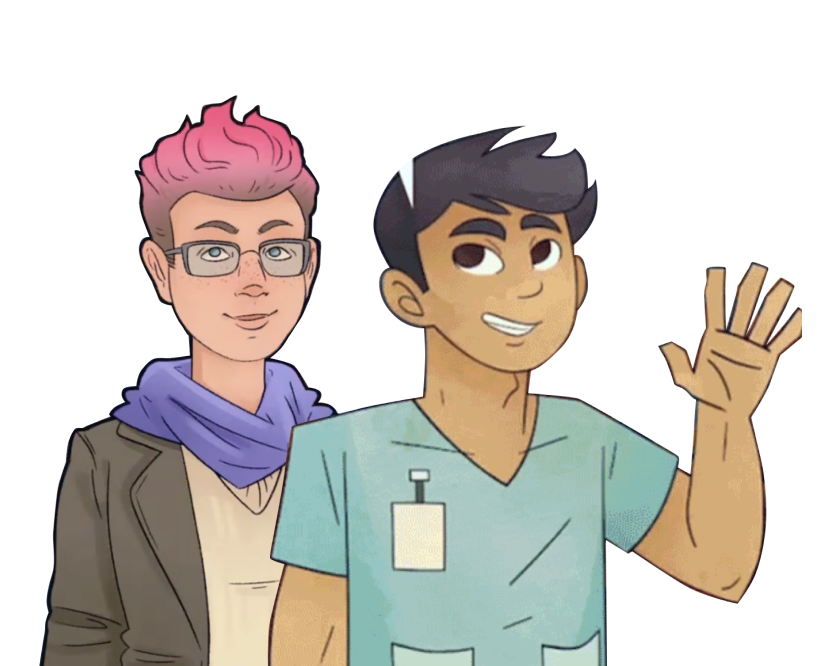

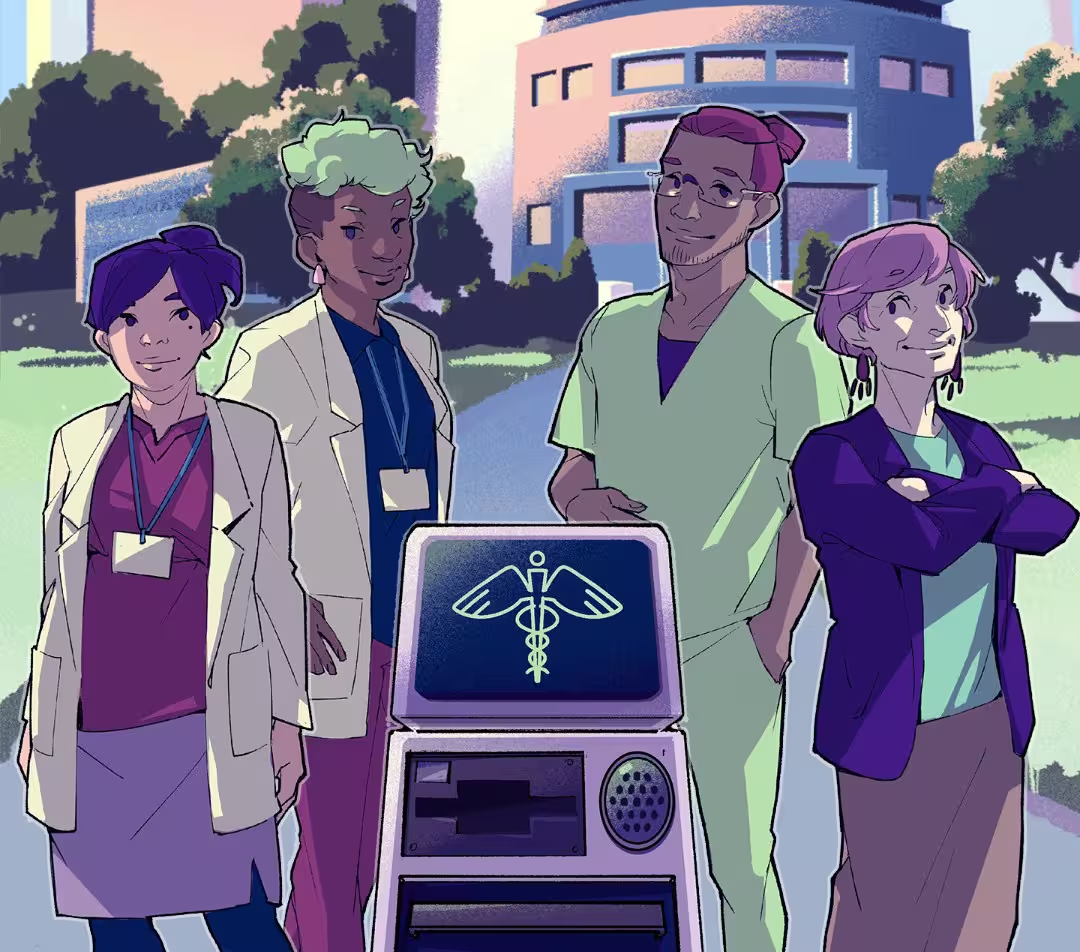
Medibytes is a medical terminology learning game developed with West Coast University that focuses on reinforcing vocabulary used in nursing and clinical settings. Players teach terminology to a simulated AI system by completing structured activities.
Explore →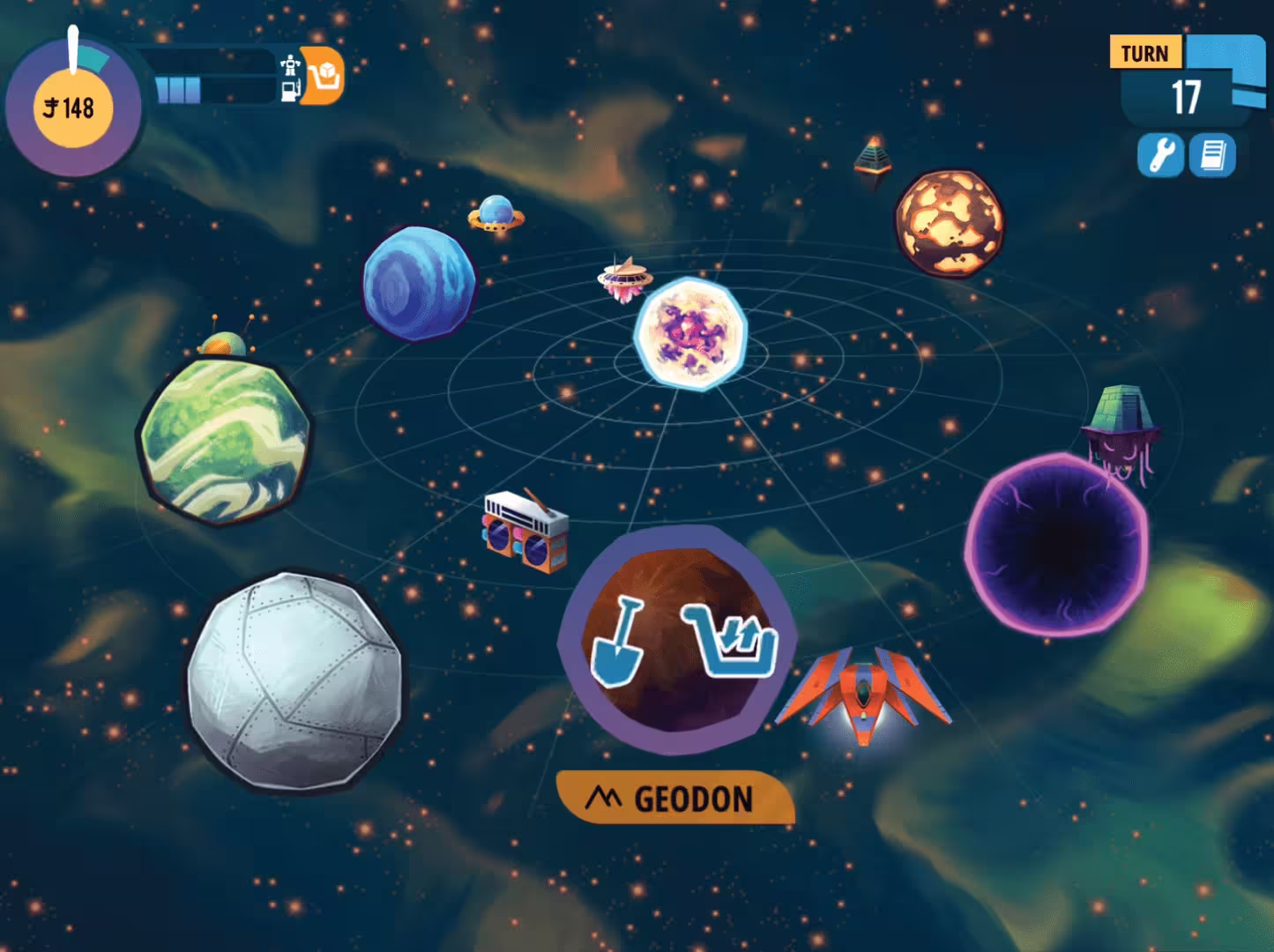
RoboSellers is an economics and entrepreneurship learning game developed with Junior Achievement that focuses on the role of money in business decisions. Players operate a robot parts business, traveling between planets to buy and sell inventory while managing costs, pricing, spending, and saving.
Explore →Welcome back to our monthly review of both the latest and the greatest game-based learning news! Here's what's hot 🔥 this month: a summer coding club where kids built their own games, a randomized clinical trial behind a teen mental health game, DeepMind's look back at 15 years of AI research in games, a new Utah law on student data collection, and a quick peek at the Game-Based Learning Readiness Report. Let's get into it.
The C.H. Booth Library in Newtown, Connecticut just wrapped a Summer Coding Club taught entirely by volunteers from the Newtown High School Computer Science Honor Society, introducing students entering grades 5-8 to computer science by way of game design. The first two weeks covered Scratch, where students used block-based coding to build interactive games with their own sound effects, and the next two moved into Python, working through maps, loops, conditionals, and booleans on the way to building text adventure games. One student came out of it with a riddle-based adventure driven by conditional logic. Moving from blocks to text-based Python inside a single month is a great model because every new concept arrives with an immediate use, and a branching text adventure is a direct way to make a conditional feel relevant and useful.
Dartmouth's play2PREVENT Lab and Center for Technology and Behavioral Health published results in JAMA Network Open from a randomized controlled trial of PlaySmart, a self-guided game built to raise adolescent awareness of mental health and substance use. The trial ran from October 2021 to February 2024 with 532 Connecticut high schoolers ages 16-19, with 269 playing PlaySmart for about an hour a week over six weeks and 263 playing commercial role-playing games with no therapeutic content. A year later, the PlaySmart group's PHQ-8 depression scores were 1.12 points lower than the control group's, results held across sex, race, grade level, and other subgroups, and participants reported more positive attitudes toward seeking psychological help. The researchers place that effect at or above what general school-based programs achieve, which is a big breakthrough for therapeutic content that’s fully self-guided, inside the school day, with no onsite clinician required to run it.
Google DeepMind published a retrospective on 15 years of using games as a research environment, starting with the 2015 Deep Q-Network that learned 49 Atari titles from raw pixels, then AlphaGo's win over Lee Sedol, AlphaZero's single algorithm for chess, shogi, and Go, MuZero learning to play without being given the rules, and AlphaStar reaching Grandmaster in StarCraft II. That work now extends into SIMA 2, a Gemini-powered agent that plays No Man's Sky, Valheim, and Hydroneer using standard keyboard and mouse controls while responding to natural language, and it also produced AlphaFold and a Nobel Prize in Chemistry - no big deal. The post details a research partnership with Fenris Creations, the studio behind EVE Online, targeting continual learning, long-term memory, and multi-agent dynamics inside a persistent universe with two decades of player-driven history behind it. Games remain the most convenient proving ground the field has for anything that needs to plan, adapt, and improvise.
BYU researchers ran 15 to 20 minutes of simulated classroom use through the 100 most commonly used education apps in Utah schools. Among companies that had signed student data privacy agreements, 52% were collecting student information anyway, and 36% of those were sharing it with advertisers using unique identifiers, the kind that allow profiling to continue long after a student closes the app. The study led directly to HB55, sponsored by Rep. Tiara Auxier and in effect since July 1, 2026, which requires stricter privacy terms in edtech contracts, gives educational entities the right to audit vendor compliance, and allows them to terminate a contract when a violation goes unremedied for 30 days. Signed agreements were already in place across these cases, and the law now gives schools a way to confirm those agreements are honored. Compliance with COPPA and FERPA is a baseline requirement in our own work, and we welcome the verification.
Quizlet's Game-Based Learning Readiness Report has been circulating through the education press again this month, and we covered it in full back in Is Your School Ready for Game-based Learning?. That post walks through what the report's infrastructure and access findings mean for anyone designing games for the classrooms schools actually have. Take a look if you missed it the first time around!
~
That's what's new in game-based learning this September! This month’s stories span a broad spectrum of impact, from a library coding club in a small Connecticut town to the Google DeepMind research partnership inside one of gaming's largest persistent universes. Interested in creating a custom educational game for your organization? Let's talk.
Best practices for preventing motion sickness while maximizing learning outcomes.
Best practices for preventing motion sickness while maximizing learning outcomes.
Get the latest Game-Based Learning Review content delivered to your inbox, including new articles, videos, and industry insights.