

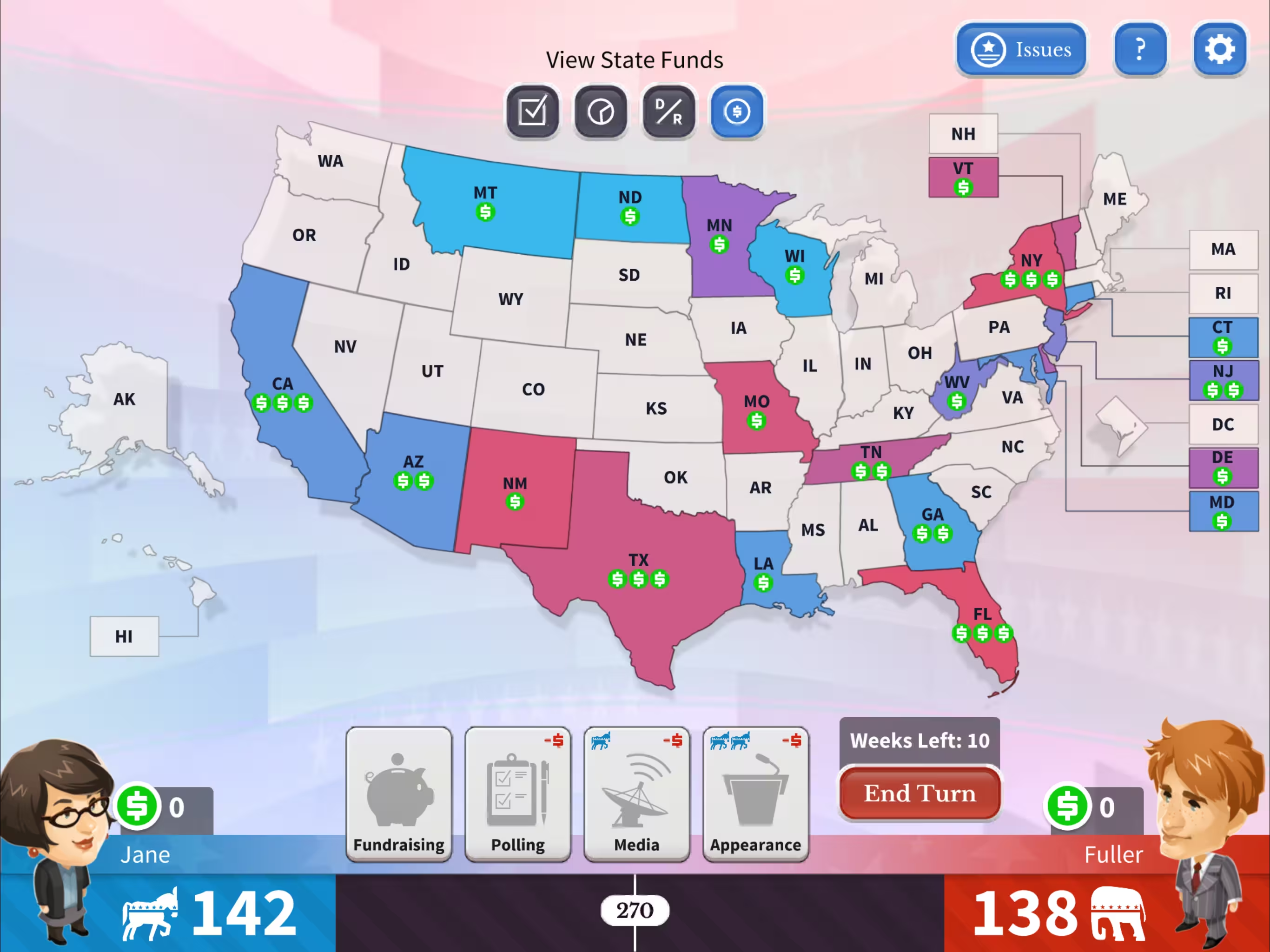
Win the White House is a civics learning game developed with iCivics that challenges players to manage a full U.S. presidential campaign. Players customize a candidate, choose policy positions, and run fundraising, polling, and media outreach efforts to experience the electoral process firsthand.
Explore →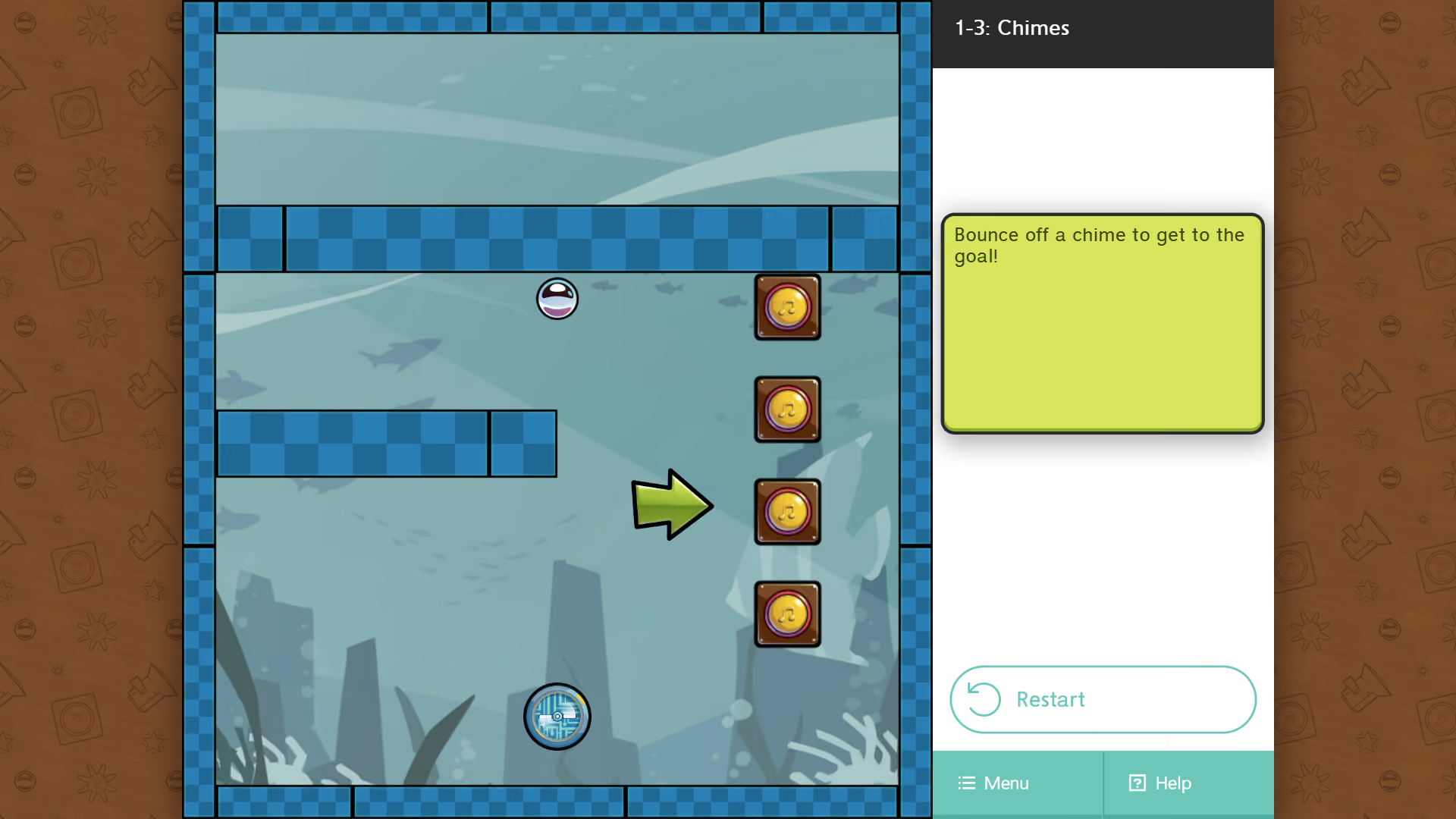
Pinball Energy Challenge is a physics learning game developed with McGraw-Hill that focuses on energy transfer and transformation. Players guide a pinball through interactive environments, observing how different objects convert energy between forms while solving physics-based challenges.
Explore →Much like game-based learning itself, we’re expanding our focus across multiple sectors this month. Across highly various delivery formats, we’re seeing games used to support early literacy, university learning, executive decision-making, and long-horizon policy planning. This month’s examples focus less on novelty and more on function, highlighting how well-designed games make thinking visible, practice repeatable, and learning outcomes observable across very different contexts.
An interview with SKIDOS CEO Aditya Prakash outlines how the platform converts casual mobile games into structured learning experiences through a proprietary SDK. SKIDOS emphasizes adaptive pacing, multilingual access, and design choices that support neurodivergent learners, with a growing library spanning math, reading, and social-emotional skills. Prakash’s framing is notable for its focus on transforming passive screen time into active learning through intentional mechanics rather than layered rewards, positioning game design itself as the instructional engine.
If we may say so ourselves, there are some exciting new voices in the practitioner-led discussion around how we make learning games and educational technology. Our recently-launched Game-based Learning Review on the Filament Games YouTube channel creates space for designers, researchers, and industry leaders to reflect on real development challenges, emerging patterns, and lessons learned from shipped projects, all while playing real educational games that are having an impact today. By focusing on lived experience rather than abstract theory, the series complements formal research with grounded perspectives on how learning games are conceived, built, and evaluated.
A newly published Scientific Reports study explores how female university students in Saudi Arabia describe the cognitive, social, emotional, and psychomotor skills they develop through video games. Based on in-depth interviews, participants reported gains in problem-solving, strategic thinking, teamwork, communication, and time management, with clear examples of transfer into academic tasks. The findings contribute to a growing evidence base that games support skill development beyond entertainment contexts, particularly for populations that remain underrepresented in gaming research
A Wall Street Journal feature examines Hasbro’s internal leadership game, Toy Tycoon, which places rising managers in simulated CEO roles to navigate market shifts, resource allocation, and strategic tradeoffs. The day-long experience blends physical board game elements with digital tracking, giving participants a structured environment to test judgment, risk tolerance, and long-term planning. The program reflects a broader trend in corporate learning, where games and simulations are increasingly used to make complex business decisions visible and discussable. Of particular note is that Toy Tycoon is proprietary and not available to the public, positioning this game-based learning solution as a competitive advantage that embodies Hasbro’s mission and product categories.
New research in npj Climate Action evaluates a serious game designed to help participants understand different types of uncertainty in climate adaptation planning. Through repeated decision cycles and disruptive events, players shifted from treating uncertainty as primarily environmental to recognizing political, institutional, and social dynamics. The study highlights how games can support systems thinking and flexible strategy development, especially in domains where linear planning breaks down under real-world conditions
–
Taken together, these examples show games being used where judgment matters and outcomes are difficult to fake. In early learning, higher education, corporate training, and policy planning, games are doing work that requires participants to make choices, live with consequences, and explain their reasoning. These kinds of learning outcomes are best delivered by games and simulations that allow participants to explore accelerated longitudinal processes and their outcomes, providing priceless insight that would otherwise take years to generate. If you’re looking to immerse your learners in this kind of complex subject matter, let’s talk.
Best practices for preventing motion sickness while maximizing learning outcomes.
Best practices for preventing motion sickness while maximizing learning outcomes.
Get the latest Game-Based Learning Review content delivered to your inbox, including new articles, videos, and industry insights.