

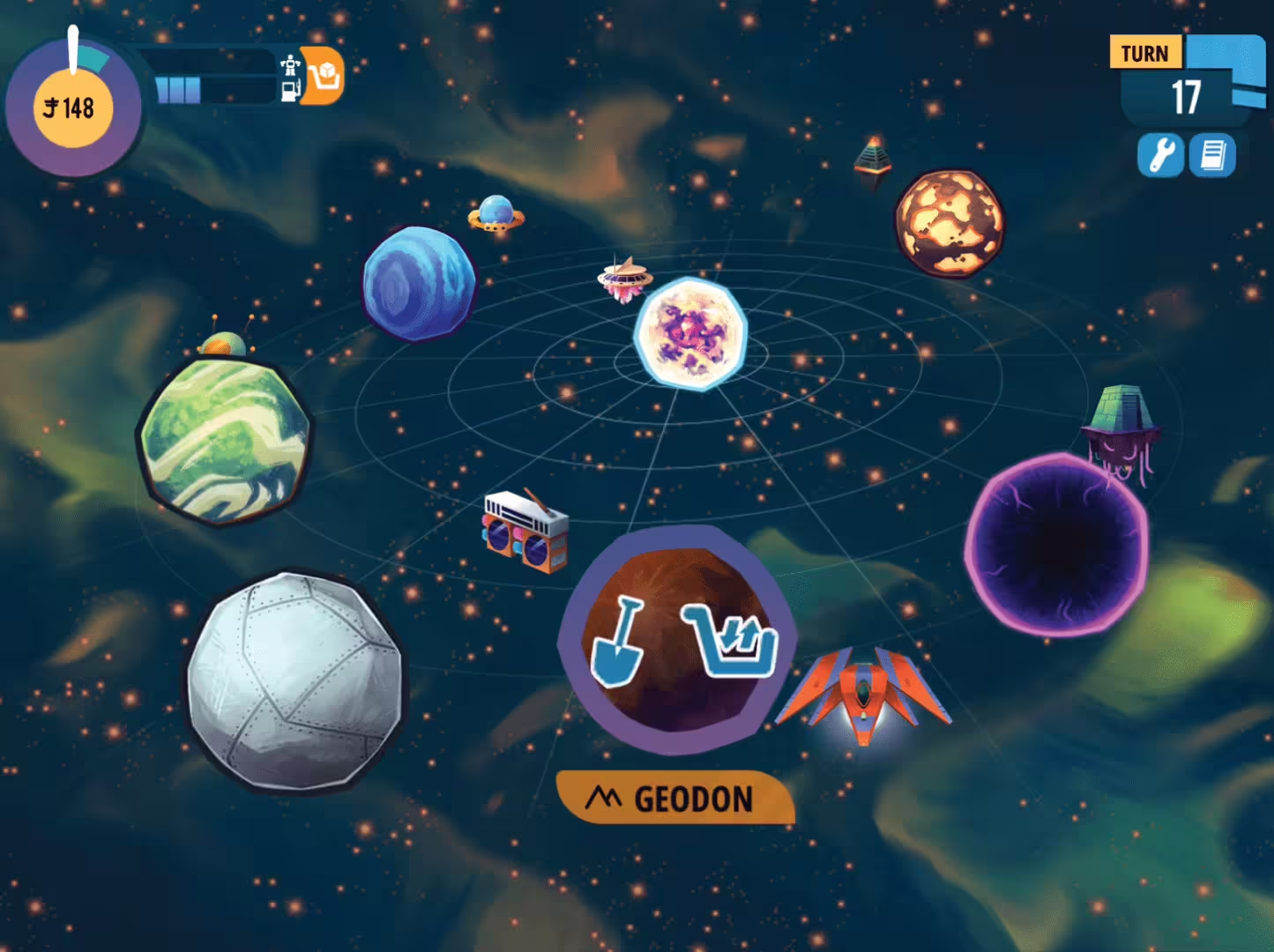
RoboSellers is an economics and entrepreneurship learning game developed with Junior Achievement that focuses on the role of money in business decisions. Players operate a robot parts business, traveling between planets to buy and sell inventory while managing costs, pricing, spending, and saving.
Explore →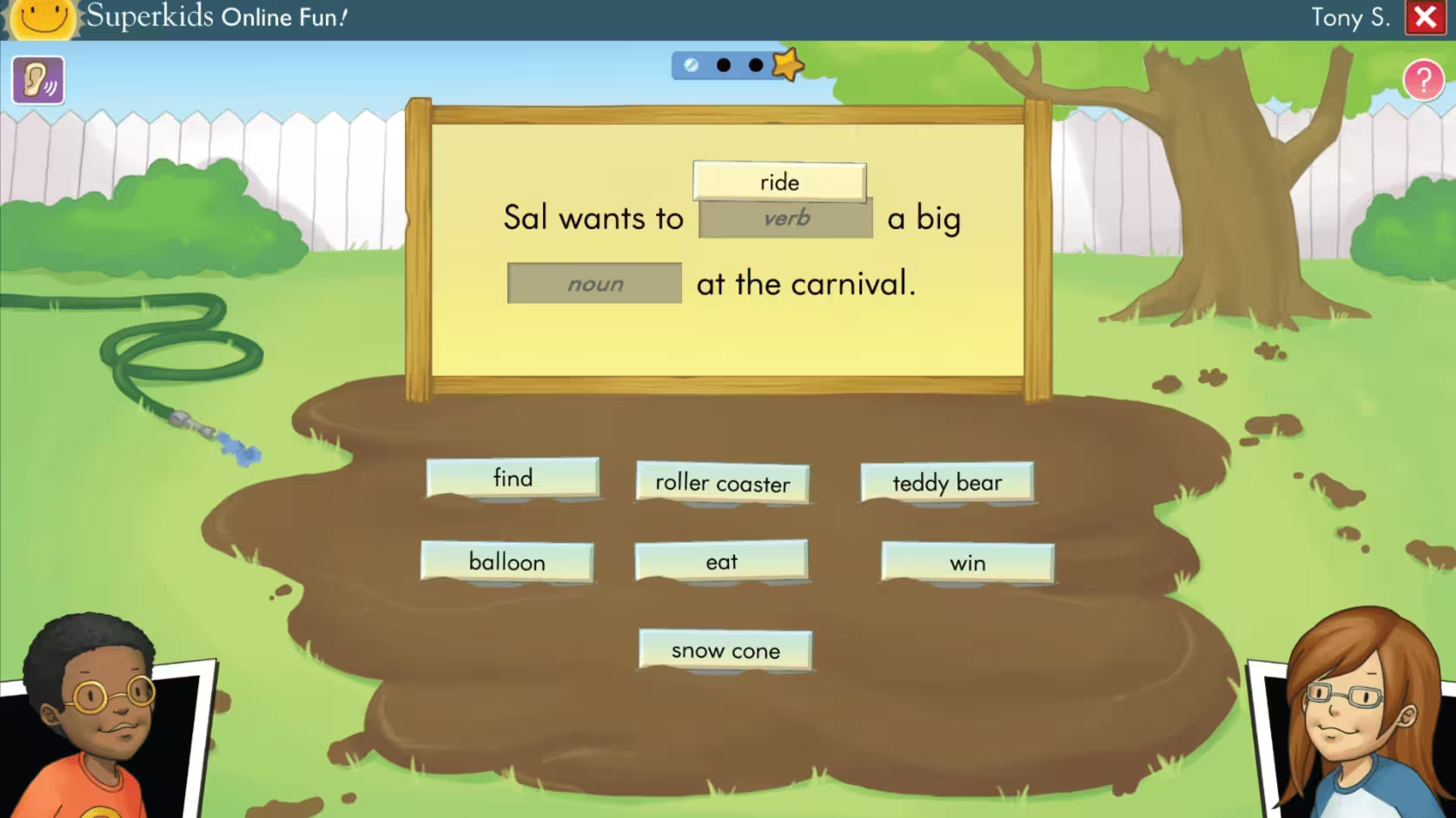
Superkids Online Fun! is a literacy learning game suite developed with Zaner-Bloser that supports the Superkids Reading curriculum for kindergarten through second grade. Players engage with read-aloud books and complete interactive activities that reinforce spelling, phonics, and vocabulary.
Explore →Game-based learning kicked off the year by reinforcing something we have seen repeatedly over the past two decades: games tend to show up where traditional systems struggle. This month’s stories span higher education, wellbeing, cognition, and early science learning, with a shared focus on structure, feedback, and sustained engagement. Together, they reflect patterns we encounter regularly in client work building custom learning games and interactive software.
Here’s what stood out.
This month marks 20 years since we started building learning games at Filament Games, and so we thought this would be a great time to reflect on what two decades of practice have taught us. Our work has evolved from early Flash games to large-scale civics titles, mobile science games, workforce training tools, and recent experiments in mixed reality robotics. Across platforms and audiences, the focus has remained consistent: designing game-based learning systems that help people practice complex thinking and decision-making. We are kicking off this anniversary with a full interview with the illustrious James Paul Gee, publishing January 12, followed by a whole year of gameplay playthroughs, retrospectives, deep dives, client interviews, and livestreams that unpack both the games and the design decisions behind them. Follow the blog or connect with us on X, Facebook, and LinkedIn to follow along throughout the year.
A recent article in Times Higher Education draws on a decade of research into how games function inside university classrooms. The authors emphasize that games are most effective when treated as intentional learning systems rather than novelty additions. By outlining approaches such as repurposing commercial games or designing full courses around game mechanics, the piece reinforces the importance of instructional design, learner agency, and clear feedback loops. These findings mirror what we see in higher-ed partnerships: outcomes improve when games are aligned to learning goals and supported by thoughtful facilitation.
Reporting from the BBC highlights emerging research into how board games and tabletop role-playing games can support wellbeing, particularly for neurodivergent players. Researchers found that structured game systems can improve confidence, social engagement, and problem-solving by reducing ambiguity in social interaction. The findings underscore a broader principle relevant to digital learning tools as well: predictable rules and clear systems create space for experimentation, collaboration, and growth.
An article in The Washington Post reviews research suggesting that certain video games engage attention, learning speed, and executive function more effectively than many traditional brain-training tools. Strategy and action games, in particular, require players to process information, adapt to changing conditions, and make decisions under pressure. While researchers emphasize moderation, the broader takeaway aligns with modern learning game design: cognitively rich games provide meaningful practice environments that support transferable skills when designed with intent.
Researchers at the University of Georgia report on an educational video game that outperformed traditional classroom activities in helping children develop science skills. By embedding data analysis and reasoning inside a narrative-driven game, students showed stronger learning outcomes and higher engagement. The study also reinforces the continued role of teachers, who used in-game feedback and progress data to guide repeated cycles of practice rather than one-off activities.
–
Across higher education, K12 learning, wellbeing research, and cognitive science, game-based learning continues to demonstrate its value when interactive software is designed with clear goals and measurable outcomes. As organizations explore custom learning games, simulations, and training tools, the opportunity is not simply to add games, but to partner with experienced developers who understand learning design, technology, and production at scale. If you’re exploring a custom game or interactive software project – let’s talk!
Best practices for preventing motion sickness while maximizing learning outcomes.
Best practices for preventing motion sickness while maximizing learning outcomes.
Get the latest Game-Based Learning Review content delivered to your inbox, including new articles, videos, and industry insights.