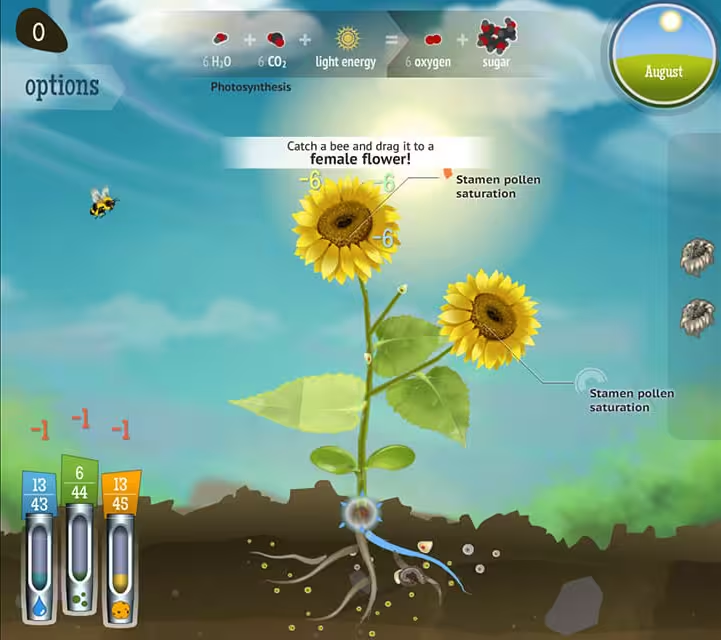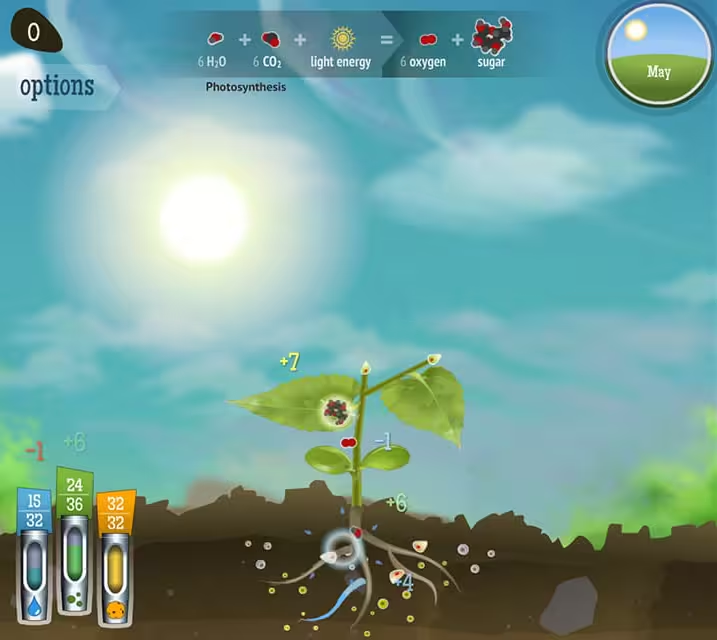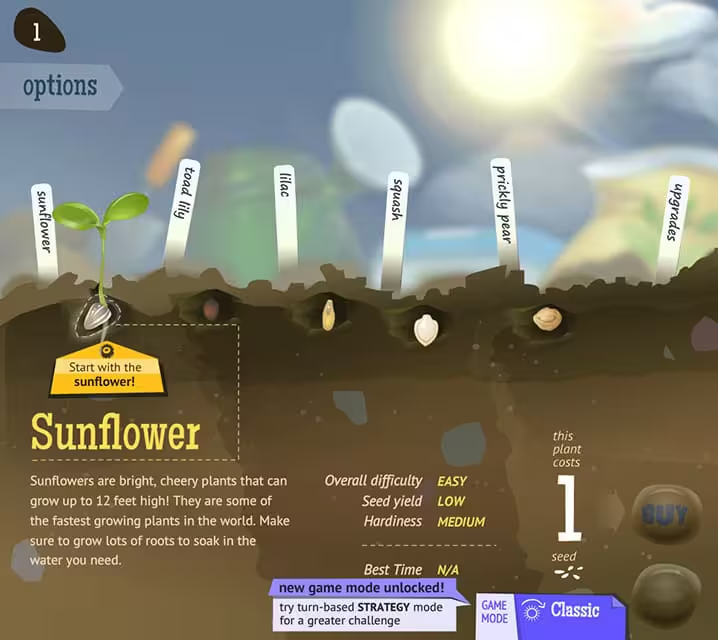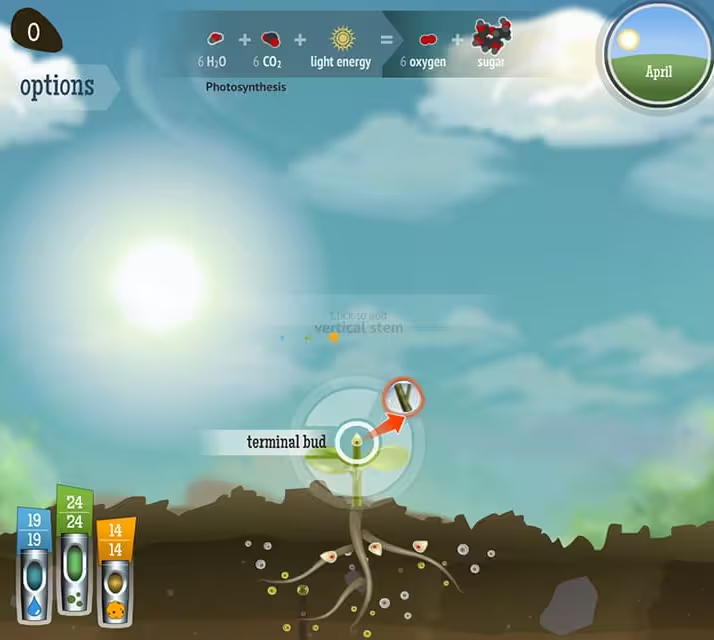
Reach for the Sun is a plant growth learning game developed by Filament Games that teaches photosynthesis and plant life cycles. Players grow a plant from seedling to maturity, managing environmental challenges and seasonal change through interactive play.
Reach for the Sun is a plant growth learning game developed by Filament Games that teaches photosynthesis and plant life cycles through interactive play. Players grow a plant from seedling to maturity over the course of a year, managing environmental challenges and seasonal change. This simulation allows players to navigate the biological processes and environmental factors necessary for plant survival across shifting seasonal conditions.
Plant Biology, Photosynthesis, Life Cycles, Resource Management


Guide a plant from seedling through a full yearly life cycle.
Adjust care based on sunlight, water, and seasonal changes.


Protect plants from insects and other hazards.
Learn how growth, survival, and reproduction are interconnected.

Plant biology concepts are often hard to conceptualize without opportunities for observation over time. Reach for the Sun gives learners a systems-level view of plant growth by condensing longterm plant growth processes into a bite-sized strategic challenge, reinforcing core life science concepts through sustained interaction.
If you’re exploring educational games, digital learning tools, or interactive simulations, Filament Games can help you design and build experiences that deliver measurable impact.
Start a project
Zodiac is an artificial intelligence learning game developed with NYU CREATE that focuses on foundational AI concepts. Players apply search strategies and heuristics to solve challenges while observing how algorithms improve through iteration.
Explore →
Beeple Elementary is a career awareness and executive function learning game developed with Twin Cities PBS that focuses on teaching, learning differences, and cognitive flexibility. Players take on the role of a classroom teacher to adjust instructional approaches.
Explore →