Catch up with the Game-based Learning Review (Live!)

Home / Content Hub /
Catch up with the Game-based Learning Review (Live!)
Jump to Section

Current State of VR in Schools
What Does the Research Say?
Challenges Facing VR Adoption
Best Practices from Early Adopters
The Future of VR in Education
Related Projects
Meta Quest 2 & 3
Design Thinking
12+
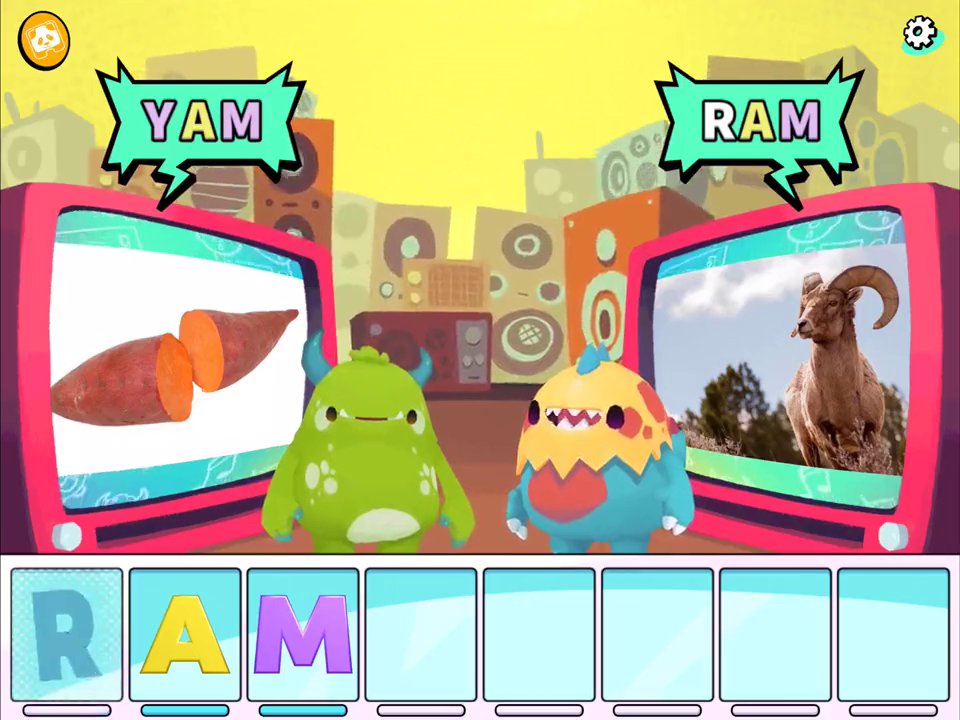
Square Panda
Square Panda is collection of early literacy games developed with Square Panda that focus on letters, phonetics, and spelling. Players place physical letters into the Square Panda Playset to hear sounds and build words while completing challenges.
Explore →Meta Quest 2 & 3
Design Thinking
12+

Superkids World
Superkids World is a WCAG-compliant literacy game developed with Zaner-Bloser that focuses on reinforcing early reading skills through independent play. Players explore a shared environment with familiar characters and complete mini-games to practice foundational literacy concepts for K–2 students.
Explore →Hello everyone! Welcome to this review of the Game-based Learning Review. Dan and Brandon (me) have been busy almost* every Monday, bringing you pulse-pounding gameplay, amusing anecdotes, wry observations, a minimal amount of blunders, and fascinating guests with incredible insight on the world of game-based learning, education, and technology. It’s been a moment since we rounded up our published episodes, and our Shiny New Website has special sections to feature our video releases, so we’ll be posting these much more frequently going forward! In the meantime, catch up below on our latest episodes (starting with the most recent), and tune in every Monday at 12:30pm CST on the Filament Games YouTube Channel to join the fun.
*Exceptions made for severe weather, old-timey health calamities, national holidays, and all other forms of force majeure.
~
The Game-based Learning Review (Live!) - Back to RoboCo! Time to compose a Silicon Sonata!
Let’s kick this retrospective off with a musically inclined episode of the Game Based Learning Review! Returning to the world of RoboCo, the duo takes on the "Silicon Sonata" level, where players must engineer a robot capable of playing the cello to serenade a romantic date night. Before diving into complex bow mechanics, Dan gets sidetracked trying to unlock the level's hidden lighting secrets, building a rudimentary robot hand to pull a fader switch and activate the ultra-dark creepy mode. Between bouts of shattering glass and fighting camera angles, the hosts chat with the audience about cozy/horror streamers, Brandon’s lifelong struggles with the texture of sushi, and the importance of analog human interaction as detailed in Kurt Vonnegut's essays. By the end of the hour, Dan successfully engineers a sleek, wood-grain kickstand to hold the cello, leaving the actual musical performance for the next stream.
Episode Outline:
- [0:00 - 4:12] Stream intro, discovering cozy/horror streamer "Memoria," and welcoming chat member Krista Lee, who is valiantly participating via speech-to-text due to a hand injury.
- [4:12 - 10:36] Introducing the "Silicon Sonata" level. Brandon shares the official Josh robot (named after our former composer Josh Bartels), and Dan reminisces about the Spencer Evans Memorial Table.
- [10:36 - 32:20] Secret hunting: Dan becomes obsessed with a fader dial on the wall, repeatedly smashing it with his robot before successfully triggering both "romantic" and "creepy" lighting modes.
- [32:20 - 39:00] The tangent zone: Discussing "fractional cellos," Brandon's lifelong attempts at enjoying sushi, and the analog human interactions praised in Kurt Vonnegut's A Man Without a Country.
- [39:00 - 58:28] Back to engineering: Dan reviews the official solution video, battles the game's spatial reasoning and camera orientation, and successfully builds a wood-grain kickstand base to grip the bottom of the cello.
- [58:28 - 59:55] Time runs out, final thoughts, and the stream wrap-up.
Links:
- Memoria
- Steam Workshop Bot: Josh the Composer
- Fractional Cellos
- A Man Without a Country by Kurt Vonnegut, Jr
The Game-based Learning Review (Live!) - Putting the Robots in the Roblox
Brandon and Dan bring special guest game designers Colin and Kelly along for a multiplayer Roblox adventure! In this episode, the team dives into Robot World, a multiplayer robotics building game developed by Filament Games in partnership with several impact-oriented organizations. The crew kicks off with a tour of the main arena, showcasing the bot collection interface and detailing the five competitive mini-games designed to foster coopertition and future-facing skill growth. From there, they venture into the Salvage Safari wilderness to clean up the environment and learn about the circular economy, sorting recyclables across the Beach, Park, and Canyon biomes. They also tackle Mount Delta, a towering obstacle course that demands constant iteration and a robust garage of collectible bots.
Episode Outline:
- [0:00 - 15:00] Stream intro, welcoming guests Colin and Kelly, and an overview of Robot World on Roblox. The hosts tour the main garage and break down the five multiplayer arena games (Bot Ball, Yeet the Sheep, Skate Park Scramble, Parmesan Pipeline, and Boarding Party).
- [15:00 - 34:00] Entering the "Salvage Safari" zone to clean up the beach, followed by a chaotic group ascent up the "Mount Delta" obby (obstacle course).
- [34:00 - 43:00] Returning to the Beach biome to sort recycling and push large trash objects (like a lobster cage and beach ball) into UFO receptacles. The team experiments with various unlockable bots - including a fish, crab, and mini chair - to overcome a tricky ramp.
- [43:00 - 57:28] Progressing into the Park and Canyon biomes. Colin explains the escalating difficulty of the recycling mechanics (sorting plastic, metal, glass, and compost), Dan knocks down a tree to create a bridge, and the crew wraps up the stream with plans for a Bot Ball match next week.
Resources Mentioned:
The Game-based Learning Review (Live!) - Four Chrome Thumbs Up
After an update on Dan’s expanding home factory (now featuring a vinyl cutter for custom tchotchkes), the duo digs into RoboCo's Chrome Thumbs level. While engineering custom tillers, seed dumpers, and water valve turners, the conversation covers the "three types of fun" experienced while camping to AP style guide grammar changes. The hosts also discuss the current era of "fragmentary E3" AI-scripted game trailers, brainstorm dream educational games based on childhood media (including Mr. Rogers, The Rainbow Goblins, and Calvin and Hobbes), and celebrate a new learning game collaboration between Sanrio and Kahoot.
Episode Outline:
- [0:00 - 15:00] Intro, Dan's new vinyl cutter, past ISTE trade show plushies, and the start of the RoboCo "Green Thumb" farming challenge. A tangent on the "Three Types of Fun" during camping and grammar pedantry ("over" vs. "more than").
- [15:00 - 32:00] Building the roto-tiller, discussions on real-life farm equipment (zero-turn mowers and the H4000 tree shaker), and engineering a seed-dropping mechanism.
- [32:00 - 37:00] "Fragmentary E3" season: Brandon and Dan critique modern game trailers for feeling AI-generated and discuss the Guild Wars 3 announcement.
- [37:00 - 56:00] Childhood media and learning games: Discussing the Sanrio/Kahoot Mr. Men and Little Miss collaboration, the media literacy of Mr. Rogers' Neighborhood, the psychedelic art of The Rainbow Goblins, and pitching a Scribblenauts-style Calvin and Hobbes game.
- [56:00 - 1:04:44] The final sprint to turn the water valve, completing the level, and a preview of next week's stream featuring Robot World in Roblox.
Links:
- ISTE
- H4000 Tree Shaking Machine
- Mr. Men and Little Miss from Sanrio & Kahoot
- Ul de Rico and The Rainbow Goblins
- Scribblenauts
- Robot World / Salvage Safari
The Game-based Learning Review (Live!) - Freights, Friends, High Places
Dan jumps back into the warehouse challenge, implementing an elegant yet simple solution to adjust his forklift's wheels and finally complete the level. The conversation then takes a fascinating historical turn when Brandon shares an article about an 18th-century toys and games event. The duo discusses the educational value of classic dexterity games like the hoop and stick and the oddly named "Bilbo Catcher" (ball and cup), exploring how games have historically reflected the practical skills of their eras. Finally, Dan tackles one of the most notoriously difficult levels in RoboCo - delivering a soda to a game-watcher without entering the living room. Through the power of iteration, RNG, and a newly engineered half-pipe side-loader robot dubbed "The Jostler," victory is ultimately snatched from the jaws of defeat.
Episode Outline:
- [0:00 - 18:26] Audio troubleshooting (a channel staple that we hope to retire soon), slant puns, and Dan's triumphant completion of the warehouse pallet challenge.
- [18:26 - 29:46] Game design history: Discussing a Peekskill Herald article on 18th-century games, Bilbo Catchers, vibrating electric football, and how physical dexterity games inherently teach foundational human skills.
- [29:46 - 42:04] The Soda Delivery challenge: Dan begins engineering a stationary, side-loading robot with a Tony Hawk-style half-pipe to catch the dropped soda.
- [42:04 - 1:02:20] Perfecting "The Jostler": Refining the catching mechanism, adjusting piston torque, and relying on pure RNG to successfully launch the soda across the room intact.
- [1:02:20 - 1:08:04] Painting The Jostler in Neapolitan/lemonade colors, discussing level secrets, and the stream wrap-up.
Links:
- Peekskill Herald: Fort Montgomery Revives 18th Century Children’s Games with Free Educational Event
- Bilbo Catchers
- Vibrating Electric Football
- Underdog Games
- Vend and Send
The Game-based Learning Review (Live!) - Back at it Again with the Robots and the Friends
After covering Dan's unfortunate battle with shingles (and a surprise webcam filter cameo by USPTO mascot T-Markey), the duo returns to the world of RoboCo. Dan resumes operation of Lucille 2, an I Love Lucy-inspired cake-decorating bot, leading to a deep dive into custom control mapping, visual programming, and the importance of intuitive UX design. Later, they pivot to a warehouse forklift challenge, experimenting with piston heights and torque to move a heavy shelf, while detouring into the cultural and educational value of deep simulation games like Forza and Assassin's Creed.
Episode Outline:
- [0:00 - 9:45] Intro, Dan's harrowing health experience, and an unexpected stream appearance from T-Markey the skateboarder.
- [9:45 - 20:44] The cake assembly line challenge: Dan wrestles with the default controls, leading to a live demonstration of custom key mapping to match player intuition.
- [20:44 - 32:16] Game design philosophy: Discussing the educational validity of digital simulations, visual programming (like Scratch) versus syntax, and the new era of AI/LLM coding.
- [32:16 - 50:18] The warehouse forklift challenge: Trying (and struggling) to lift an entire pallet shelf, a debate on game dev terminology ("Alpha Development"), and testing out large versus small pistons.
- [50:18 - 57:48] Educational tangents: How games like Forza and Assassin's Creed function as cultural celebrations, teaching mechanical engineering, and acting as living museums.
- [57:48 - 1:04:29] Final frantic attempts at the forklift challenge, a quick discussion on Conway's Game of Life, and the stream wrap-up.
Links:
- T-Markey
- You Make Me Sick
- Scratch Coding Language
- Forza Horizon 6
- Assassin's Creed Discovery Tour
- Conway's Game of Life
The Game-based Learning Review (Live!) - Coffee, Cake, and Microcontrollers
After a quick catch-up on Dan’s new motorcycle commute, the team dives right back into the world of RoboCo. The stream kicks off with a showcase of Mr. Coffee, a community-uploaded robot designed from the Filament Games Team. Built to perfectly execute a café delivery mission, Mr. Coffee features an adjustable cup size, a low-ride stealth mode, and a wiggly mustache. From there, the hosts tackle the Robo Repair level, highlighting the game's powerful Python-based microcontroller coding that allows players to automate their bots. Finally, Dan takes the reins for an assembly line challenge, spending quality time in the lab experimenting with strawberry physics to meticulously craft a custom wooden bowl.
Episode Outline:
- [0:00 - 2:03] Intro, yapping, and Dan's new motorcycle commute.
- [2:03 - 22:51] Showcasing Brandon's Mr. Coffee robot, testing its stealth capabilities, and a failed attempt to steal a balloon dog from a security guard.
- [22:51 - 27:40] The Robo Repair level: Exploring RoboCo's Python API documentation and microcontroller automation.
- [27:40 - 53:50] The strawberry assembly line challenge: Dan tests strawberry drop physics, builds a lattice, and ultimately engineers a wooden catching bowl from ramp parts.
- [53:50 - 54:31] Stream wrap-up and outro.
Links:
You Might Also Like
ARTICLE
Designing for Comfort in VR
Best practices for preventing motion sickness while maximizing learning outcomes.
ARTICLE
Designing for Comfort in VR
Best practices for preventing motion sickness while maximizing learning outcomes.