

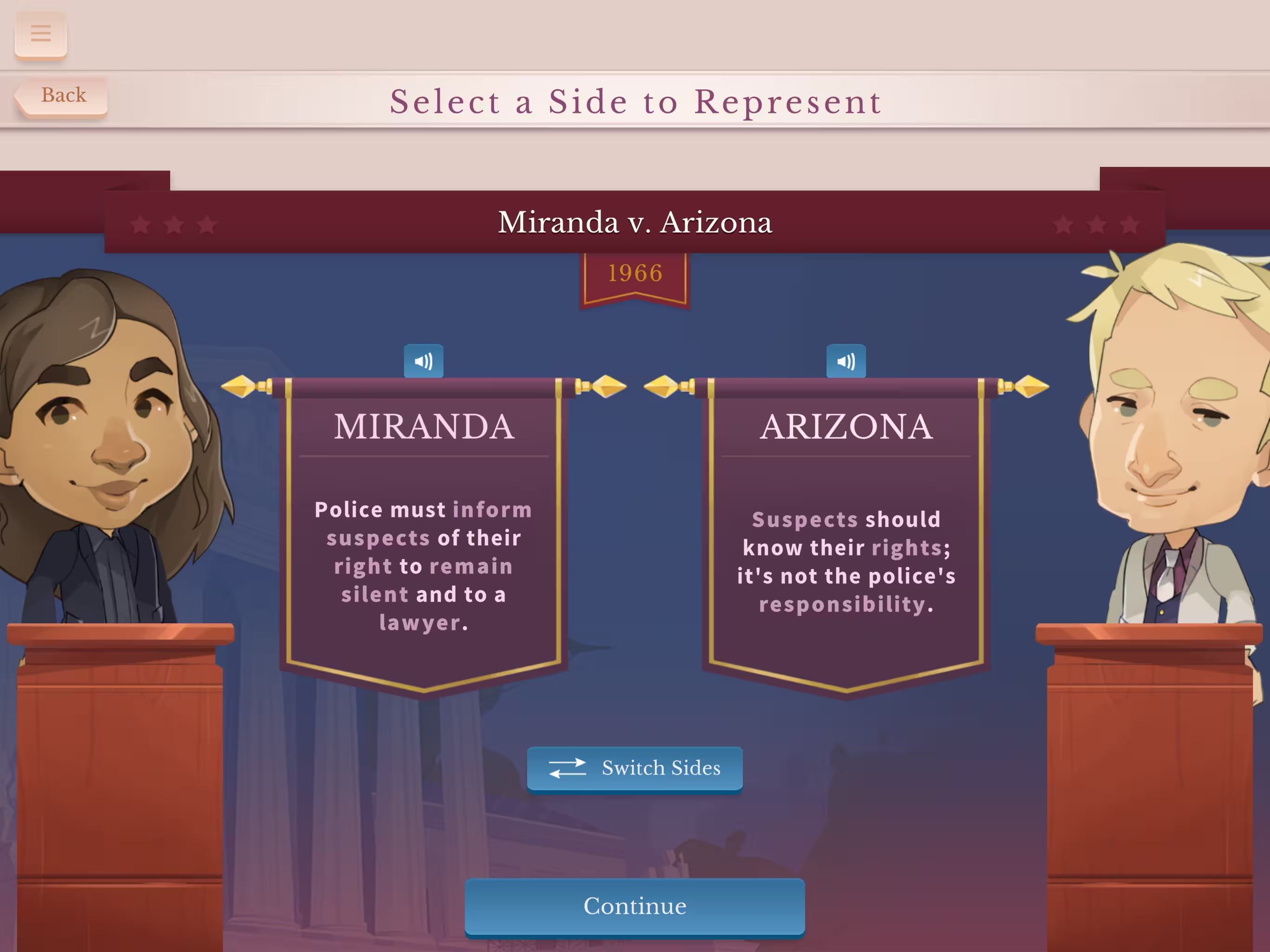
Argument Wars is a civics learning game developed with iCivics that puts learners in the role of an attorney arguing real Supreme Court cases. Using card-based mechanics, players face off against rival lawyers in landmark decisions to build persuasive skills and learn constitutional law.
Explore →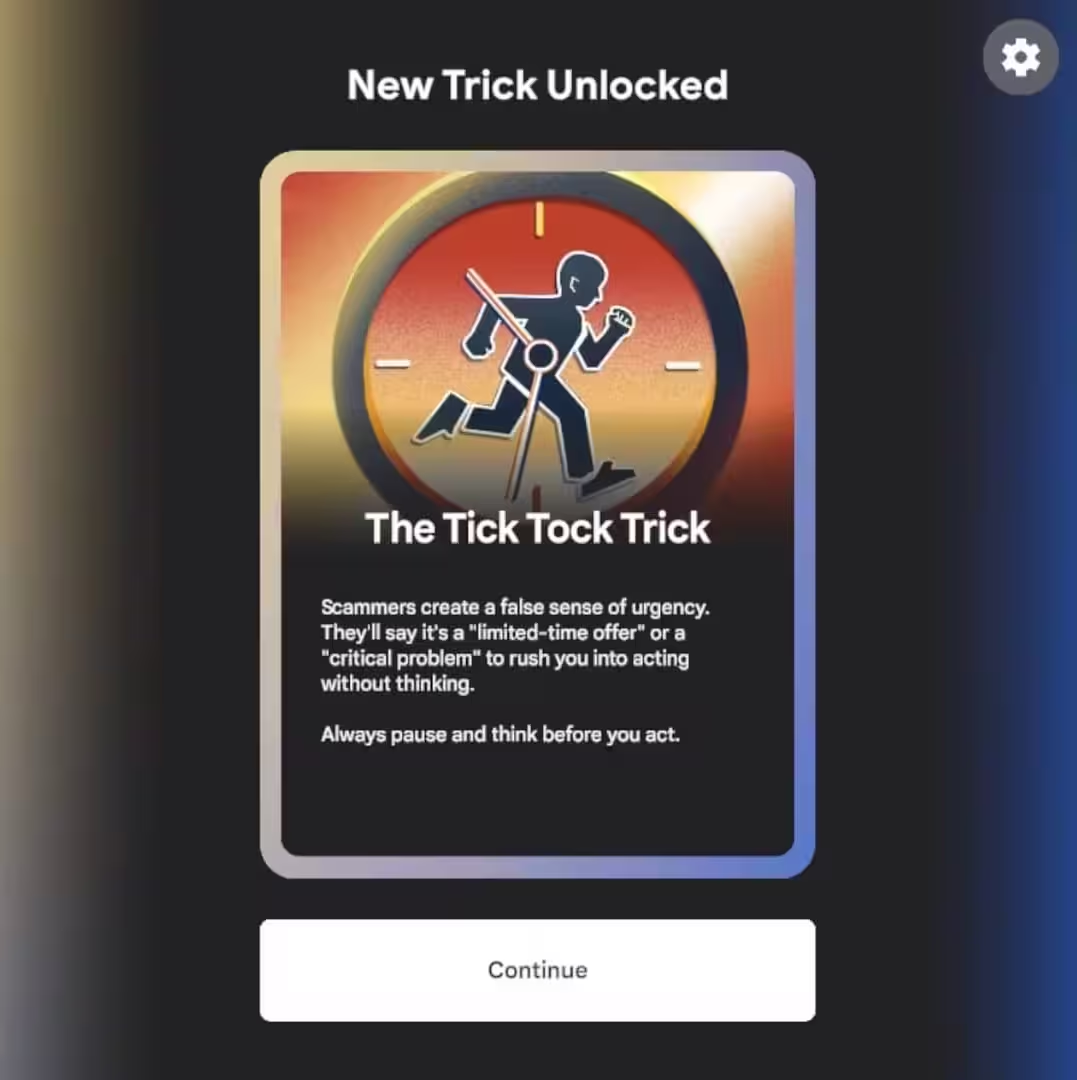
Be Scam Ready is a free, browser-based learning game developed with Google to help players identify and avoid online fraud. Players explore short, interactive scenarios across multiple characters to recognize the manipulation techniques used in real-world scams.
Explore →Data literacy is a non-negotiable competency for the modern workforce. While our recent update on artificial intelligence and education explored how learners prompt generative models, it’s equally important to address the foundational skills required to evaluate their work. As luck would have it, game-based learning delivers the exact mechanisms needed to build true data fluency. Interactive systems demand active decision-making, forcing players to interpret metrics and apply them to complex problems under pressure. So today, we’re examining four distinct approaches to data education, looking at new research on adult learner agency, showcasing our own foray into data literacy, exploring higher education leadership strategies, and reviewing comprehensive workforce upskilling frameworks.
A 2026 study published by Taylor & Francis demonstrates exactly how interactive play activates learner agency. Researchers found that adults build deeper data literacy when allowed to make independent choices within a structured game environment, with the perceived fun and high-quality visual texts in these systems driving active participation across all age groups. Instructors can apply these findings by assigning players specific roles within a simulated data ecosystem, forcing them to defend their choices using in-game metrics. Facilitators can also pause gameplay at critical junctures to ask learners to predict the outcomes of their data-driven decisions. These targeted instructional moves guarantee that adults process information actively rather than passively consuming spreadsheets.
We know firsthand how simulation builds analytical skills, as demonstrated by Beats Empire. In this experience, players run a music studio and rely entirely on data dashboards to make business decisions. They analyze market trends to select artists, release tracks, and target specific listener demographics. The mechanics directly mirror real-world data analysis tasks. Educators using this title can direct students to draft written business proposals based on their in-game market research before allowing them to sign a new virtual artist. Teachers can also group learners into competing record labels, requiring them to present weekly data reports comparing their studio’s performance metrics against their peers. By wrapping this well-rounded simulation with these kinds of supplemental activities, Beats Empire creates a relevant and engaging context for data analysis skill development in the classroom.
The demand for these skills extends to institutional leadership, as detailed in a recent MIT Sloan Management Review article on building robust data cultures. The piece highlights that organizational success relies on training staff to frame purposeful questions and decode complex metrics for strategic planning. True data fluency requires hands-on application rather than theoretical lectures. Training coordinators can replicate this operational success by having staff members analyze anonymized institutional data to identify operational bottlenecks. Workshop leaders should then require participants to construct a visual data narrative pitching a new workplace initiative based on those findings. These practical application strategies ensure that institutional teams use information for active organizational improvement.
Corporate teams require systematic approaches to build these competencies, and The Data Literacy Project offers a massive library of resources to meet this need. Their platform categorizes learners into distinct personas and provides targeted courses on topics like data aggregations, distributions, and signal versus noise. The organization focuses heavily on creating a culture of data-informed decision making across all levels of a business. Corporate trainers can leverage these concepts by implementing role-specific data challenges where employees must identify the statistical noise in a provided dataset. Managers should routinely ask team members to present a correlation versus causation analysis during weekly meetings. These continuous practice methods solidify analytical frameworks within daily operations.
–
Building data literacy requires interactive systems that demand critical thinking and active participation. By treating data analysis as a playable experience, organizations and educational content publishers can move past surface-level engagement and deliver verifiable skill development. If you’re ready to design custom training tools that build true data fluency for your audience, let’s talk!
Best practices for preventing motion sickness while maximizing learning outcomes.
Best practices for preventing motion sickness while maximizing learning outcomes.
Get the latest Game-Based Learning Review content delivered to your inbox, including new articles, videos, and industry insights.