

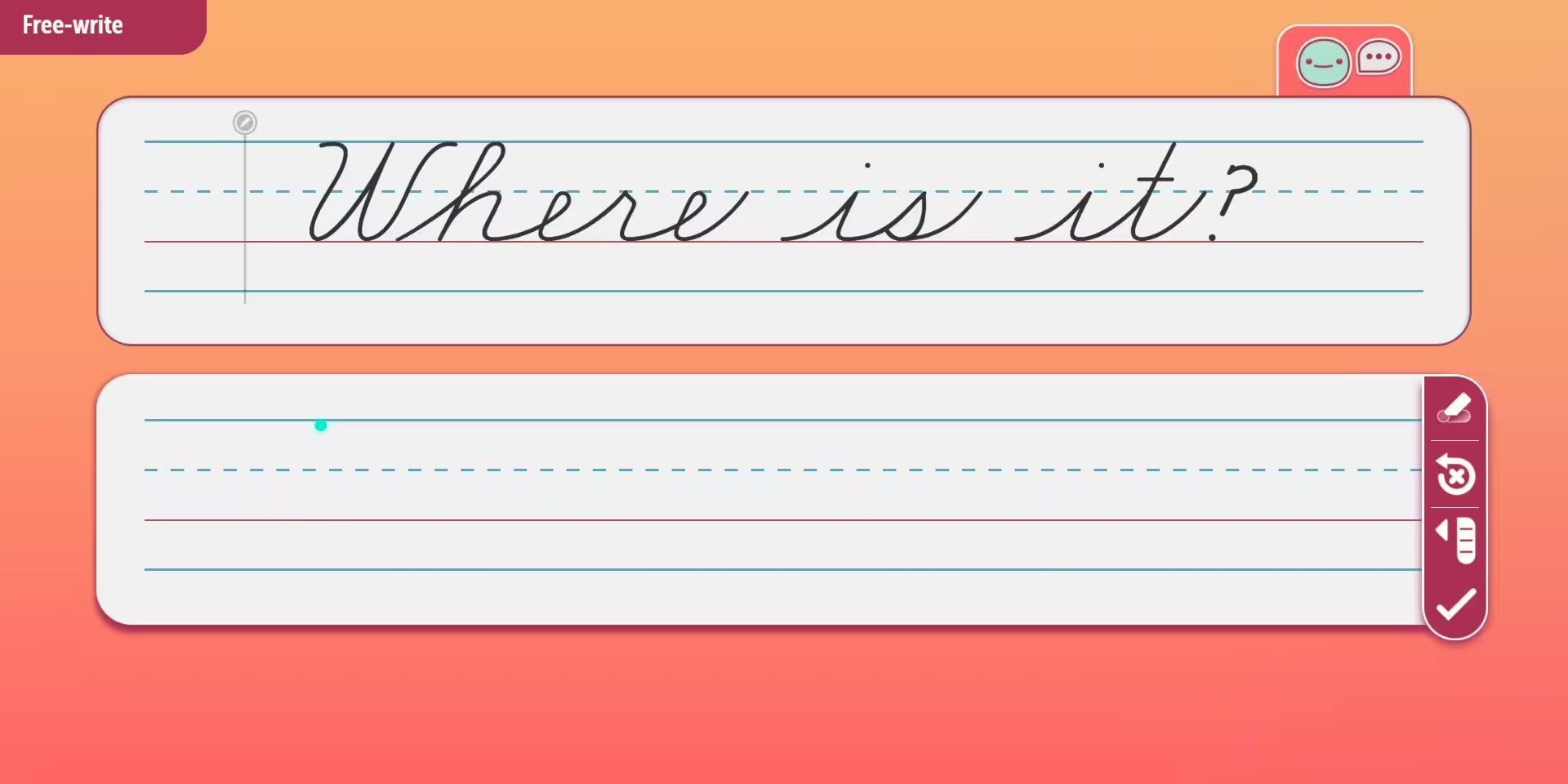
Digital Handwriting is a WCAG-compliant literacy learning game developed with Zaner-Bloser that focuses on handwriting skills through touchscreen interaction. Players practice forming letters and words using guided stroke sequences while progressing through both manuscript and cursive writing styles.
Explore →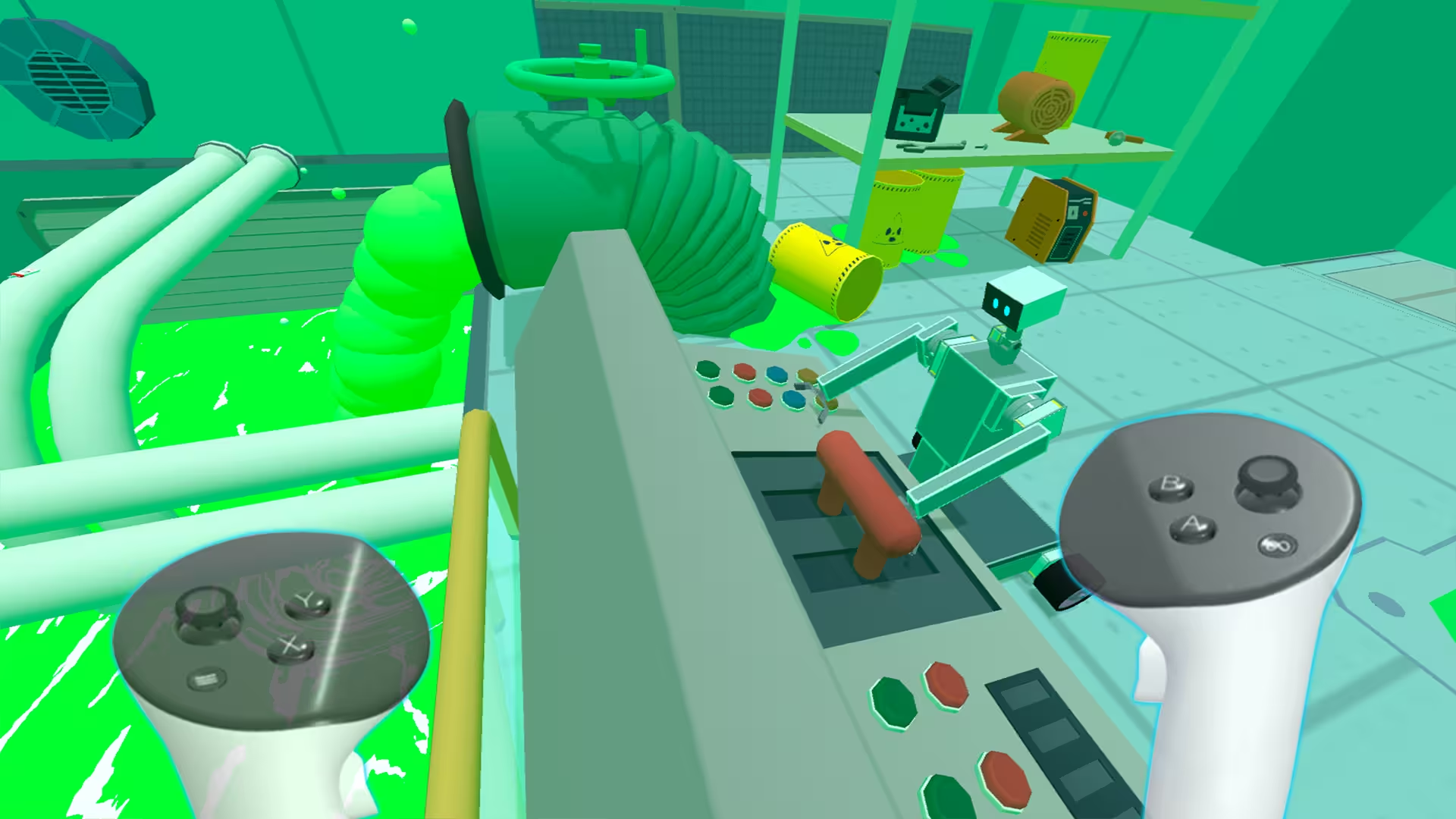
Some Assembly Required is a VR robotics sandbox game developed by Filament Games for Meta Quest 2 and 3. Players design and build robots with intuitive hands-on controls to complete mechanical challenges and explore a secret-filled warehouse.
Explore →Hello, Filafriends! This October we focused our blog on serious games, and here's what's hot 🔥 from the month. We opened with six examples from our own portfolio, then followed the research into game mechanics, clinical education, VR budgets, and learning analytics. Florida State University researchers showed that a stealth assessment in Physics Playground produced competency estimates tracking students' scores on an external physics test, and PwC found that VR training reaches cost parity with classroom training at 375 learners. Here's a recap of every post from the month so you can catch up on the articles you missed.
We kicked off the month with six serious games from our portfolio, each paired with the design decision that made it work. The lineup ran from Investigation Declaration with iCivics to FIRMM-pix, a game suite we built with Turing Medical that helps young patients stay still during brain MRI scans. Each example started from the behavior its partner needed to build, with mechanics designed around that behavior.
Our second post looked at the verbs at the heart of every learning game. Four sources, from Miguel Sicart's definition of game mechanics to the Zombie Division study on intrinsic integration, showed why learning sticks best when the core mechanic requires the target skill. Children in that study learned more from the integrated version of the game and played it far longer when given free choice - a strong case for putting the math inside the swordplay.
Next, we reviewed five recent studies on patient simulators and medical games for nursing and medical students. Randomized trials found significant gains from a virtual simulation game on infection prevention and a mobile game on medication administration. A pilot study at Great Western Hospital also found that VR sepsis simulation performed on par with in-person training for final-year medical students.
Our VR budgeting post looked past the price of a headset to the full cost of an immersive program, including content development and device management. PwC's research showed that VR becomes 52% more cost-effective than classroom training at 3,000 learners. Learner volume and content strategy emerged as the two decisions with the greatest influence on lifetime cost.
We closed the month with four studies on turning gameplay data into evidence of learning. The post covered the stealth assessment in Physics Playground along with analytics work on Mission HydroSci and Articoding, where nearly 99,000 interaction traces revealed which levels needed revision. Planning telemetry alongside mechanics gives instructors and designers the evidence they need from the first day of play.
~
Our healthcare post alone drew on four studies published in 2026, and new randomized trials on serious games in nursing and medical education keep appearing. That steady growth in evidence makes this an exciting time to build learning games for health sciences programs and beyond! Ready to put a serious game to work for your learners? Let's talk.
Best practices for preventing motion sickness while maximizing learning outcomes.
Best practices for preventing motion sickness while maximizing learning outcomes.
Get the latest Game-Based Learning Review content delivered to your inbox, including new articles, videos, and industry insights.