
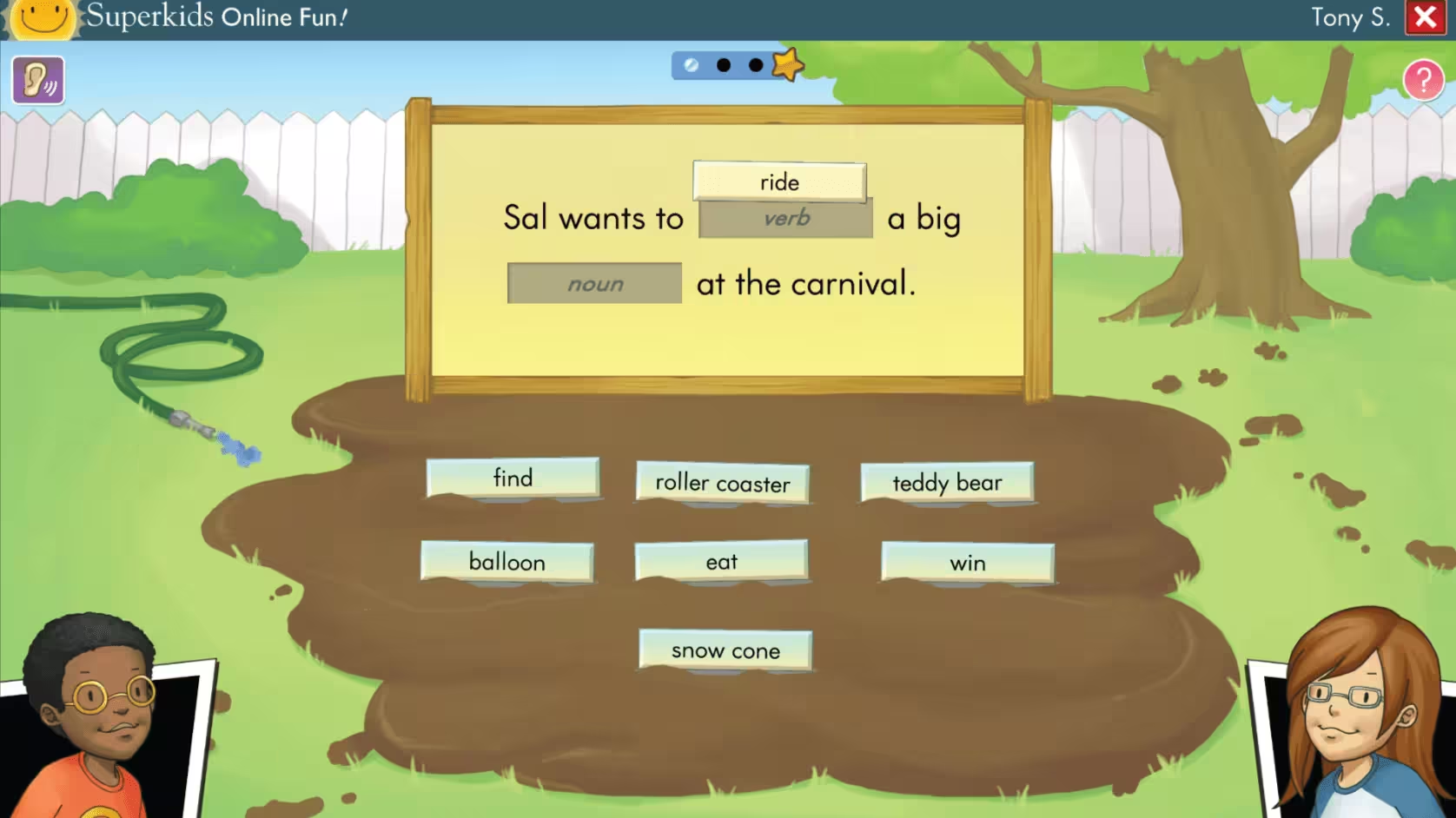
Superkids Online Fun! is a literacy learning game suite developed with Zaner-Bloser that supports the Superkids Reading curriculum for kindergarten through second grade. Players engage with read-aloud books and complete interactive activities that reinforce spelling, phonics, and vocabulary.
Explore →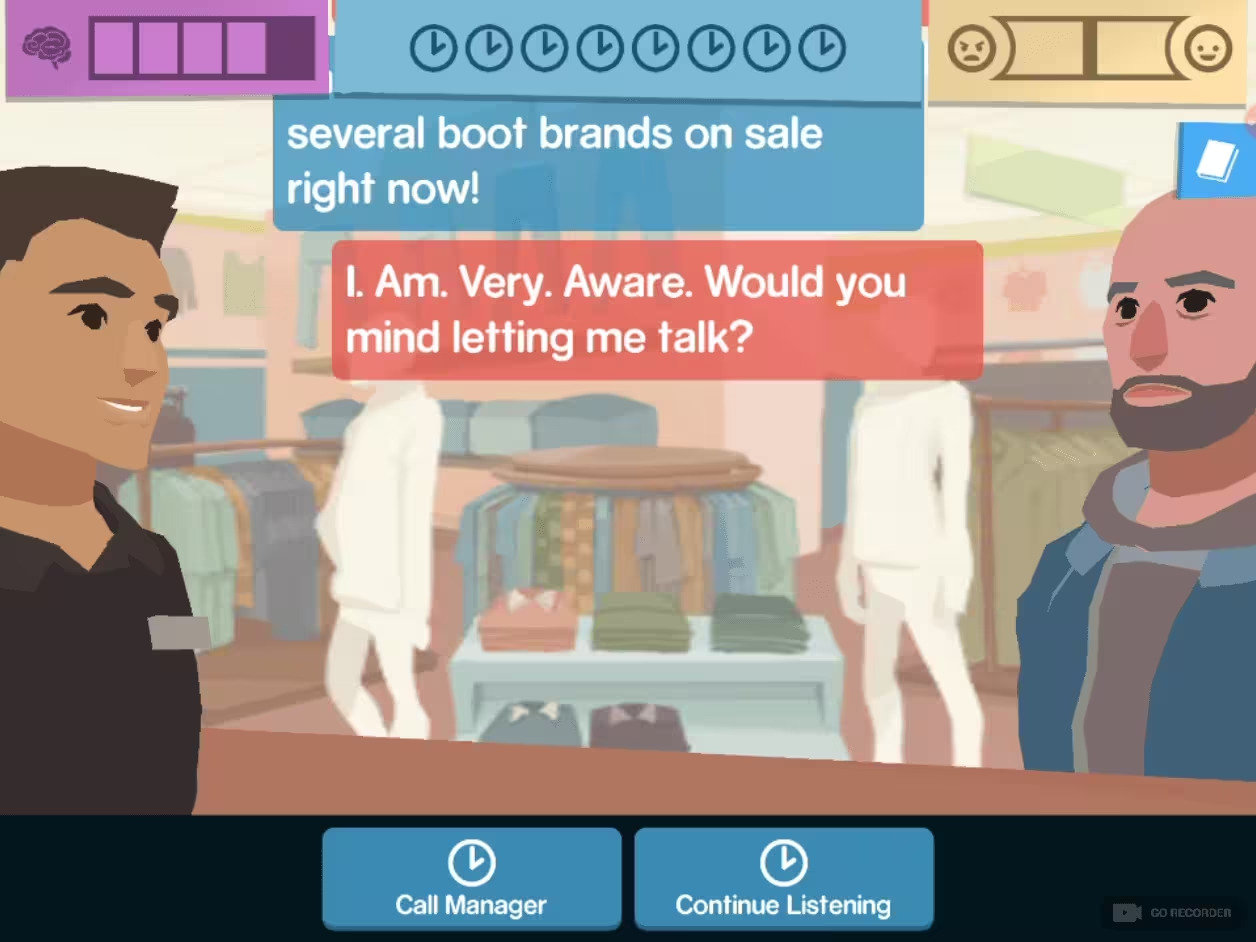
MSI Retail Sim is a workforce learning game developed with McKinsey Social Initiative focusing on retail customer service. Players navigate store scenarios to improve satisfaction and business performance.
Explore →Our March roundup focused on clarity, and with that clarity in hand, April is showing us where the lines start getting drawn. Educators are defining when AI belongs in the learning process and when it gets in the way. Researchers are building new ways to measure what students retain after using it. Institutions are making large-scale decisions about adoption, often before those questions are fully answered. Across all of this activity, one theme keeps surfacing: learning depends on what students do themselves, and that boundary is now under active negotiation.
New reporting from The Conversation highlights a shift in how writing instructors are approaching AI in the classroom, with assignments increasingly structured around when students should rely on the tool and when they should work independently. Classroom experiments show that students can generate polished responses quickly, yet often miss factual errors or weak reasoning unless they slow down and interrogate the output. Research cited in the article reinforces that gap, showing that students using ChatGPT produced stronger essays in the short term but did not demonstrate meaningful gains in underlying knowledge and were more likely to disengage from their own thinking process. In response, instructors are introducing side-by-side comparisons of AI-assisted and independent work, along with structured reflection that forces students to explain their reasoning and recognize when the tool supports learning versus when it replaces it.
Inside Higher Ed reports on a growing movement among writing faculty to formalize the right to opt out of AI in the classroom, with a resolution from the Conference on College Composition and Communication framing this as an academic freedom issue. The argument centers on what writing instruction is meant to develop, with faculty emphasizing that reading, interpretation, and sustained argumentation depend on active engagement over time and cannot be outsourced without consequence. This position is emerging alongside rapid institutional adoption, as universities sign large agreements with AI vendors and embed tools into required systems, often without faculty input. Surveys cited in the article show that most instructors support opt-out policies and many believe current usage is already negatively affecting student outcomes.
Anthropic’s new science blog offers a view into how AI is being used across research domains, with early examples including AI-assisted mathematical proofs, large-scale data analysis, and biological discovery across massive datasets. These capabilities shift the nature of expertise, as tasks that once required years of training can now be completed more quickly with AI support, moving the focus toward oversight, validation, and interpretation. At the same time, limitations remain clear, with models still producing incorrect outputs, reinforcing assumptions, or stalling on problems that domain experts would resolve quickly. For learning, this raises a direct question about which parts of the scientific process students must still master directly as AI becomes part of everyday workflows.
OpenAI is addressing a critical gap in how learning with AI is evaluated through its Learning Outcomes Measurement Suite, a framework designed to track changes in behavior, cognition, and performance over time rather than relying on single assessments. Early results from a randomized study show mixed outcomes, with students using AI-supported study tools scoring about 15% higher in microeconomics while showing similar performance to traditional methods in neuroscience. The more significant contribution is the measurement approach itself, which tracks persistence, metacognition, engagement, and recall across repeated interactions to provide a clearer view of how learning develops over time. This reflects a broader shift toward evaluating learning as an ongoing process rather than a single outcome.
–
Taken together, these stories point to a more grounded phase of AI in education. The conversation is moving away from access and toward decision-making. When should students use these tools?. When should they step away? How do we measure the difference? Those questions are starting to shape both classroom practice and research agendas. Looking to explore your own AI-enabled learning experiences that hold up in real classrooms? Let’s talk.
Best practices for preventing motion sickness while maximizing learning outcomes.
Best practices for preventing motion sickness while maximizing learning outcomes.
Get the latest Game-Based Learning Review content delivered to your inbox, including new articles, videos, and industry insights.