
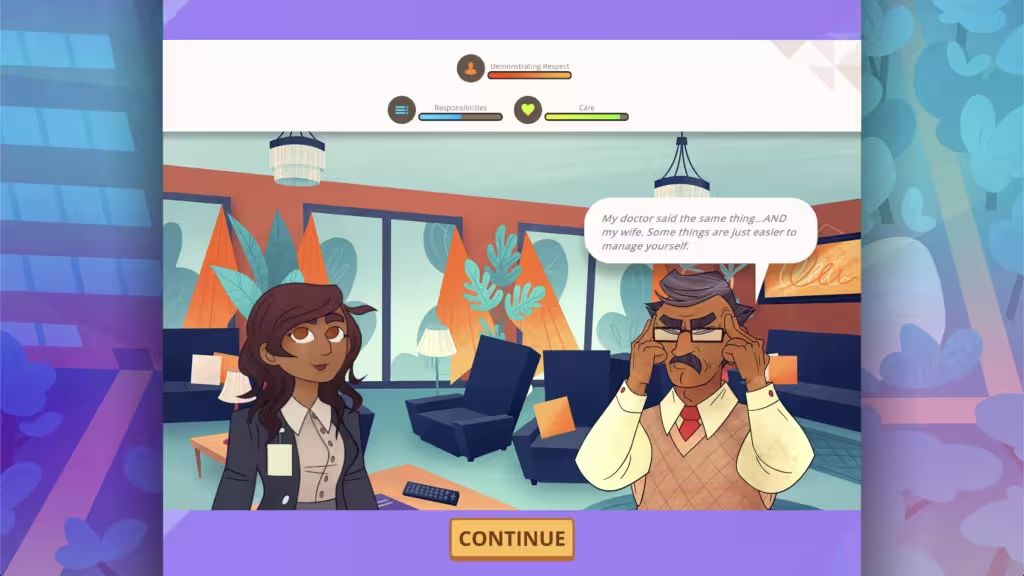
Demonstrating Respect Game is a healthcare training simulation developed with the Mental Health Association of Maryland. Players practice communication and empathy while providing person-centered care to older adults.
Explore →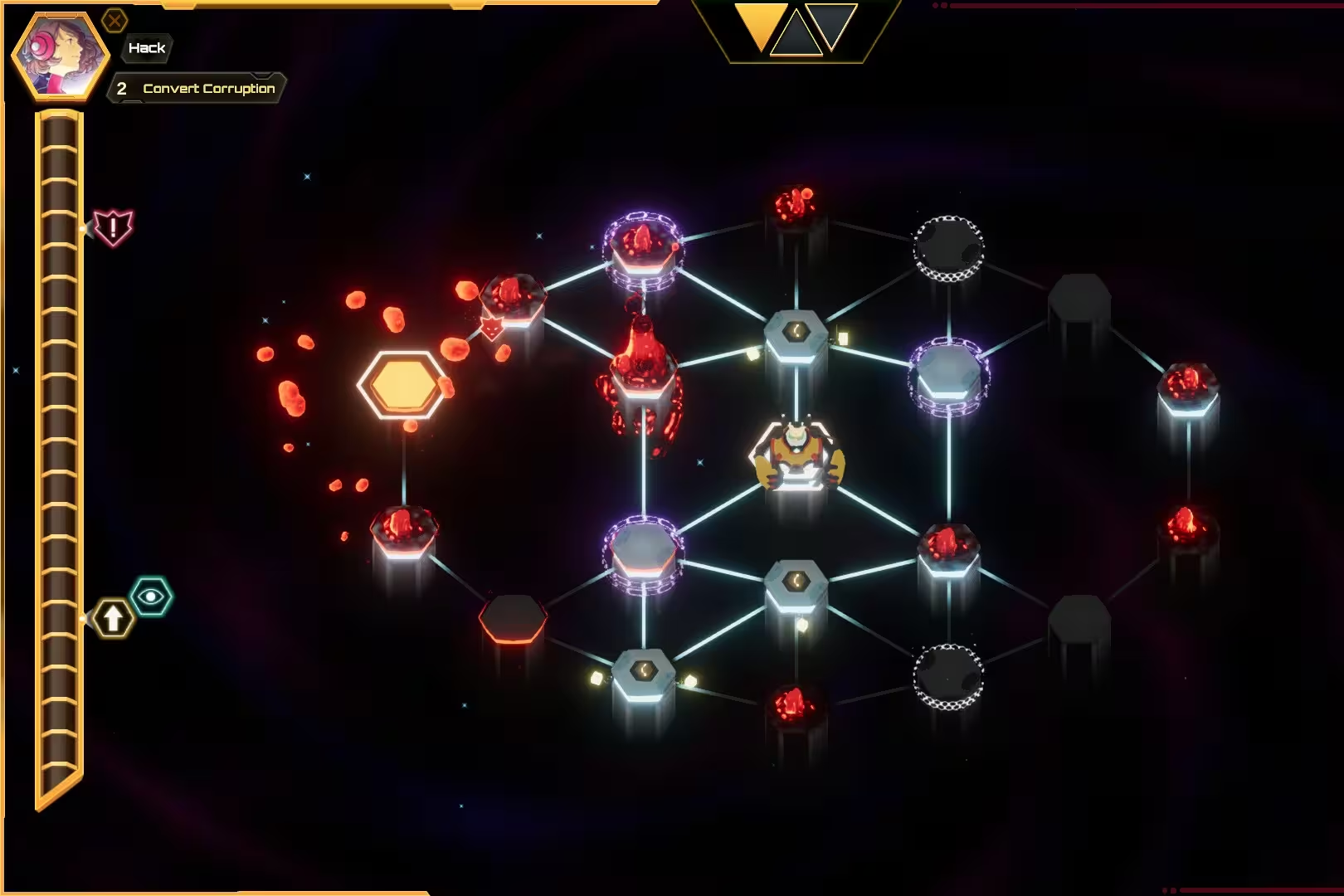
Zodiac is an artificial intelligence learning game developed with NYU CREATE that focuses on foundational AI concepts. Players apply search strategies and heuristics to solve challenges while observing how algorithms improve through iteration.
Explore →Game-based learning showed its range this month. Several stories focused on how interactive systems support people during moments of strain, whether that strain comes from workplace pressure, academic uncertainty, or the slow work of physical recovery. Other developments are looking to celebrate and foster the creative momentum that emerges when young designers have the right scaffolds. Across fields, game-based learning is helping people take risks, steady their attention, and build skill with a clearer sense of direction. Here are the details:
AWS introduced a new AI-powered meeting simulator that helps users practice handling difficult workplace interactions by placing them inside responsive, high-pressure scenarios. The system models realistic communication dynamics and reacts to tone, timing, and conversational choices, which allows learners to rehearse stressful situations without real stakes. This work blends emotional rehearsal with interactive decision-making in a way that traditional training rarely achieves. It also demonstrates how simulated environments can improve soft-skill readiness for roles that require composure, clear communication, and steady navigation of complex professional dynamics.
Our friends at Games for Change officially kicked off the 2026 Student Challenge and invited creators ages ten through twenty-five to design games that address issues shaping their schools and communities. This year’s program offers a mix of workshops, educator resources, and mentorship opportunities, and it also gives participants a clear structure for sharing their work through the submission portal. The announcement reflects G4C’s ongoing investment in nurturing early creative confidence by pairing purpose-driven design with accessible tools. Submissions are open until March 30, 2026 @ 11:59PM PT, so students have plenty of time to develop ideas, test prototypes, and bring thoughtful games to life.
A recently published study examined how teachers guide students during digital language learning games and identified the kinds of feedback that shape stronger outcomes. Researchers observed that specific prompts, targeted scaffolding, and clear corrective cues produced better gains than broad encouragement alone. The findings suggest that digital language games work best when educators treat them as opportunities for finely tuned interaction rather than passive practice. They also highlight how well-timed support can help students adopt new vocabulary, refine pronunciation, and maintain confidence through cycles of trial and revision.
The 74 profiled a teacher who uses game-based activities to shift students out of math anxiety and into a learning mindset centered on exploration. The piece describes how structured challenges introduce concepts through approachable steps and reduce the emotional weight tied to mistakes. Students gain space to test ideas and revisit strategies without fear of judgment. The classroom story shows how interactive problem solving helps learners rebuild their relationship with mathematics and discover the satisfaction that comes from steady progress, experimentation, and clearer conceptual entry points.
Another recent study explored a rehabilitation game that uses deep learning to support hand movement recovery by analyzing motion patterns and adjusting difficulty in real time. Participants used the system across multiple sessions and showed measurable improvements in precision, dexterity, and overall control. Researchers noted that the adaptive feedback loop gave users a clearer sense of momentum and made demanding exercises more engaging. This work illustrates how game systems can supplement clinical therapy by creating structured practice environments that encourage repetition, refine motor skills, and offer an immediate sense of accomplishment.
–
As educational game developers continue to refine educational design methodologies, game-based learning is being effectively applied across professional development, K-12 classrooms, language education, and rehabilitation science. Each story this month illustrates how interactive systems help people engage with challenges that normally provoke stress or hesitation. When learning feels manageable and purposeful, it becomes easier to stay committed, take risks, and build skills that last. If you want to explore how playful learning can support your organization’s goals, let’s talk.
Best practices for preventing motion sickness while maximizing learning outcomes.
Best practices for preventing motion sickness while maximizing learning outcomes.
Get the latest Game-Based Learning Review content delivered to your inbox, including new articles, videos, and industry insights.