
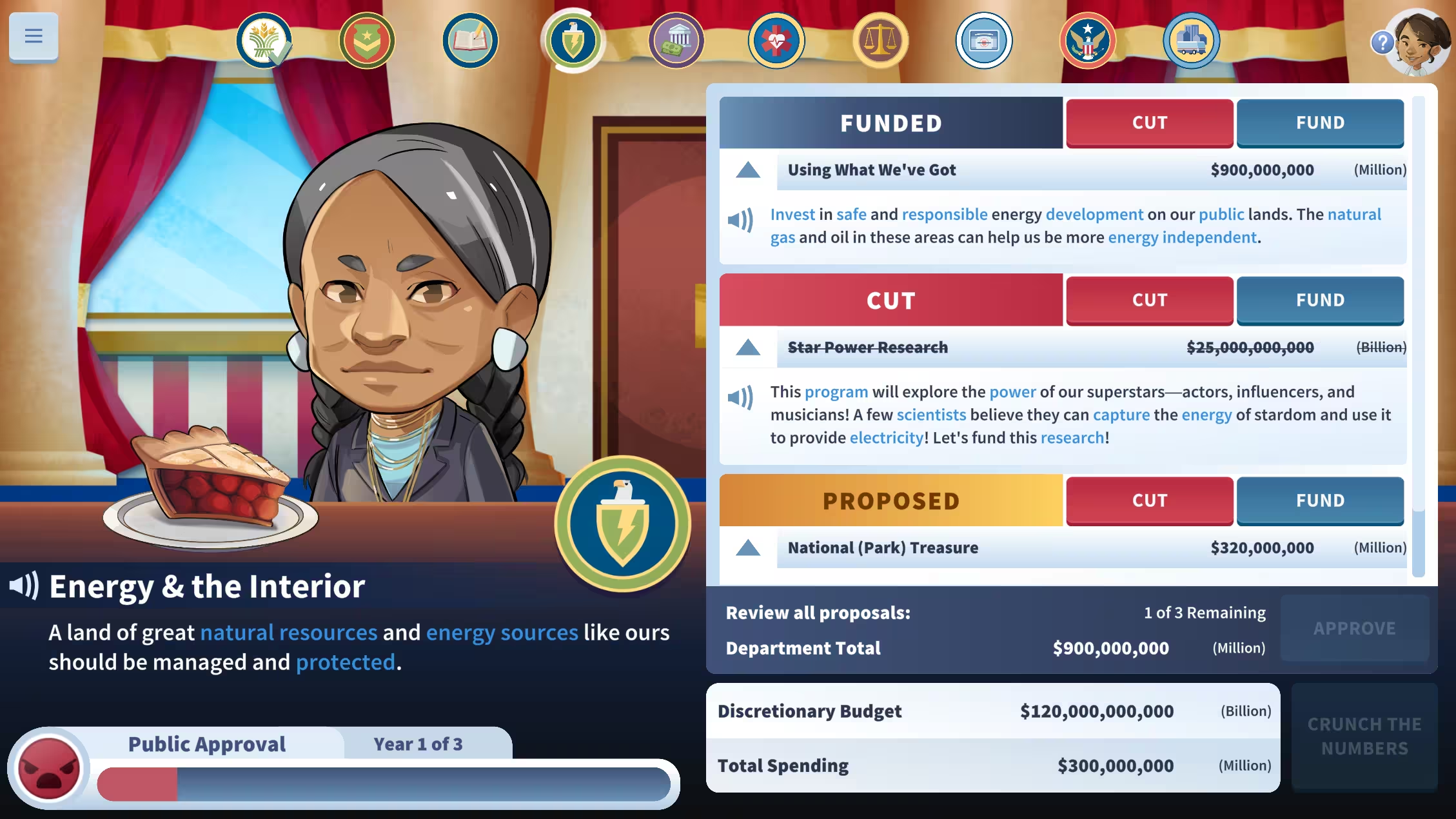
People’s Pie is a civics learning game developed with iCivics that focuses on the federal budgeting process. Players create and balance a national budget by making decisions about taxes, borrowing, and spending while responding to citizen satisfaction and economic conditions.
Explore →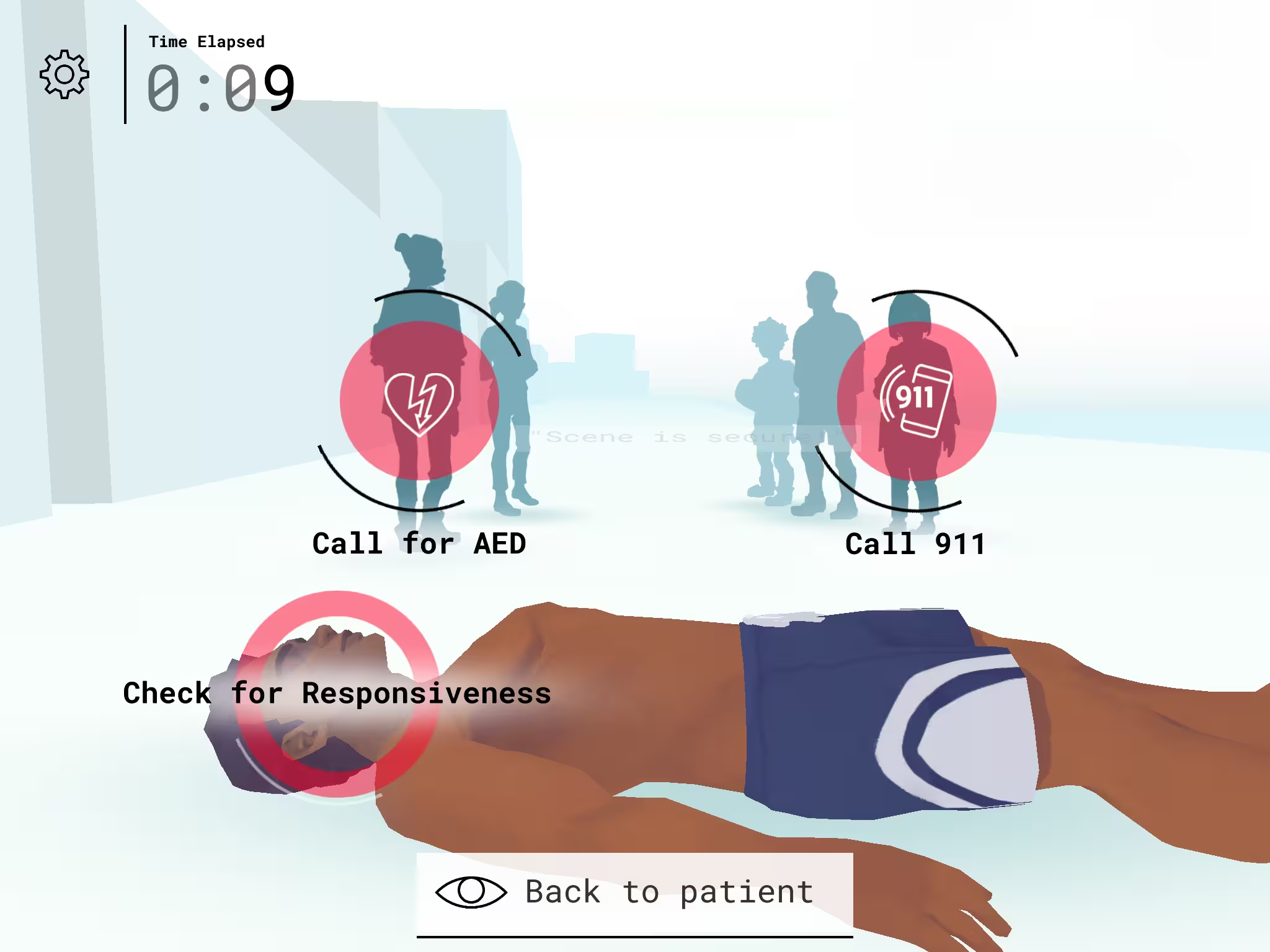
Saving Lives! trains professionals in AHA best practices for CPR and life support. Players master compressions and AED use in real-time simulations, building the muscle memory needed for high-stakes emergencies.
Explore →The highlights (and numerous student-led EDU game launches!) from this last month show that structured play is now a frontline tool for public health, high-level physics, and crisis management. This month, the GBL space is proving that if you can simulate it, you can master it. From mobile apps that track zoonotic diseases to VR-ready fire safety training, here are the top stories making complex systems understandable and actionable.
A recent report in PhillyVoice covers new research suggesting that a cognitive training game delivered through the BrainHQ app reduced participants’ risk of developing dementia by 25 percent. The study followed older adults over a three-year period, focusing on speed-of-processing exercises and subsequent cognitive outcomes. Researchers tracked participants’ cognitive function over time and identified measurable reductions in dementia risk among those who completed specific levels of training. The findings add to a growing body of research examining how repeated, targeted gameplay can influence long-term cognitive trajectories in adult populations.
Our collaborator Intuit’s launch of Credit Climber introduces a narrative-driven financial literacy game designed to help students explore how everyday money decisions influence credit scores and long-term goals. Created with Filament Games for the Hour of Finance Challenge, the game places players in the role of mentoring a friend through real-world financial scenarios. Students encounter concepts such as debt, interest, and risk management within a structured, hour-long classroom experience. The program runs from February 23 through April 15, 2026, and includes plug-and-play educator resources designed for completion within 60 minutes.
The University of Nebraska Medical Center and the University of Nebraska at Omaha have launched Zoodemic, a free mobile app that turns public health education into a fast-paced survival game for middle and high school students. Players navigate waves of infectious disease scenarios, unlocking information about hygiene practices, zoonotic transmission, vaccinations, and outbreak prevention as they level up. The app’s dynamic backend allows developers to release new levels in response to current public health needs, supported by collaboration with Nebraska’s Division of Public Health and grant funding connected to the Centers for Disease Control and Prevention.
The University of Barcelona’s Institute of Cosmos Sciences and Institute of Nanoscience and Nanotechnology have released Quantum Tycoon, a strategy simulation that introduces players to quantum computing concepts through company management gameplay. In the game, users allocate resources, develop technology, and apply real quantum algorithms such as Grover’s algorithm while operating a virtual quantum computing firm. Developed by physics students under faculty supervision, the app is available for free on Google Play and invites player feedback to refine both the user experience and the educational design.
A collaboration between UC Digital Futures, the College-Conservatory of Music Acting program, the School of Information Technology, and the Cincinnati Fire Museum has produced Fire Escape, an interactive video game designed to teach K12 students how to respond during a house fire. Developed in Unreal Engine by UC IT student Tyler McCall, the project integrates accurate fire safety guidance with immersive dialogue and professional voice acting. The game has been installed at the Cincinnati Fire Museum and will be made available for free download later this year for classroom and community use.
–
Across these new developments, we’re encouraged to see the space focusing on impact as well as engagement. This month’s research – particularly the 25% reduction in dementia risk via BrainHQ – proves that structured play is a legitimate clinical and professional intervention. We looking beyond time-spent-in-app for measurable changes in cognitive health, financial stability, and physical safety. Looking to bring impactful content to your portfolio? Let’s talk.
Best practices for preventing motion sickness while maximizing learning outcomes.
Best practices for preventing motion sickness while maximizing learning outcomes.
Get the latest Game-Based Learning Review content delivered to your inbox, including new articles, videos, and industry insights.