

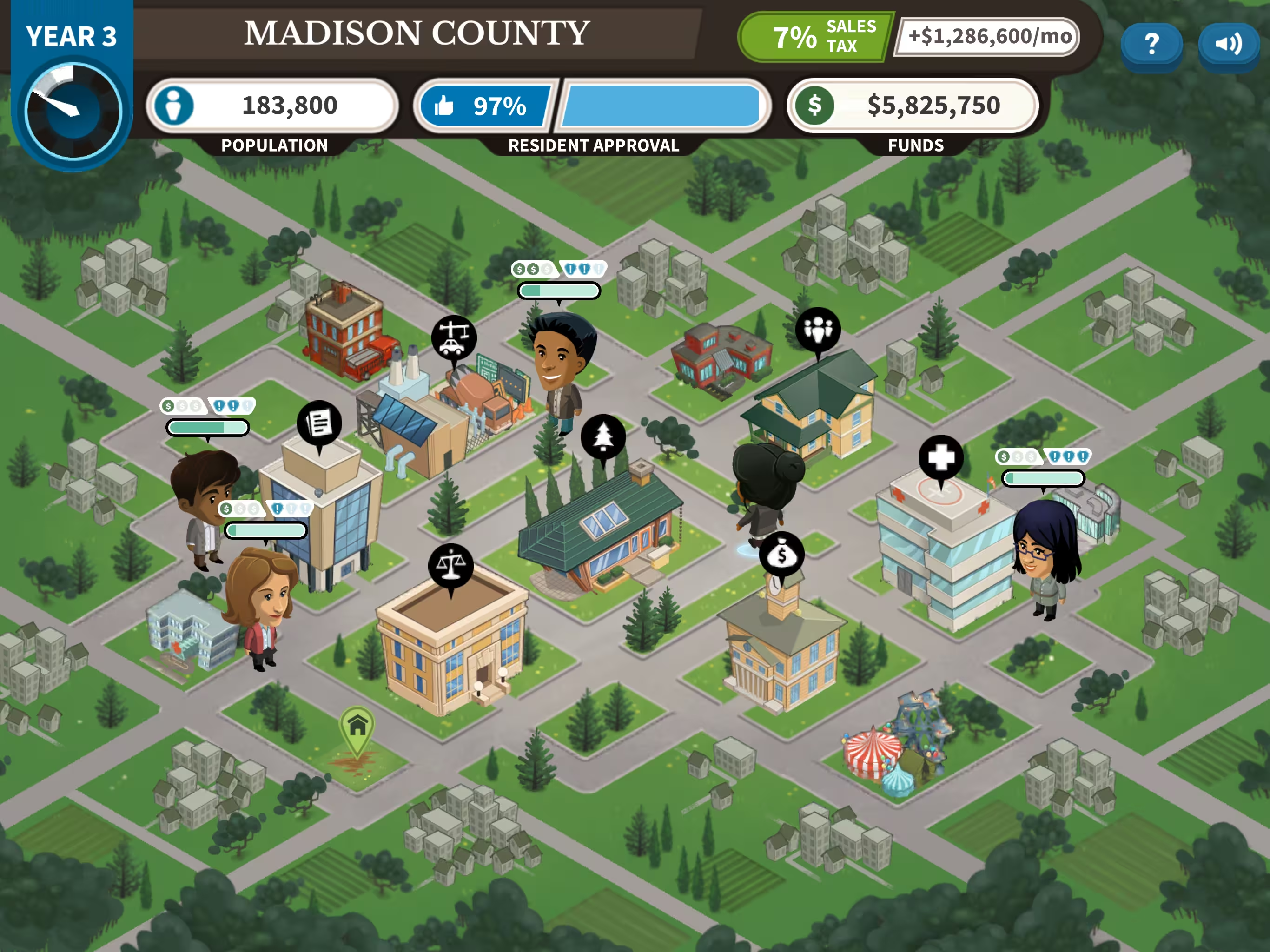
Counties Work: Texas is a civics learning game developed with iCivics that focuses on the structure and responsibilities of county government in Texas. Players take on the role of a county official, responding to resident requests, coordinating across departments, and managing budgets and taxes to keep county operations running effectively.
Explore →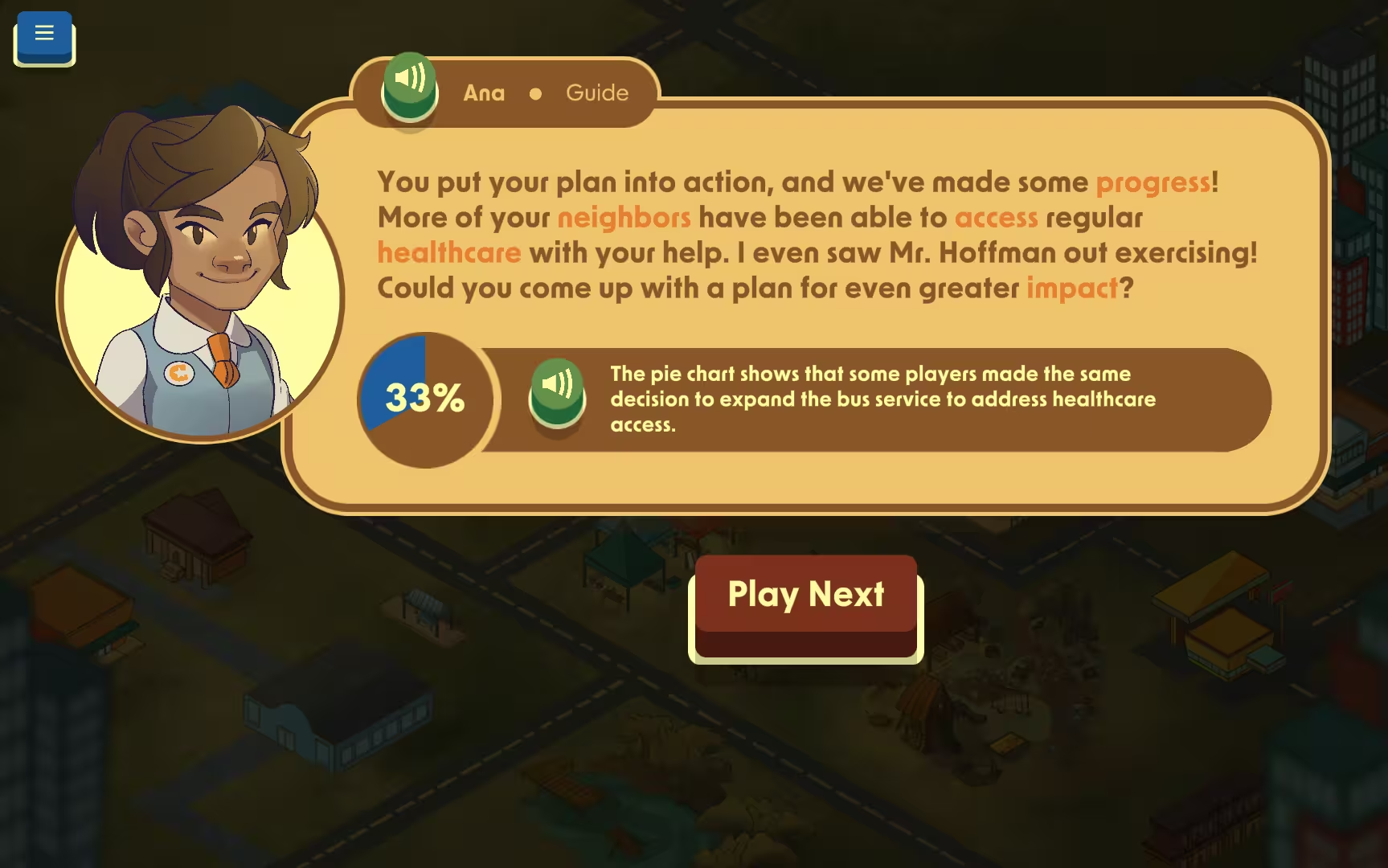
Neighborhood Good is a civics learning game developed with iCivics that introduces students to community-level civic engagement. Players select issues within a fictional neighborhood, talk with residents to understand different perspectives, and develop plans of action using available community resources.
Explore →We’re getting heady today folks, and for good reason – as we look around at medical learning solutions and impact-oriented medical technologies, we can’t help but notice some changes in the landscape of digital health in 2026. Increasingly, companies (and investors!) are shifting expectations from speculative innovation toward measurable clinical performance. As healthcare providers and pharmaceutical companies integrate software-as-a-medical-device into standard care pathways, the primary challenge remains the adherence gap in which patients abandon digital interventions before therapeutic benefits are fully realized. Fortunately, we have an answer to this problem, and if you know us, it won’t surprise you – that’s right, it’s games. High fidelity game design offers a technical solution to adherence friction by replacing passive interfaces with interactive systems that drive consistent patient engagement. By leveraging game mechanics as a delivery vehicle for evidence-based healthcare protocols, organizations can improve patient outcomes and optimize patient use of clinical infrastructure.
The efficacy of digital health interventions depends on the consistency of patient participation over time. Research published in Frontiers in Psychiatry demonstrates that immersive virtual reality environments provide a superior alternative to mobile applications for maintaining long term user engagement by establishing the cognitive presence necessary for therapeutic success. Filament Games utilized these principles when developing Mindful Market, a virtual reality tool developed from Penumbra Inc. designed for cognitive rehabilitation. Users perform activities of daily living in a simulated marketplace to ensure they remain committed to recovery tasks. Embedding executive function exercises within a responsive digital environment provides a context that mirrors real world challenges and rewards, mitigating patient drop-out.
Healthcare systems in 2026 prioritize value based care models where reimbursement is tied to the efficiency of clinical workflows and the reduction of operational waste. The Centers for Medicare & Medicaid Services (CMS) recently introduced the ACCESS Model to establish a pathway for outcome aligned payments, supporting technology integrated care that reduces expensive technical errors like motion artifacts in MRI suites. Developed in partnership with Turing Medical, FIRMM-pix software illustrates this mitigation by using real time head motion data to drive an interactive visual experience that only progresses when the patient remains still. This direct feedback loop enables children to maintain the necessary posture without the need for sedation, improving the efficiency of diagnostic machinery and reducing the financial burden associated with repeated scans.
The shortage of specialized mental health professionals requires scalable tools that extend the reach of existing clinical teams. The American Psychological Association notes that interactive software is increasingly used as a bridge for the more than 50% of psychologists to help ease access issues for mental health patients. Filament Games developed Serein to facilitate Meaning Centered Psychotherapy for cancer patients by utilizing an AI-driven Guide Bird that reinforces therapeutic protocols through guided storytelling. This technology functions as a clinical accelerator, allowing patients to engage with evidence-based protocols between sessions while remaining under the supervision of their medical team. By automating the delivery of standardized therapeutic exercises, these tools allow practitioners to provide higher quality support to larger patient groups without replacing the essential human element of the therapeutic relationship.
–
As the healthcare industry continues to adopt digital solutions, the focus will remain on the intersection of engagement and clinical validity. Successful implementations in 2026 move beyond the novelty of gaming to treat interactivity as a core component of medical efficacy, positioning organizations that invest in high fidelity simulations to meet the demands of value based care. Through the strategic application of game mechanics, the industry can address long standing challenges in patient adherence and operational efficiency, leading to more resilient healthcare systems and improved patient quality of life. In the process, we anticipate that digital therapeutics will transitions from experimental tools to a necessary pillar of modern clinical practice. Interested in adding a digital therapeutic solution to your portfolio? Let’s talk.
Best practices for preventing motion sickness while maximizing learning outcomes.
Best practices for preventing motion sickness while maximizing learning outcomes.
Get the latest Game-Based Learning Review content delivered to your inbox, including new articles, videos, and industry insights.