

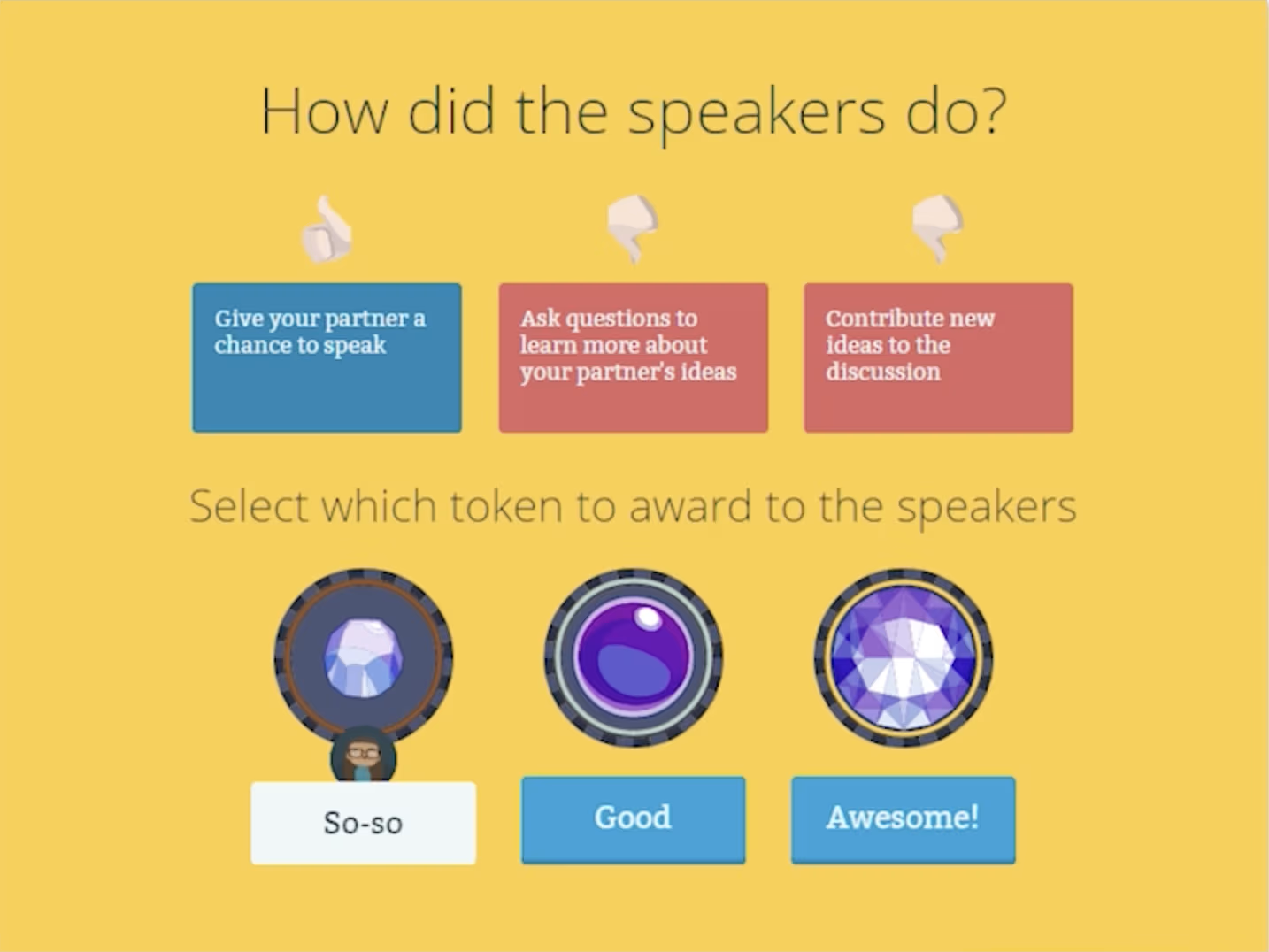
Discussion Maker is a multiplayer mobile game developed by Filament Games that teaches speaking, listening, and argumentation skills. Designed for face-to-face classroom use, the game enables teachers to facilitate structured small-group discussions at scale.
Explore →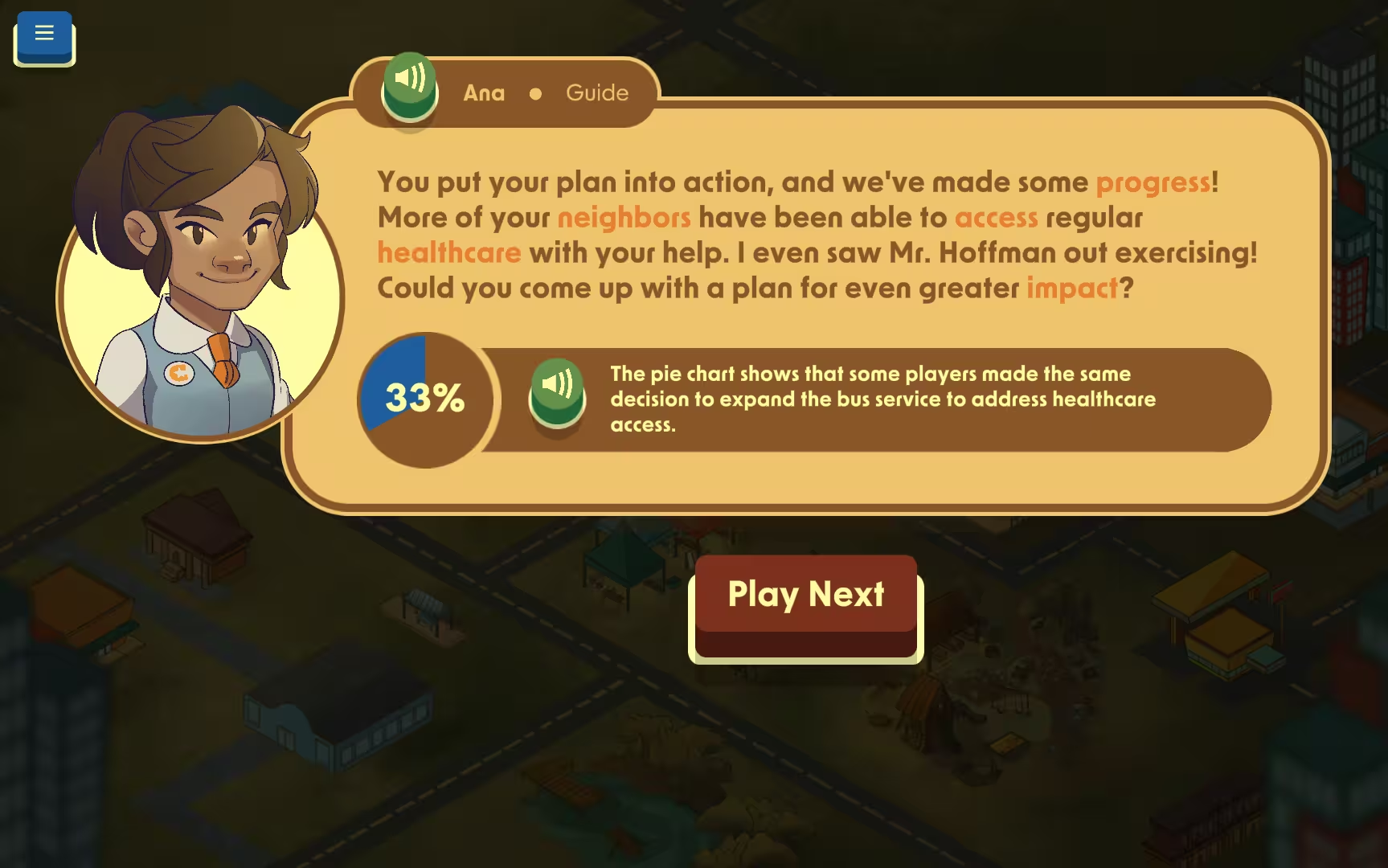
Neighborhood Good is a civics learning game developed with iCivics that introduces students to community-level civic engagement. Players select issues within a fictional neighborhood, talk with residents to understand different perspectives, and develop plans of action using available community resources.
Explore →The intersection of digital innovation and clinical validation has long been a bottleneck for medtech entrepreneurs. Traditionally, the path to market involved a rigorous clearance-first hierarchy that made it challenging for digital therapeutics to generate the real-world data they needed to prove long-term efficacy. However, the FDA’s recently launched Technology-Enabled Meaningful Patient Outcomes (TEMPO) pilot represents a targeted shift in this landscape. By aligning with the CMS ACCESS model, the TEMPO pilot allows for a risk-based enforcement approach where manufacturers can engage with patients and clinicians earlier in the development cycle. This is a move away from existing regulatory hurdles and toward a dynamic, evidence-based evolution of healthcare tools, and has significant implications for software as a medical device and other innovative game-based healthcare interventions.
The TEMPO pilot creates a unique entry point for medical technology innovators by offering a period of enforcement discretion for certain pre-market requirements. Under this initiative, the FDA intends to select approximately ten manufacturers across four specific clinical areas, including behavioral health and musculoskeletal conditions, to provide devices to participants in the CMS ACCESS model. This arrangement allows developers to collect critical real-world performance data within a controlled clinical environment before obtaining full FDA clearance. It effectively solves the circular problem where developers need data to get cleared but need clearance to get data, providing a structured pathway for startups to demonstrate value to both regulators and payers simultaneously.
The broader medtech sector is currently at an inflection point where digital solutions are moving from experimental novelties to essential components of care delivery. Current industry analysis suggests that healthcare systems are now generating nearly 30% of the world’s data, yet a vast majority of this information remains unstructured and underutilized. The promise of modern medtech lies in its ability to transform this mountain of data into actionable, patient-centric insights that fit seamlessly into daily routines. As clinical capacity remains stretched and costs continue to outpace inflation, the shift toward interoperable, technology-enabled care offers a much-needed mechanism for scaling healthcare to meet the needs of a population managing increasingly complex chronic conditions.
At Filament Games, we have already crossed the bridge from entertainment to clinical application. Serein, developed in collaboration with Blue Note Therapeutics, utilizes a Meaning-Centered Psychotherapy framework to help cancer patients navigate distress and find purpose through a narrative-driven adventure. Similarly, Mindful Market™ serves as a high-fidelity VR tool designed for cognitive rehabilitation, helping patients regain executive function and working memory through simulated activities of daily living. Another example, FIRMM-pix, combines gamification and biofeedback to reduce patient motion and improve brain MRI data quality. These projects demonstrate that when interactive design is tightly coupled with therapeutic goals, the result is a functional medical device that maintains high patient engagement while delivering measurable clinical outcomes.
–
The TEMPO pilot is a signal that the future of medicine is interactive, data-driven, and increasingly delivered through the medium of play. This new era of digital therapeutics offers an unprecedented opportunity to create tools that are as effective as they are engaging. If you are looking to navigate this new regulatory landscape or want to translate clinical expertise into a functional digital intervention, we are ready to help you build that future. Let’s talk about how we can make your vision for the next generation of medtech a reality.
Best practices for preventing motion sickness while maximizing learning outcomes.
Best practices for preventing motion sickness while maximizing learning outcomes.
Get the latest Game-Based Learning Review content delivered to your inbox, including new articles, videos, and industry insights.