
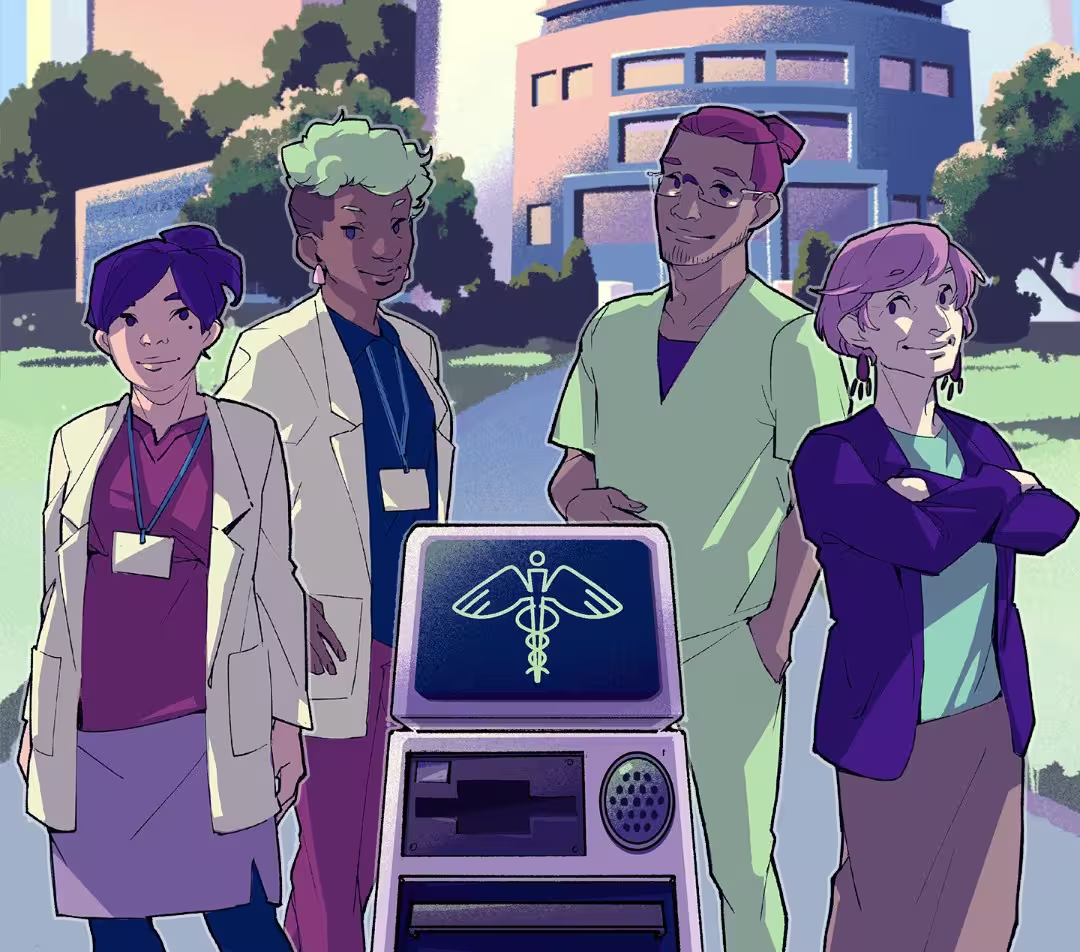
Medibytes is a medical terminology learning game developed with West Coast University that focuses on reinforcing vocabulary used in nursing and clinical settings. Players teach terminology to a simulated AI system by completing structured activities.
Explore →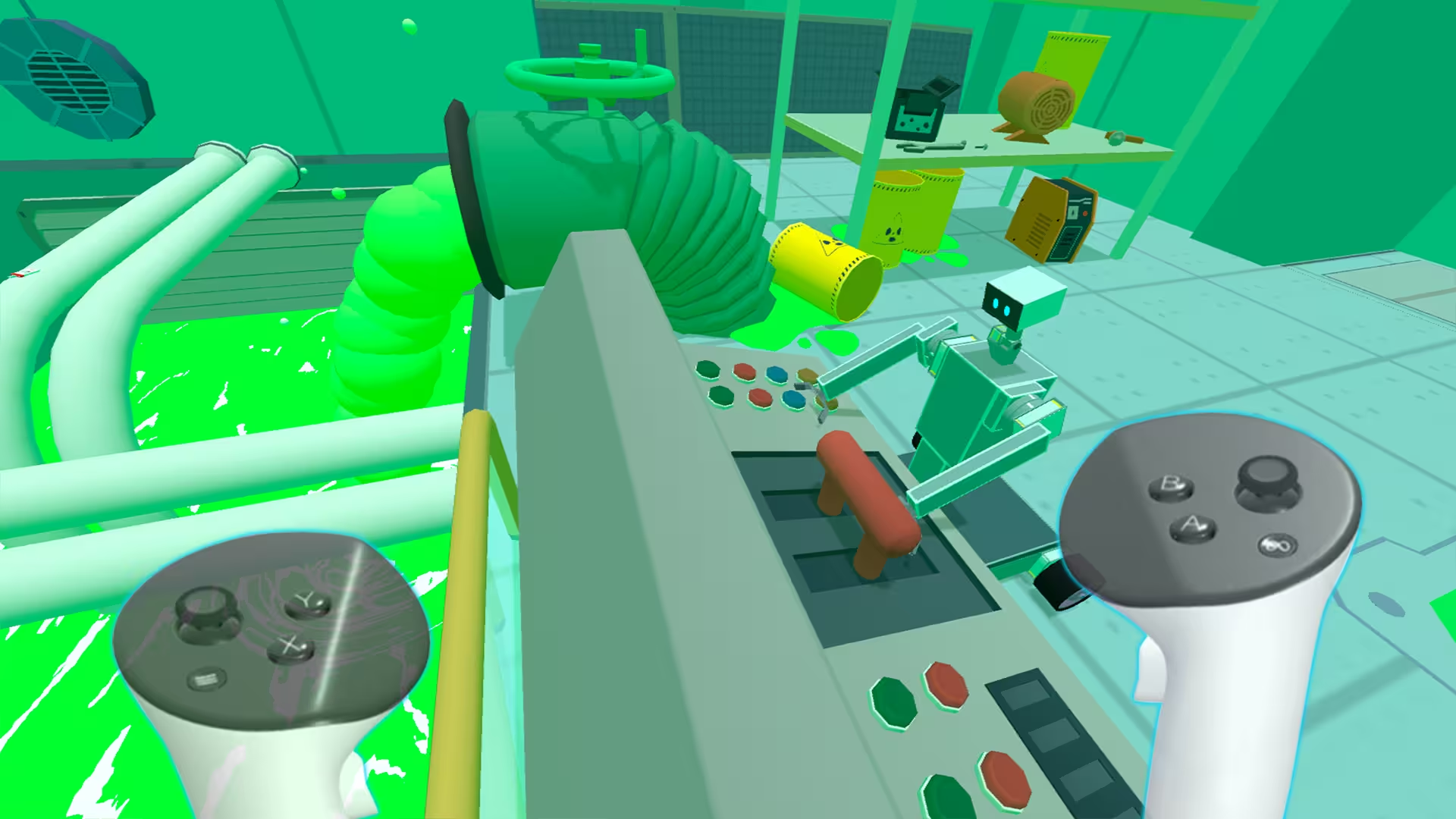
Some Assembly Required is a VR robotics sandbox game developed by Filament Games for Meta Quest 2 and 3. Players design and build robots with intuitive hands-on controls to complete mechanical challenges and explore a secret-filled warehouse.
Explore →This month on the blog, we spent July on a big topic: what games can do for the environment. The research here is growing fast, so we pulled together recent studies on climate negotiation, disaster preparedness, corporate sustainability training, and even the carbon cost of the software behind digital learning. If you missed any of July's posts, this post is for you. Whether you teach, set policy, or run a sustainability program, there's evidence below that well-designed games help people learn their way through some hard problems.
Big sustainability goals can feel abstract until someone actually has to act on them. In Game-Based Learning for the UN Sustainable Development Goals, we looked at how custom games connect policy to behavior by dropping players into simulations where they can test real decisions. A 2025 study of the Play IT Cool web platform found that aligning game mechanics with players' core psychological needs sparked stronger positive emotions and motivation. A 2026 study went further, showing that serious games can help communities design blue-green infrastructure for flood resilience by giving residents a way to voice local concerns. It turns out a game is a pretty good place for people to shape solutions together, instead of wading through dense technical reports.
When disaster strikes, there's no time to consult a lecture. In How Game-Based Learning Builds Disaster Readiness, we explored how interactive media gives people a safe place to rehearse crisis skills before they need them. One 2026 study found that students who played modules simulating floods and earthquakes came away with clear gains in hazard awareness and evacuation know-how. A separate quasi-experimental study saw nursing students using a gamified curriculum post significant gains in both disaster nursing competence and self-directed learning. The common thread is that structured practice helps safety knowledge stick, even under the pressure of a simulated emergency.
Here's one that hits close to home for us as developers: the software itself has a footprint. In Sustainable Practices in Software and Game Development, we made the case that thoughtful, efficient architecture cuts both operating costs and emissions. A 2026 article in IEEE Software points out that training AI models and running cloud services can balloon the carbon footprint of a digital system. The Playing for the Planet Alliance reports that building and shipping games carries its own heavy footprint across the supply chain. So when you're choosing a studio, it's worth asking how they write and run their code, and how they keep it lean.
Climate topics can overwhelm students to the point of shutting down. In Using Serious Games to Combat Climate Anxiety in the Classroom, we looked at how structured play keeps that from happening. Researchers at Lund University built interactive activities that tend to students' emotional well-being right alongside the facts. And the learning holds up. One study found that high schoolers using interactive tabletop mechanics retained 33% more knowledge over three weeks than classmates in a standard lecture. Give students something to do with a heavy topic, and they're far more likely to stick with it.
Some of the best climate learning happens at the negotiating table, where every choice trades environmental outcomes against economic pressure. That's the terrain we covered in Beyond the Forecast: Using Simulation Games to Build Climate Literacy and Negotiation Skills. Ciara Renee Johnson's recent study in In Factis Pax found that interactive simulators ground peacebuilding work in real science, helping players spot the co-benefits of specific environmental policies. A review in the Journal of Geoscience Education looked at 53 articles and concluded that pairing hands-on problem-solving with climate science builds functional literacy in adult learners. In one test of an online simulation about renewable energy transitions, players picked up real international relations models and got invested in solving the coordination problems.
A corporate sustainability pledge only means something if thousands of employees actually change how they work day to day. We looked at that challenge in Game-based Learning for Enterprise Sustainability. An analysis in Frontiers in Education examined gamified systems that track eco-friendly behavior at work, and one documented rollout saw energy use drop 27% while recycling jumped 34%. Researchers also showed off a hybrid strategy game called SIMA-Play that squeezes a sixty-year planning horizon into a single afternoon. And a 2026 study in Frontiers in Psychology found that gamified HR practices shift behavior when the feedback loop ties each person back to their team. The pattern across all of it: game mechanics change habits when they line up with what people already care about.
~
Put it all together and the picture is encouraging. When the design is good, games give people a real, evidence-backed way to build the sustainability skills and systems thinking the years ahead will ask of them. That's the kind of work we love. If you're thinking about a custom educational game to move your organization's sustainability goals forward, let's talk.
Best practices for preventing motion sickness while maximizing learning outcomes.
Best practices for preventing motion sickness while maximizing learning outcomes.
Get the latest Game-Based Learning Review content delivered to your inbox, including new articles, videos, and industry insights.